

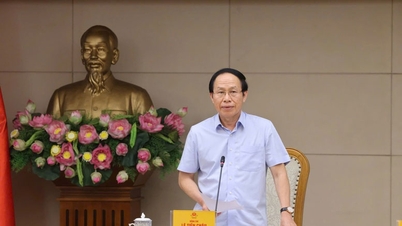
At a recent meeting on the implementation status and solutions for the revised National Power Development Plan for the period 2021-2030, with a vision to 2050, and the implementation status of key national projects in the energy sector, Deputy Prime Minister Pham Gia Tuc issued a decisive order: All resources must be mobilized and all obstacles removed to ensure there is no electricity shortage under any circumstances, creating momentum for the goal of double-digit growth.

Electricity - the foundation for great aspirations.
Energy is not merely a technical and economic sector, but a crucial foundation ensuring the functioning of the entire economy and the stability of people's lives. Deputy Prime Minister Pham Gia Tuc stated that ensuring sufficient electricity supply is a prerequisite for the successful implementation of Resolution 70-NQ/TW of the Politburo on ensuring national energy security by 2030, with a vision to 2045.
In the new era, Vietnam has set ambitious goals: green transformation, digital transformation, and the development of high-tech industries (such as semiconductors and AI). To ensure these goals remain on paper, energy infrastructure must be developed ahead of time. In particular, Conclusion No. 18-KL/TW has outlined the five-year socio-economic development plan (2026-2030), closely linked to the goal of achieving double-digit growth. This is a historic milestone requiring breakthroughs in thinking and action.
"This is an extremely special, important, strategic, urgent, and long-term task for the development of the country," affirmed Deputy Prime Minister Pham Gia Tuc. Ensuring a continuous power supply is not just about the production figures (kWh), but also about national prestige with global strategic investors.
While acknowledging the proactive efforts of the Ministry of Industry and Trade, Vietnam Electricity Group (EVN), Vietnam Oil and Gas Group (PVN), and related units in proposing solutions to prevent and combat electricity shortages, the Government also frankly pointed out limitations in the implementation of the Power Development Plan VIII.
In reality, many key power generation and grid projects are stalled or experiencing prolonged delays. According to Minister of Industry and Trade Le Manh Hung, the reasons stem not only from objective factors but largely from subjective bottlenecks: land clearance remains problematic and has not been thoroughly resolved; investment procedures are still cumbersome and involve multiple layers; and coordination between ministries, sectors, and localities is sometimes merely superficial and lacks close cooperation.
Notably, Deputy Prime Minister Pham Gia Tuc pointed out that the tendency to "avoid and shift responsibility" still exists among some officials and implementing agencies. This is the biggest obstacle hindering the development of the energy sector. In the context of rapidly increasing electricity demand driven by economic recovery, every day of delay in a power project represents a loss to the nation's development opportunities.
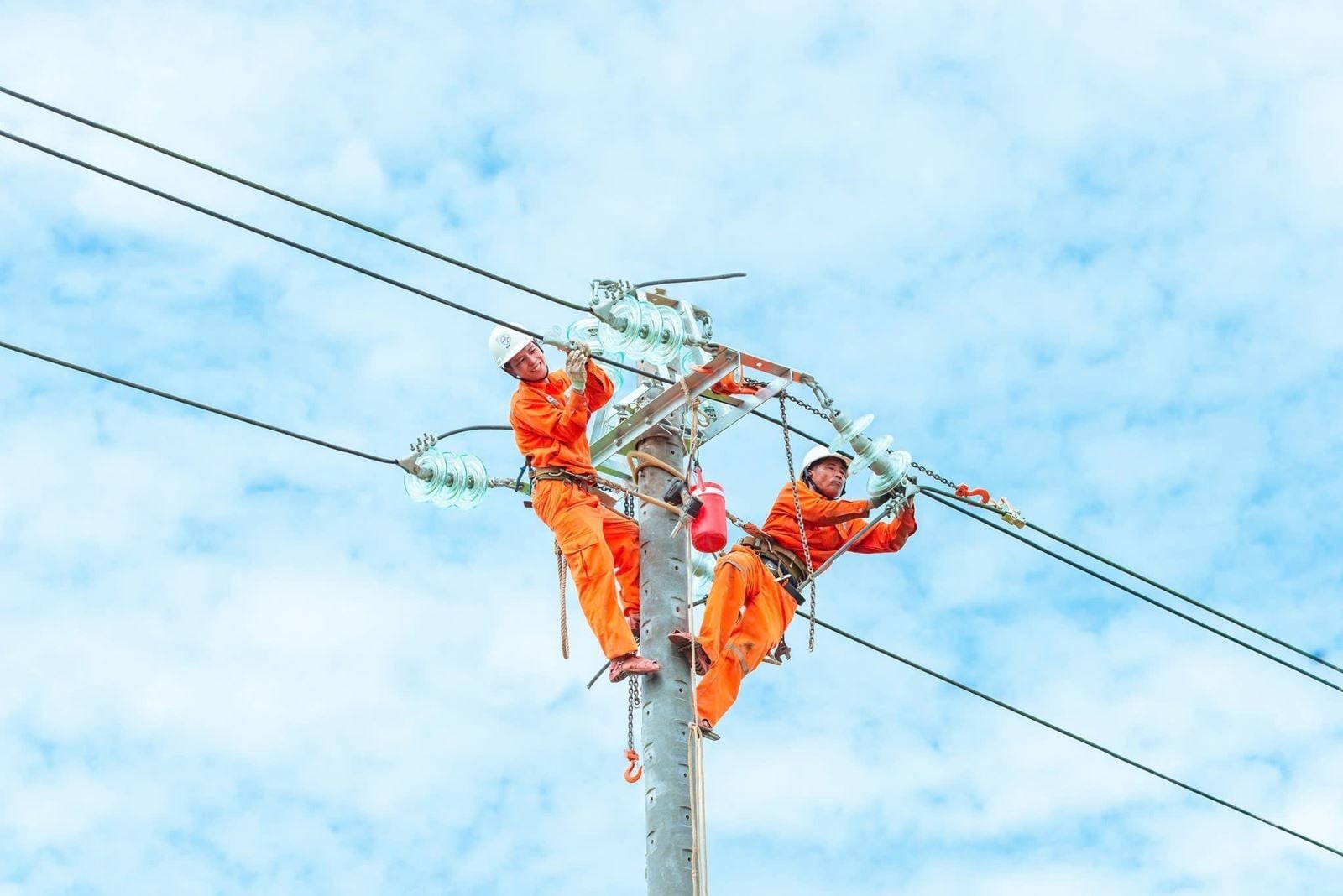
Shorten the timeline for key projects by 1-2 years.
To realize the directive of "ensuring no electricity shortages," Deputy Prime Minister Pham Gia Tuc requested the Ministry of Industry and Trade and related agencies to shift to a more urgent and efficient working mode. The focus is on accelerating the progress of important national electricity programs and projects as stipulated in Decision No. 2634/QD-TTg dated December 2, 2025.
A groundbreaking requirement has been put forward: Striving to complete and put projects into operation 1-2 years earlier than planned in Prime Minister's Directive No. 01/CT-TTg dated February 3, 2025. This is a huge but necessary pressure to create a safe "room" for the national power system.
To achieve this goal, the Ministry of Industry and Trade must maximize its role as the focal agency, proactively advising the Steering Committee to coordinate and resolve inter-sectoral and inter-local issues. On-site inspections must not be superficial but must promptly identify and resolve specific technical, legal, and financial obstacles for investors.
Simultaneously, the process of selecting investors for power generation and transmission grid projects under the revised Power Development Plan VIII must be transparent and expeditious. Local authorities are not permitted to delay the handover of cleared land for key national projects.
One of the strongest messages from government leaders is the readiness to innovate institutionally to serve development. "We must not delay; if necessary, we must have special mechanisms and simplify administrative procedures to implement energy projects early, quickly, and ahead of schedule," emphasized Deputy Prime Minister Pham Gia Tuc.
The specific mechanism here can be understood as minimizing unnecessary intermediate procedures, applying streamlined processes in project appraisal and approval, while simultaneously facilitating access to capital and advanced technology. This reflects a new management mindset: shifting from a more robust "pre-approval" to a "post-approval" approach, focusing on the ultimate goal of ensuring electricity is integrated into the national grid on schedule and ahead of schedule.
However, this special mechanism comes with accountability. The Ministry of Industry and Trade is entrusted with full responsibility before the Prime Minister for implementing solutions to ensure energy security. Delays in implementation that affect electricity supply for socio-economic development will be subject to strict accountability.
The fight against electricity shortages is not solely the responsibility of the electricity sector or the Ministry of Industry and Trade, but requires the involvement of the entire political system. Close coordination between the central and local governments, and between management agencies and businesses, is a key factor in keeping large-scale power plants running day and night.

Under the close guidance of Deputy Prime Minister Pham Gia Tuc, investors have committed to specific operational timelines and are striving for breakthroughs. With a solid energy infrastructure, we can confidently enter a period of double-digit growth, realizing our aspiration to become a developed, high-income nation by the middle of the 21st century. Maintaining energy security is crucial for sustaining the nation's development. And in this race against time, there is no room for delay or hesitation.
Source: https://baotintuc.vn/kinh-te/khong-de-thieu-dien-trong-bat-ky-hoan-canh-nao-20260527172406874.htm



![[Photo] Standing Committee member of the Party Central Committee Tran Cam Tu working with the Central Inspection Committee](https://vphoto.vietnam.vn/thumb/1200x675/vietnam/resource/IMAGE/2026/05/28/1779969579668_ndo_br_bnd-2495-jpg.webp)
















































































Comment (0)