
Blood test - Photo: T.MINH
Diabetes consistently tops the list of most searched health issues each year.
According to the Times of India, users often ask questions such as: "How to lower my A1C level?", "What is a safe blood sugar level?", or "Can prediabetes be cured?" in search of information aimed at preventing or slowing down dangerous complications.
Ways to lower blood sugar levels
Statistics on diabetes show that the burden of the disease is increasing globally. Specifically in Vietnam, the IDF reports that the number of adults (aged 20-79) with diabetes will be approximately 2.5 million in 2024. This number is projected to reach around 2.7 million by 2050.
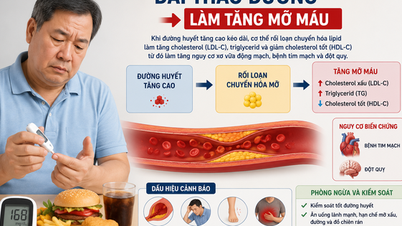
According to experts, diabetes is a chronic condition of hyperglycemia caused by impaired insulin secretion, reduced insulin metabolic effect, or a combination of both. If blood sugar levels are not well controlled, it can quickly lead to many complications in organs such as the heart, eyes, brain, and kidneys.
Sharing her insights on blood sugar control, Ms. Phan Kim Dung, Head of the Nutrition and Dietetics Department at the National Institute of Hematology and Blood Transfusion, stated that diet plays a crucial role, and increasing physical activity is also essential.
According to Dr. Dung, the principle of a balanced diet is to provide sufficient nutrients in both quantity and quality. The amount of carbohydrates in each meal should be stable, appropriate for daily activity and the amount of medication being taken. Maintaining normal daily physical activity and a healthy weight are also important.
"It's important to be aware of carbohydrate-rich foods, be flexible in choosing foods from the same group and with a low glycemic index to vary the menu according to taste without causing a significant spike in blood sugar after meals. This prevents hypoglycemia between meals and avoids increasing risk factors such as dyslipidemia, hypertension, and kidney failure," Dr. Dung said.
According to this nutritionist, to lower blood sugar levels, choosing foods with a low glycemic index (GI) can help stabilize blood sugar, better control the disease, and slow down the risk of complications.
The glycemic index (GI) determines how much a food will raise blood sugar levels when consumed, and is divided into three groups: foods with a low GI of 55, medium GI of 56-69, and high GI of 70 or higher.
For carbohydrates, use partially milled rice, brown rice, or whole grains in combination with or as a substitute for white rice, noodles, and white bread if you want to lower your glycemic index. Increase plant-based protein intake by eating more legumes (lentils, mung beans, peas), bean products (soy milk, tofu...), and pumpkin seeds. Choose lean animal-based protein sources such as lean pork/beef, shrimp, crab, fish, and poultry like skinless chicken and duck...
Use vegetable oils in cooking: soybean oil, sesame oil, olive oil, almond oil, walnut oil, etc. Eat a variety of vegetables rich in fiber and vitamin C, and high in nitrates such as green beans, lettuce, cauliflower, kohlrabi, spinach, celery, cabbage, tomatoes, etc. (about 400-500g of vegetables per day). Consume fruits with low to medium sugar content such as dragon fruit, grapefruit, guava, oranges, papaya, avocado, pears, plums, strawberries, etc.
Patients should avoid stewed, pureed, and fried foods, as these can cause a rapid increase in blood sugar levels. Excessive salt intake and processed foods should also be avoided.
The secret to long-term control
To control diabetes, experts say that patients first need early detection and adherence to their doctor's treatment. Dr. Nguyen Quang Bay, Head of the Endocrinology and Diabetes Department at Bach Mai Hospital, said that diabetes can lead to dangerous complications if not properly treated and controlled. In fact, studies show that up to 55% of diabetes patients in Vietnam already have complications from the time they are diagnosed.
Dr. Bay explained that diabetic complications are divided into two main types: macrovascular complications and microvascular complications. Microvascular complications are considered specific complications of diabetes, closely related to blood sugar control. These include diabetic retinopathy, the leading cause of blindness, and damage to the blood vessels in the glomeruli, the leading cause of kidney failure requiring dialysis.
In Vietnam, one-third of end-stage chronic kidney disease patients requiring dialysis are due to diabetes. Damage to the nerves and, most frighteningly, the cause of foot ulcers leading to amputation...
However, macrovascular complications are the most dangerous because they cause the highest number of deaths. Three groups of macrovascular complications are commonly mentioned: coronary artery complications causing myocardial infarction; cerebrovascular and carotid artery complications causing stroke; and lower limb vascular occlusion, foot ulcers, and amputation.
To control diabetes, in addition to maintaining a diet and lifestyle as recommended by their doctor, diabetic patients must undergo screening for all complications every 6-12 months.
"If it's not yet time for a check-up but you notice unusual signs such as blurred vision, swelling, chest pain, or numbness in your limbs, you should see a specialist immediately. If you wait until severe symptoms appear, complications are often very late," Dr. Bay emphasized.
In addition, patients should absolutely not stop taking medication when their blood sugar and blood pressure return to normal, because that result is due to the medication. They should adhere to a healthy diet and lifestyle, including exercise, avoiding overeating, overeating, or extreme dieting.
Early detection of carbohydrate metabolism disorders

Glycemic index of food groups - Image source: Harvard
MSc. Phan Kim Dung further advises that regular blood glucose testing is essential for detecting carbohydrate metabolism disorders, prediabetes, and diabetes.
Not only people with diabetes, but anyone should have their blood sugar tested regularly to receive timely treatment or adjust their diet and exercise if their blood sugar levels are abnormal. Note that you must fast for at least 6-8 hours before blood is drawn for a blood test.
WILLOW
Source: https://tuoitre.vn/kiem-soat-duong-huyet-mua-tet-the-nao-20260204055516833.htm



![[Photo] General Secretary and President To Lam presides over a meeting on preparations for the review of one year of operation of the three-tiered government system.](https://vphoto.vietnam.vn/thumb/1200x675/vietnam/resource/IMAGE/2026/06/02/1780391821195_a1-bnd-4595-9717-jpg.webp)










































































































Comment (0)