

Culture then becomes an ecosystem, in which policies create the framework, the market provides the impetus, technology expands the space, and artists and the public together participate in creating value.
To develop a truly thriving cultural industry, Ho Chi Minh City possesses both the unique advantage of being the most dynamic creative center in the country and the challenges it faces in overcoming obstacles.
Ho Chi Minh City's advantages include a large number of artists, audiences, and markets; a thriving media and digital space; and an open spirit and a rapid ability to embrace new things. From theater, music , film, and festivals to digital content, everything reflects a vibrant cultural life. However, if this energy is not organized through policies, data, professional standards, and appropriate investment mechanisms, it can easily develop spontaneously, strong in individual phenomena but weak in structure, vibrant on the surface but lacking sustainable depth.
Besides that, Ho Chi Minh City also faces some bottlenecks. Firstly, translating awareness into action. We have recognized the potential of the cultural industry, but for culture to become a creative economic sector, we need more specific and practical mechanisms and policies. For example, we cannot simply call for social mobilization and then leave investors and artists to fend for themselves.
Secondly, there is a lack of coordination. The cultural industry cannot be built solely by the cultural sector; it requires the participation of many other fields. A valuable theatrical production relies not only on performing talent but also on scriptwriting, communication, audience development, and market expansion. If these links are not connected, creativity will be isolated, and the market will remain fragmented.
Thirdly, human resources. Today's performing arts require not only talented individuals but also artists who understand technology, the audience, and the market, without losing their cultural roots. To develop the cultural industry, art schools should not only train people who chase the market, but also equip them with the courage to engage in dialogue, lead, and create humanistic values within the market.
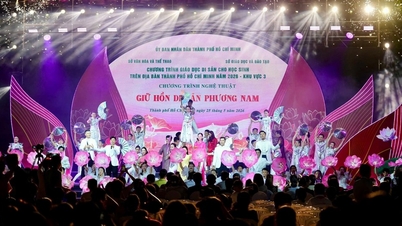
Ho Chi Minh City's socialized theater scene is a highly commendable direction. It demonstrates that when artists are given space, when audiences are respected, and when creativity is linked to real-life needs, art will always exist and spread. However, to have a long-term career in theater, besides love and passion, young people need a sufficiently good environment where they can thrive, develop, and believe that art can nurture their character, honor, and future.
In reality, the line between art and entertainment is increasingly blurred. This creates both opportunities and challenges: Art can reach a wider, faster, and more diverse audience; however, if artists only chase trends, views, and immediate revenue, they are easily swayed by the market. Therefore, the standards of the cultural industry cannot be solely based on revenue but must also include humanistic values, identity, artistic quality, competitiveness, and social responsibility.
For Ho Chi Minh City to become the cultural industry center of the country and the region, the role of artists needs to be emphasized more. Artists are not only performers but also creators and co-builders of policy. The cultural industry is not a race for quantity of products but a competition for value.
For the cultural industry in Ho Chi Minh City, the most sustainable value lies in its ability to harmonize dynamism and humanism, market forces and cultural identity, and individual creativity with the city's shared aspirations for development.
Assoc. Prof. Dr. Bui Hoai Son - Member in charge
Committee on Culture and Society of the National Assembly
According to NLDO
Source: https://baogialai.com.vn/kien-tao-gia-tri-cong-nghiep-van-hoa-post587221.html
![[Photo] The heat at the fireworks display site on the opening night of the Da Nang International Fireworks Festival 2026](https://vphoto.vietnam.vn/thumb/1200x675/vietnam/resource/IMAGE/2026/05/27/1779889741485_ndo_br_z7872039145157-fecaba5112f39e8352544099d7ef4738-5140-jpg.webp)
![[Photo] The courage of new recruits of Brigade 144 on the training ground.](https://vphoto.vietnam.vn/thumb/1200x675/vietnam/resource/IMAGE/2026/05/27/1779881651341_anh-man-hinh-2026-05-27-luc-18-32-52.png)






































![[Photo] The courage of new recruits of Brigade 144 on the training ground.](https://vphoto.vietnam.vn/thumb/402x226/vietnam/resource/IMAGE/2026/05/27/1779881651341_anh-man-hinh-2026-05-27-luc-18-32-52.png)















Comment (0)