

Matador Network, an American digital media company specializing in travel , shares the experiences of survivors who got lost in the jungle, and advice from renowned American survival expert Andrew Herrington.
Keep warm
Pressing your body against another person is a common method of keeping warm. Some people hug each other to stay warm...
It's also a good idea to exercise, just like Jorge Joachim did when he was lost for nine days in Jasper National Park, Alberta (Canada).
Find shelter.
If you can find a hollow tree trunk, it's a great shelter, just like Lacy Murphy did when she survived two days on Mt. Rainier (USA).
Some people also dug caves and lined them with branches and pine needles for insulation.
Find something to drink.
On average, you can survive for about 3 days without water. Many survivors have found lakes, streams, and other bodies of water to drink.
Even if the water is contaminated, expert Herrington says you're highly likely to be saved within 24 hours, so you should be more concerned about dehydration than infection.
Take the case of Gilbert Dewey Gaedke, who spent five days on a lava field atop Kilauea volcano in Hawaii. With no natural water source, he squeezed water from moss to survive.
Aron Ralston (USA), famous for amputating his own arm to free himself from a rock, drank his own urine to survive. Ronald Hutter (USA) also survived for four days by drinking urine while stranded on Mount Lemmon, Arizona. Ed Rosenthal (USA) did the same when he got lost in Joshua Tree National Park (USA), also obtaining water from a cactus.
Lukas Cavar (19 years old), who got lost in Sullivan Cave, Indiana (USA), used candy wrappers to collect water and survive for three days. He also licked the cave walls to conserve water, and Lacy Murphy (USA) licked leaves and moss when lost on Mount Rainier, according to Matador Network.
Find food
Most people have enough calories to live for about 30 days, so there's no need to panic.
Expert Herrington says that trying to hunt or forage for food consumes more calories than it consumes, so it's best to eat what's readily available.
If the worst happens, you can eat insects – one of nature's best sources of protein. Greg Hein did just that before getting lost in Kings Canyon National Park for a week. He survived by eating crickets, giant ants, and water bugs before being spotted by a rescue helicopter.
However, those who survived for more than 30 days had to resort to extreme measures. Marco Lavoie, who was stranded for three months on Lake Mattagami in Quebec, Canada, had to eat everything he could find and fish.
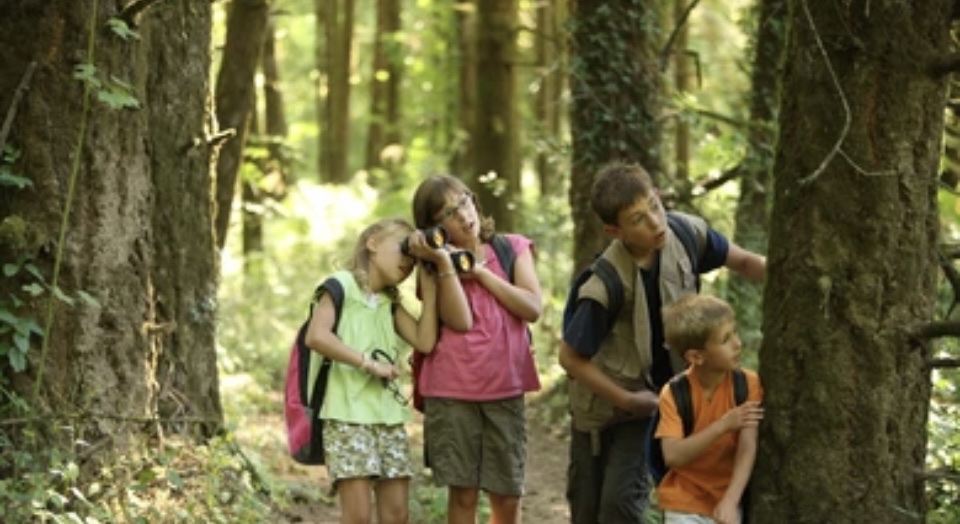
Getting lost in the forest is one of the worst nightmares when traveling.
Return to safety
Nearly two-thirds of those rescued continue to move when they realize they are lost. However, expert Herrington advises that if you have already informed others of your location, it's best to stay put because people will search for you in that area. Three-quarters of those who get lost are found by rescuers rather than finding their way out on their own, so don't go far, according to Matador Network.
This expert suggests bringing tarpaulins and brightly colored clothing, as well as a beacon mirror to shine a light on rescuers. Gaedke escaped a lava field in Hawaii, and Lon McAdam (Scotland) was rescued after being lost for a week in the Superstition Wilderness Mountains, Arizona (USA) both using this method.
Following a stream is often a good way to get to safety. Austin Bonahan, 18, discovered this when he got lost while hiking through Great Smoky Mountains National Park. He followed a stream down the mountain to a large creek and was rescued, according to Matador Network.
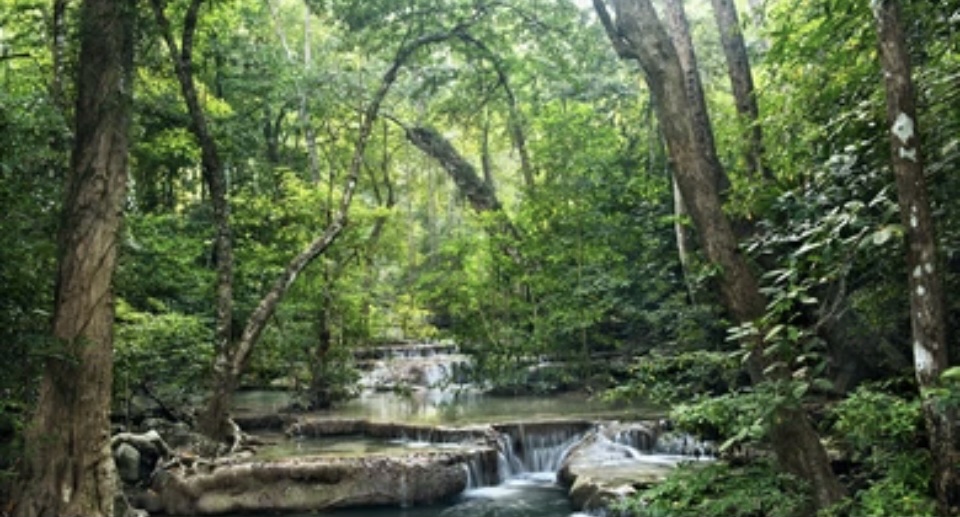
Following the current is often a good way to get to safety.
You could also try tracking animals, as Marcus Mazzaferri did in Yosemite National Park (USA) by following deer tracks to escape.
Prepare for the worst-case scenario.
Expert Herrington notes that before a trip, you should inform two different people of your travel plans and check-in times. This way, everyone can see and find you.
You should also study maps and find escape routes if you get lost, and use printed maps instead of relying solely on GPS or battery-powered technology. In addition to essentials like a flashlight, compass, and first-aid kit, bring water purification tablets and fire-starting tools such as cotton balls soaked in Vaseline and matches or a lighter.
If you're going into the forest, mark your path by breaking branches and stripping bark from trees, then follow these marks to find your way back.
Source link





![[Image] Nearly 125,000 Hanoi students completed the Literature exam for the 10th grade entrance exam.](https://vphoto.vietnam.vn/thumb/1200x675/vietnam/resource/IMAGE/2026/05/30/1780117233041_ndo_br_thiet-ke-chua-co-ten-2-png.webp)



































































































Comment (0)