

Many localities are beginning to recognize culture as an important resource for socio -economic development through tourism attraction. From heritage tourism routes to community-based tourism models that offer experiences of local life and culture, new opportunities are opening up.
Using tourism to preserve culture.
Born and raised in Nam Ban commune, Lam Ha district, Lieng Hot Thai Hoa, a Co Ho woman, quickly recognized the changes in her village life. As modern life infiltrated, many traditional customs and practices were gradually forgotten. This concern prompted her and her husband to embark on a challenging journey: developing tourism to preserve their culture.
"We thought that if we didn't do something, our children and grandchildren would only know about our culture through books," Ms. Hoa shared. Based on this idea, the family decided to develop a community-based tourism model, with experiencing local culture as its core.
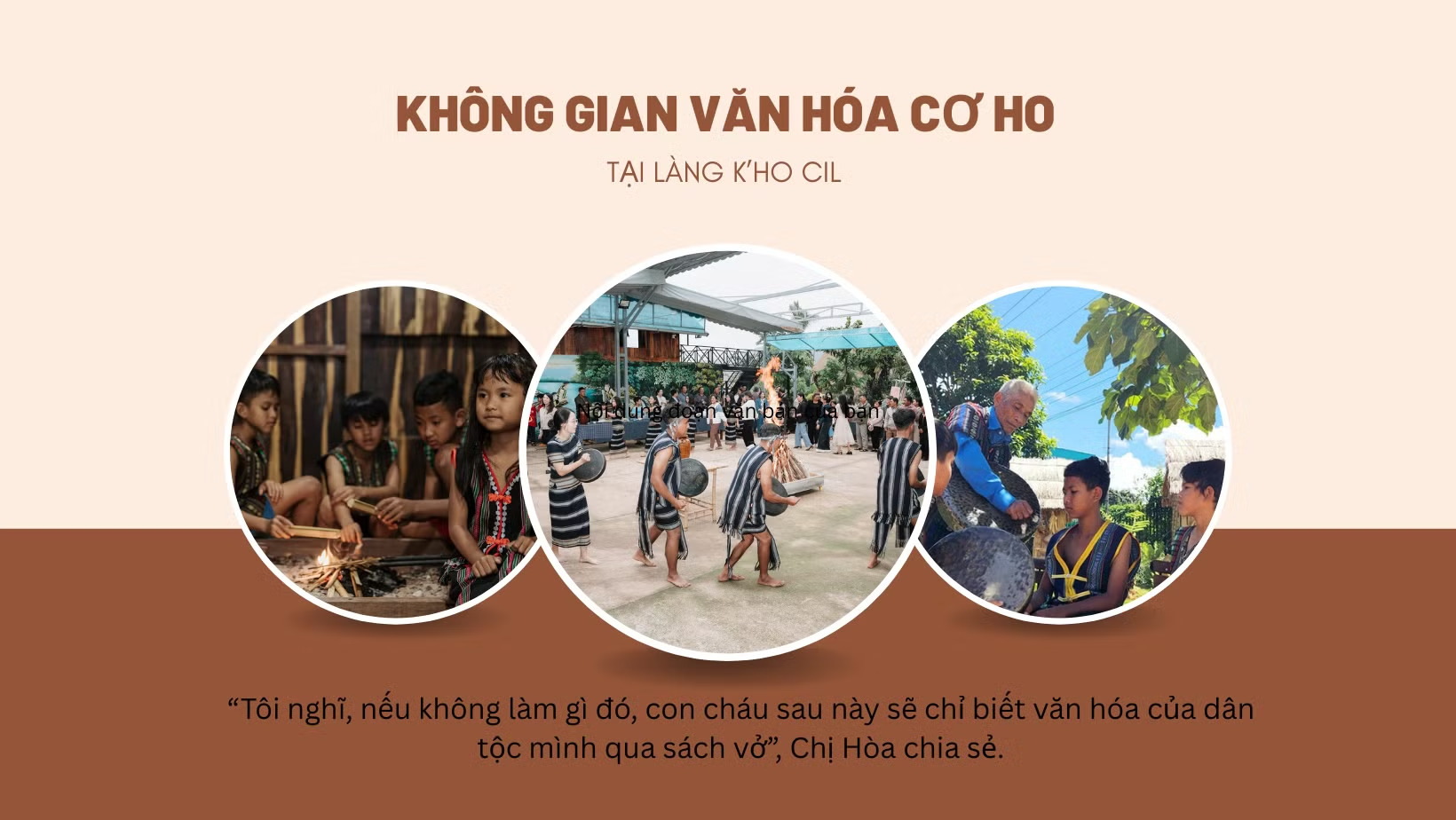
On a plot of land approximately 6,000 square meters located along the tourist route, the couple began renovating and building a space to welcome guests. After much effort, in 2022, K'Ho Cil Village officially opened, welcoming its first visitors.
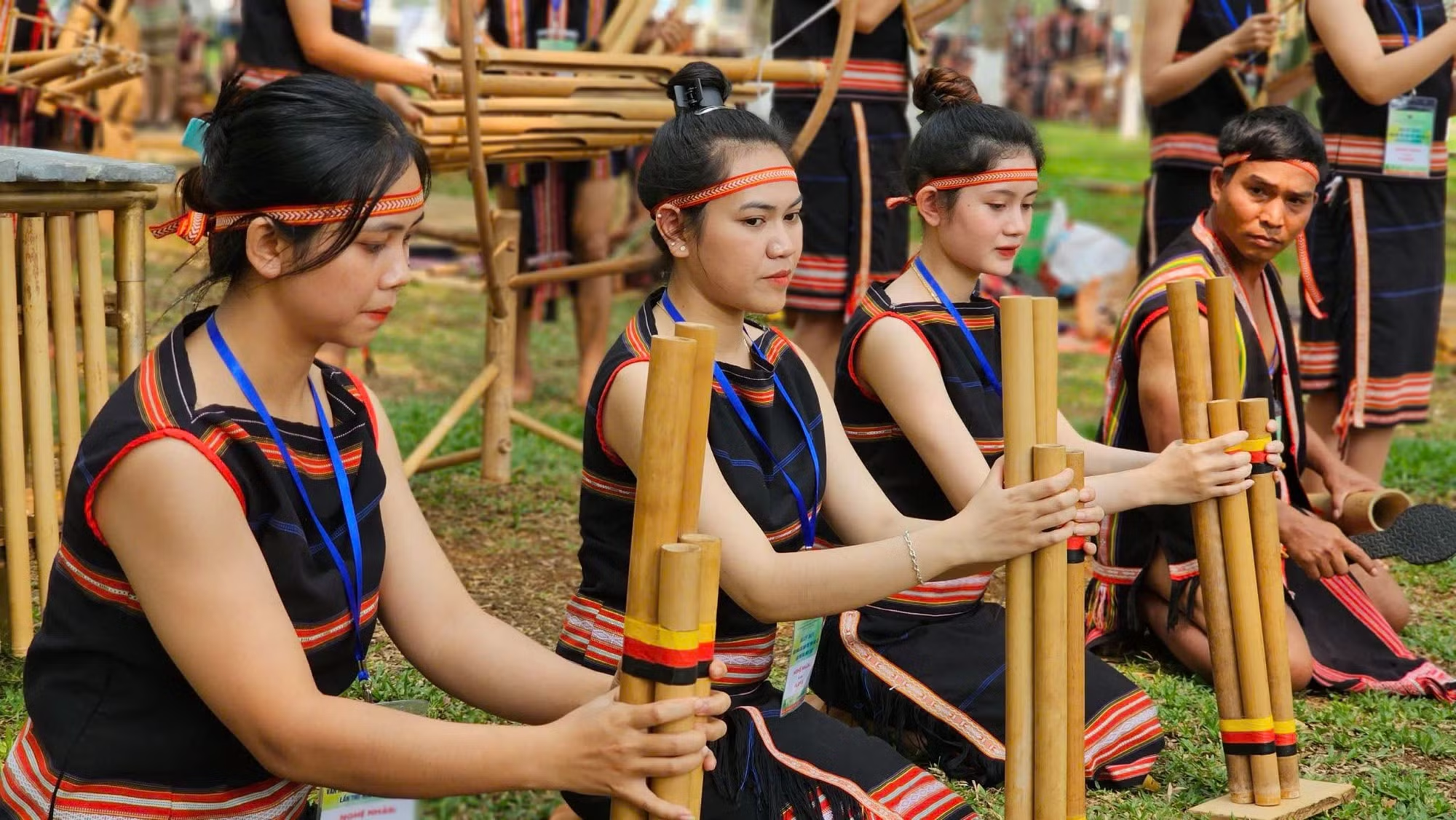
From the outset, this model didn't simply follow the "check-in" trend but aimed to authentically recreate the life of the Co Ho people. At the center of the village is a long stilt house restored according to traditional architecture. Inside, a series of familiar items such as baskets, axes, water gourds, fishing nets, brocade costumes, etc., have been carefully collected and preserved. The space also resonates with the sounds of gongs, T'rưng instruments, stone xylophones, and more.
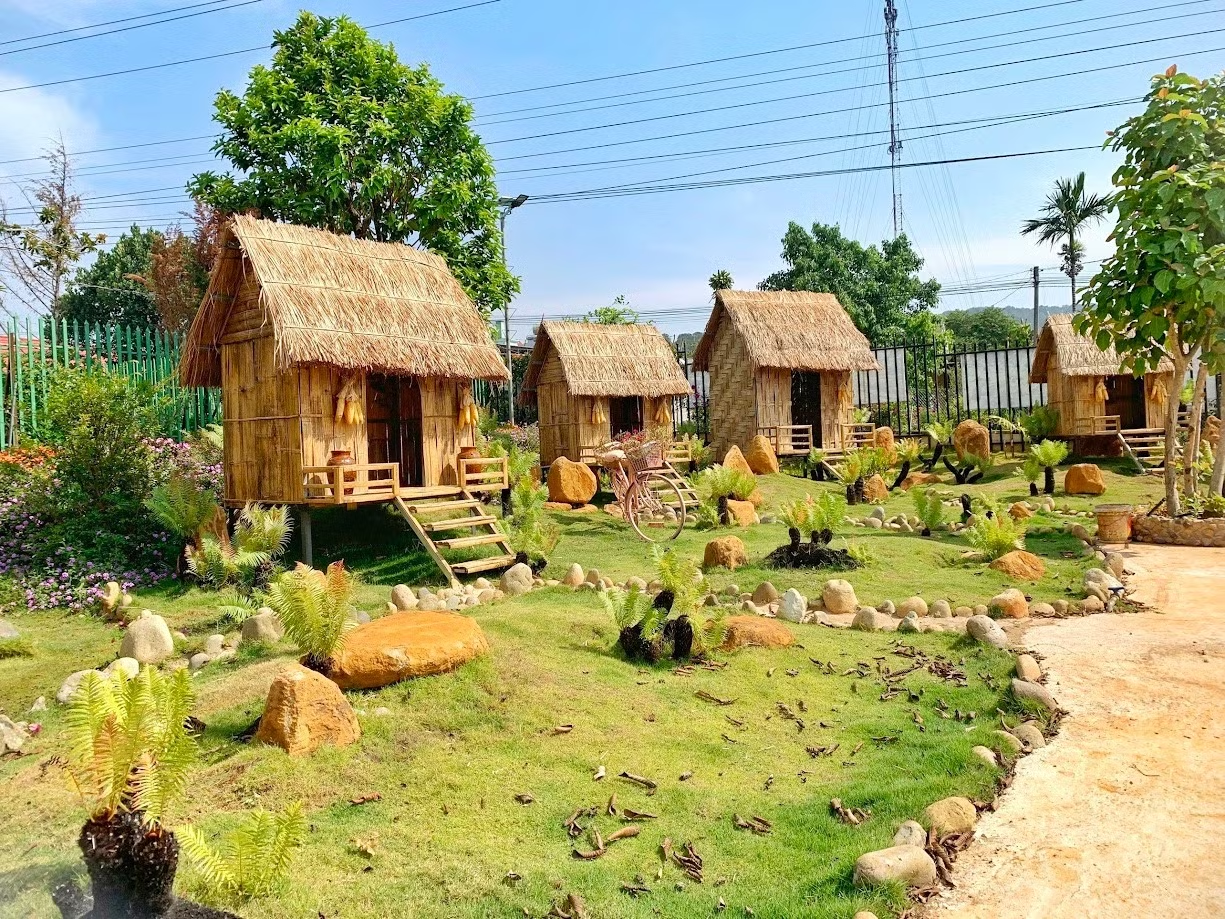
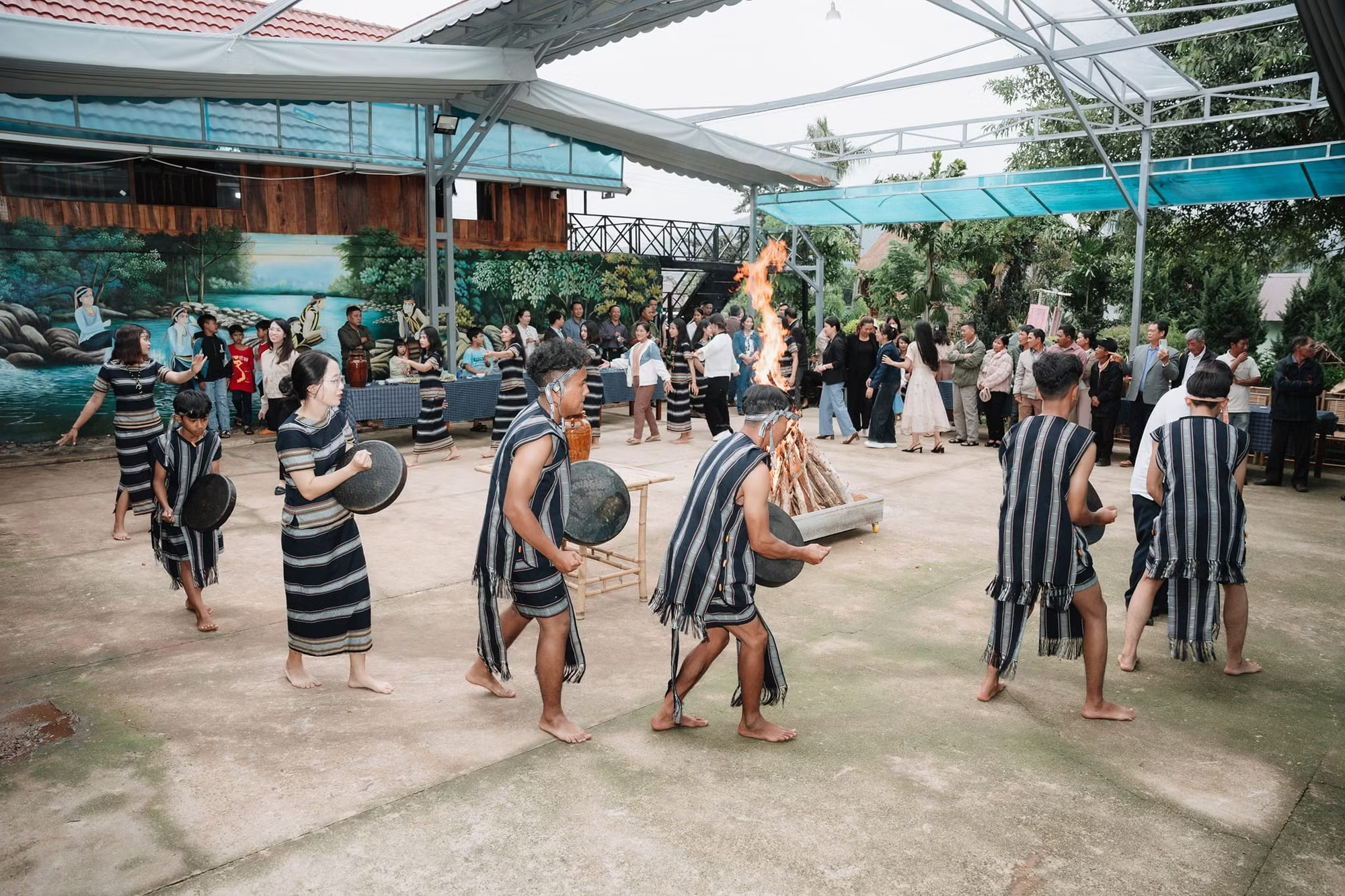
Outside, the landscape is designed to be close to nature: small streams, gardens, wildflowers, and accommodations modeled after traditional houses. All of this creates a "miniature village," where visitors can not only sightsee but also truly experience the local culture.
Ms. Nguyen Thi Thu, a tourist from Ho Chi Minh City, shared that the experience here was completely different. “It’s not just a tourist attraction; this place gives us the feeling of living with the culture. From drinking coffee and enjoying traditional food to sleeping in rustic houses, everything felt very authentic. In the evening, being immersed in the sounds of gongs and the traditional dance was truly impressive,” she said.
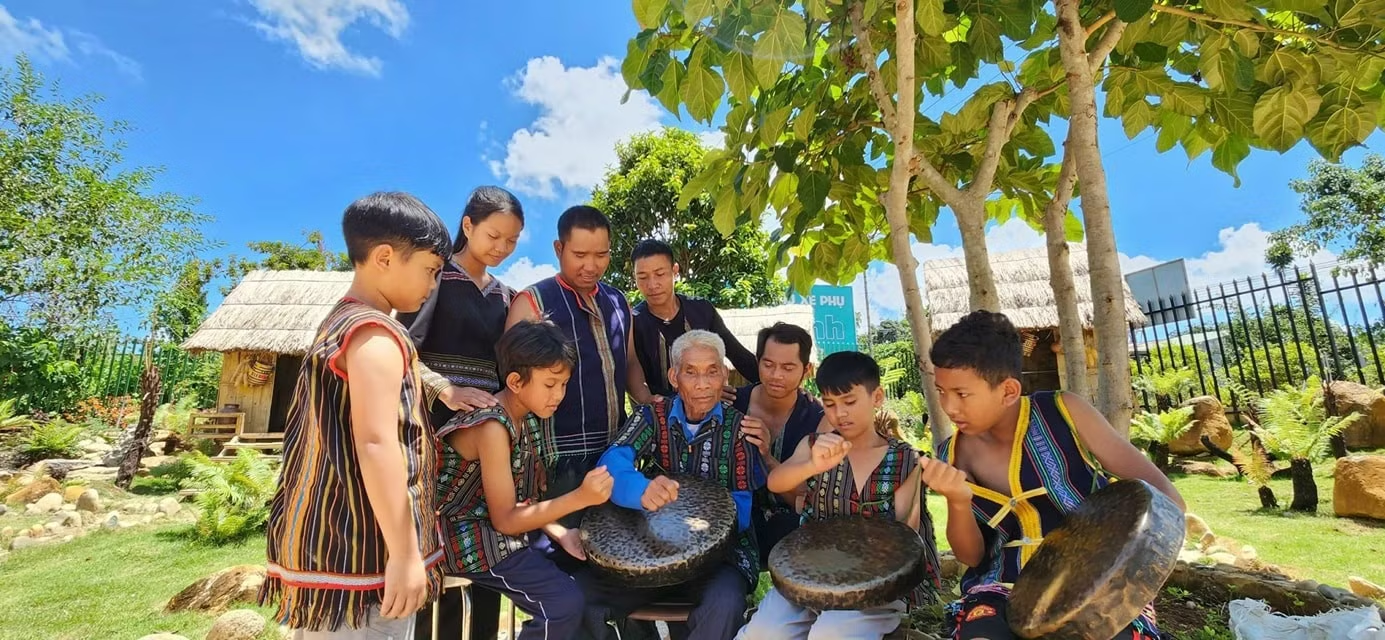
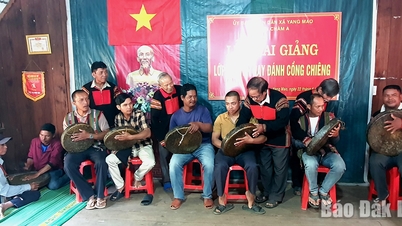
Notably, this model not only serves tourism but also contributes to the "revival" of community cultural activities. To preserve the traditional gong music of the Central Highlands, Ms. Hoa proactively gathers young people in the villages and invites village elders to teach them gong playing and traditional dance skills.
"These performances for tourists are also an opportunity for young people to practice and connect with their culture. Thanks to this, the sound of the gongs is not interrupted, but resonates further, following the footsteps of tourists," Ms. Hoa said.
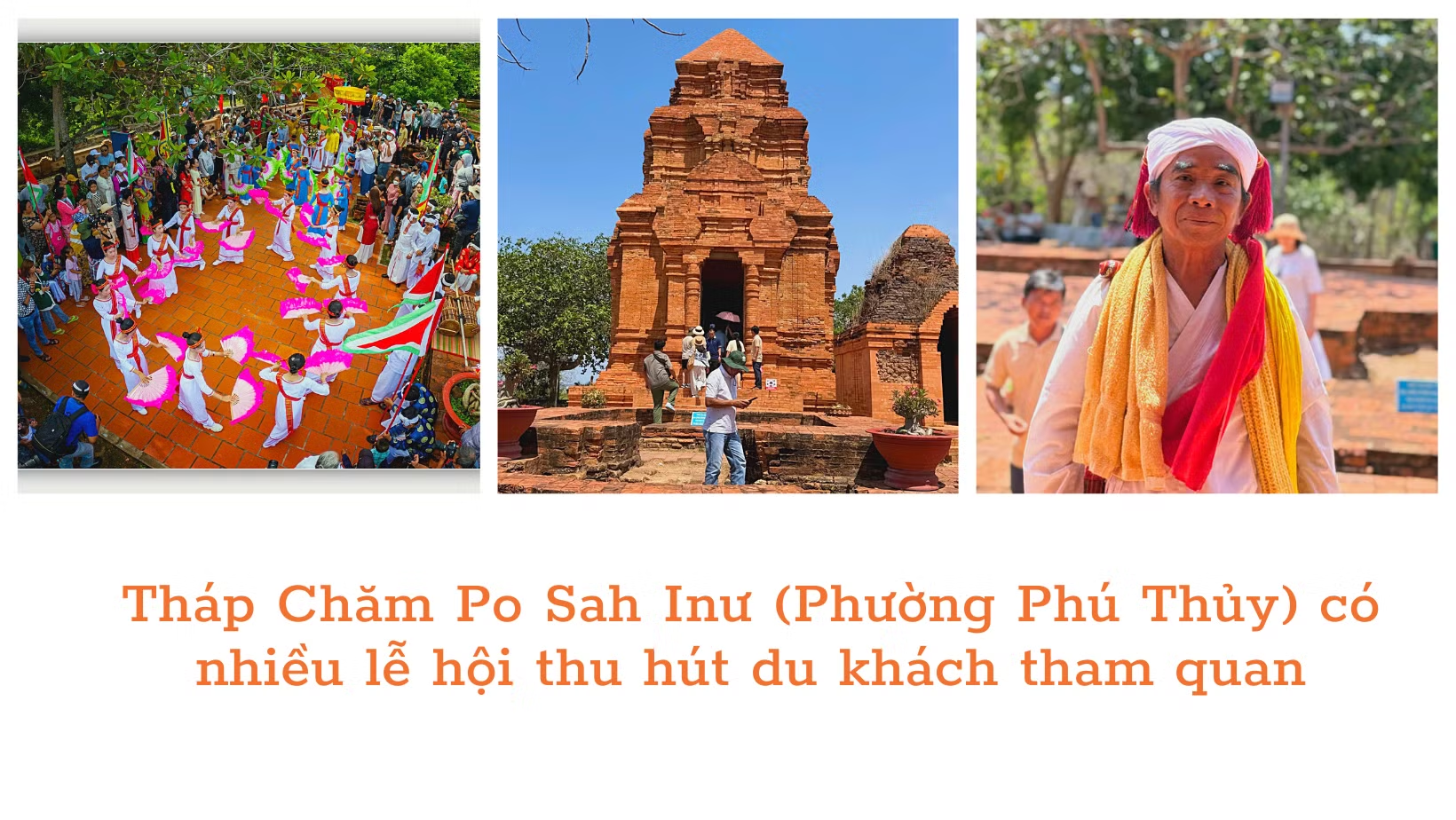
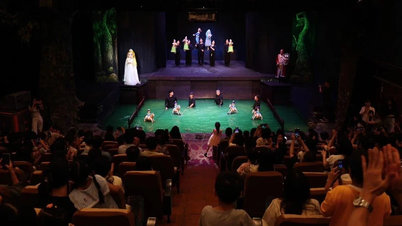
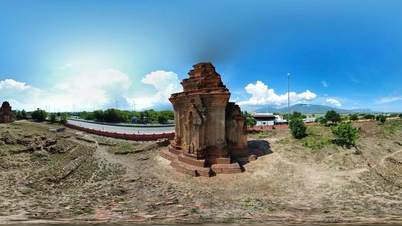
Meanwhile, in the Mui Ne coastal area, tourism businesses are also effectively exploiting cultural elements to innovate their products. Besides swimming, tourists can also visit the Po Sah Inư Cham Tower to learn about the history and beliefs of the Cham people; visit the fish sauce museum to discover the traditional craft; or enjoy art performances recreating the life of a fishing village.
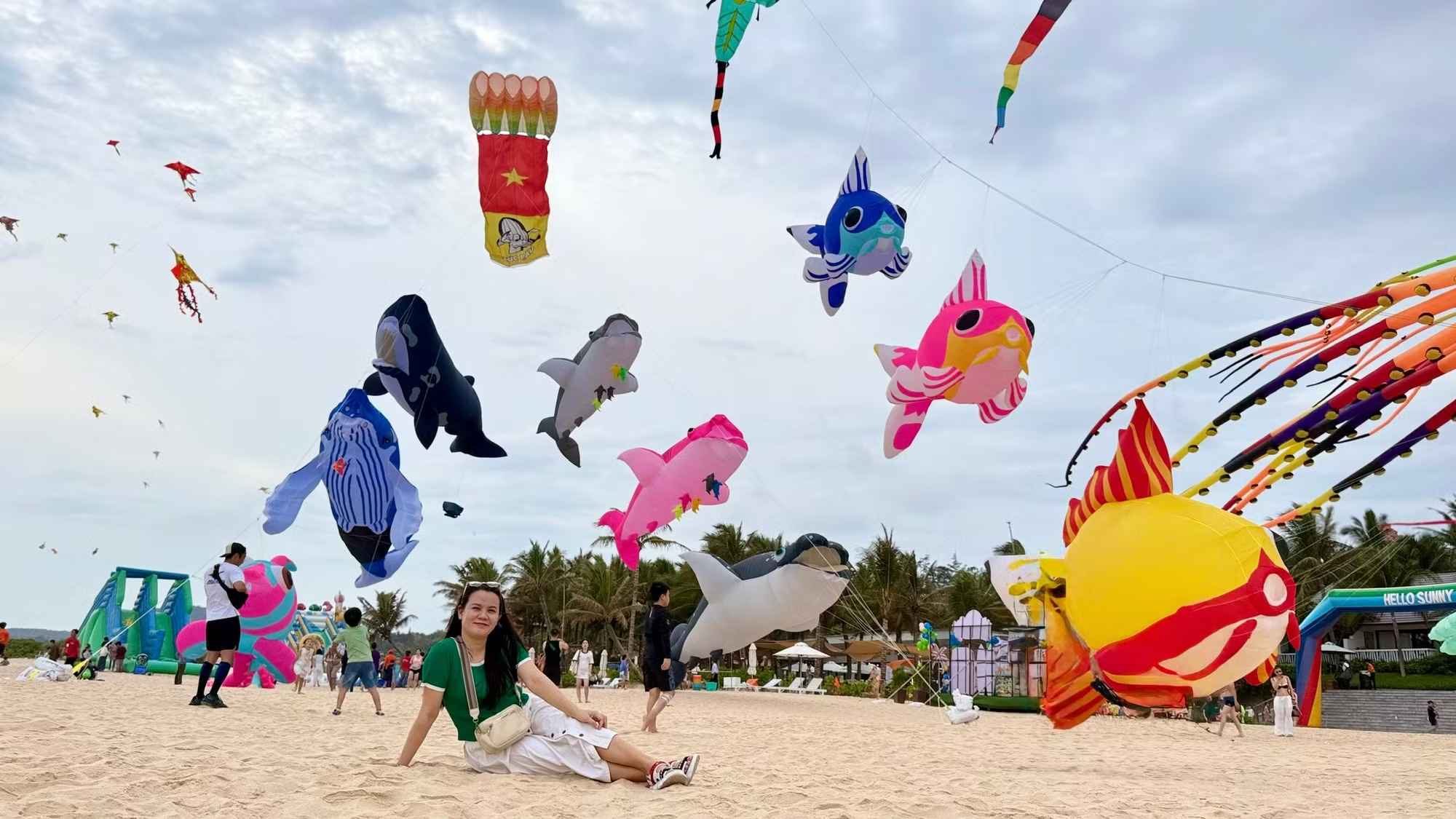
Carin, a Swedish tourist, shared that, in addition to the natural scenery, the cultural destinations made her trip more complete. "I enjoyed learning about how the local people live, work, and preserve their traditions," she said.
Based on this reality, Lam Dong province's tourism industry is aiming to connect distinctive cultural spaces into a series of inter-regional experiences. The idea of "One journey - Three experiences" was formed, connecting from the coast of Binh Thuan to the Lam Dong plateau, and then to the forests of Dak Nong. Each destination has its own unique character, creating a diverse and emotionally rich journey for tourists.
Linked to community livelihoods
Following the severe impacts of the Covid-19 pandemic and natural disasters at the end of 2025, Gia Lai's tourism industry is gradually recovering, alongside a restructuring strategy focused on sustainability and cultural identity.
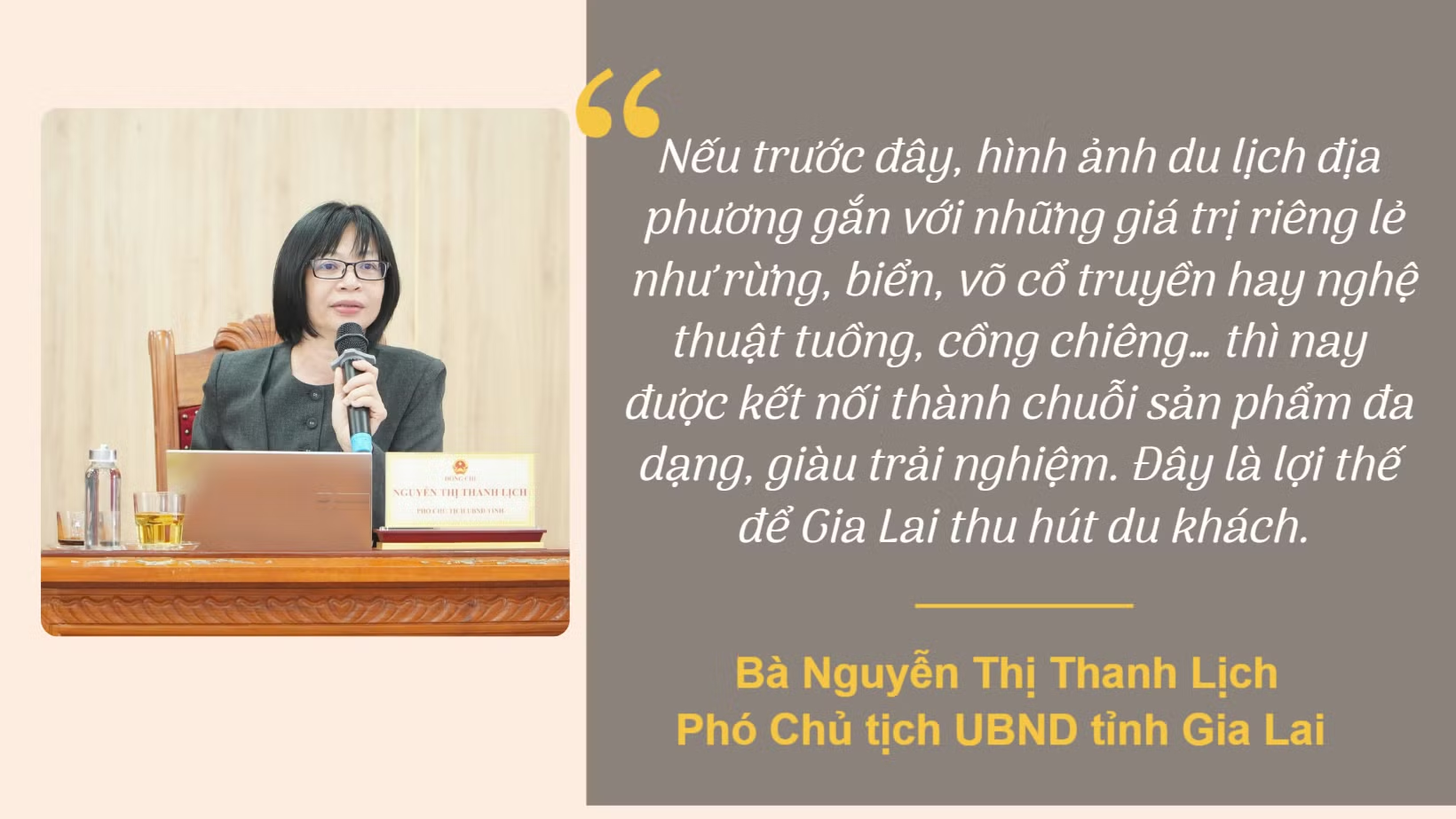
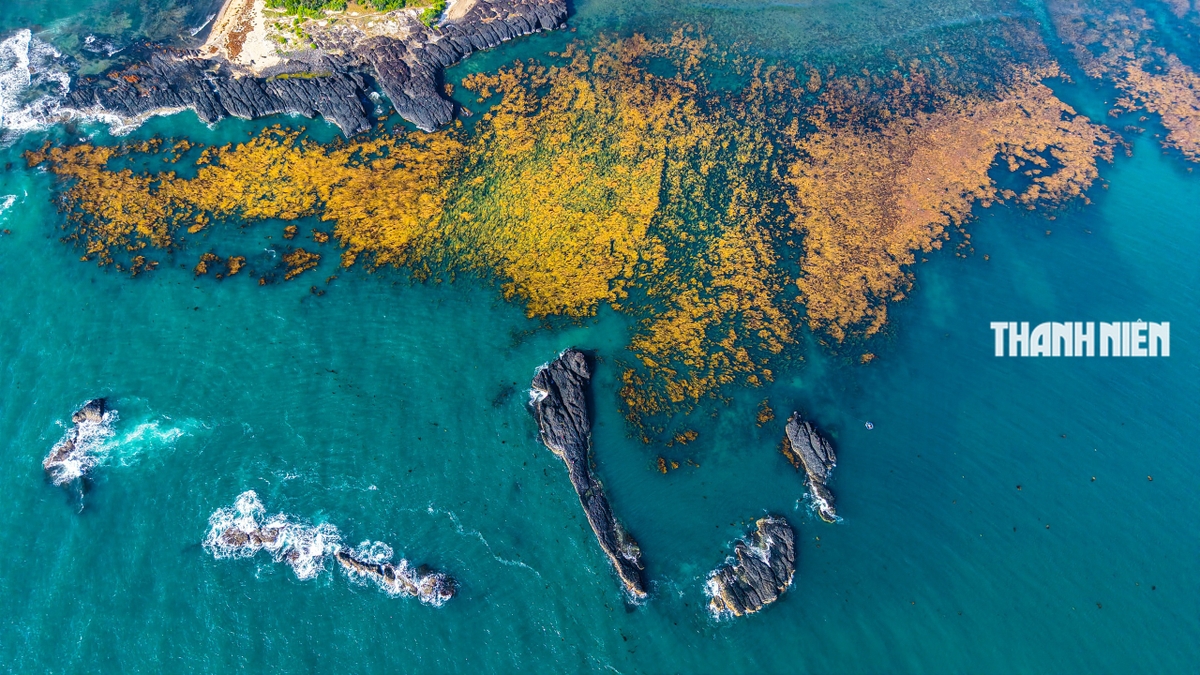
Ms. Nguyen Thi Thanh Lich, Vice Chairman of the Gia Lai Provincial People's Committee, said that after the merger, Gia Lai possesses a vast tourism space with a harmonious combination of forests and the blue sea. Previously, the image of local tourism was associated with individual values such as forests, seas, traditional martial arts, or traditional theater and gong music… but now these are connected into a diverse chain of products offering rich experiences. This is an advantage for Gia Lai to attract tourists, especially since the province will host the National Tourism Year in 2026, so the locality will learn professional tourism organization and operation methods from large investors and businesses.
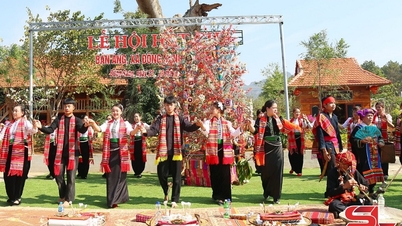
According to Ms. Lich, one of the province's overarching directions is to use culture as the foundation for tourism development. Unique values such as the cultural space of gong music and traditional martial arts continue to be preserved and promoted through specific projects, contributing to creating a distinct identity for the destination.
In addition, travel agencies are actively developing and improving tours and routes to serve tourists visiting Gia Lai. The province has supported the Gia Lai Tourism Association in developing new experiential products such as coffee tasting and coffee flower hunting. Diversifying tourism products not only helps extend the length of stay for tourists but also contributes to increasing the value of the experience and creating sustainable appeal for the destination.
Gia Lai not only focuses on products but also places great emphasis on its people. The locality is working to build an image of friendly and hospitable Gia Lai people in every commune and ward. Sincerity and openness are expected to become a "plus point" to help retain tourists for the long term.
A common approach in many localities is to place the community at the center of tourism activities. Ms. Huynh Thi Thu Sen, Vice President of the Gia Lai Tourism Association, said that many destinations in Gia Lai have been renovated and improved. In the context of rising travel costs and a slowdown in tourism demand, Gia Lai is seeking a new direction by exploiting its "sea-forest" advantages after the merger, creating a continuous experiential journey from the coast to the highlands.
Notably, when local people directly participate in tourism activities, they not only gain additional livelihoods but also become guardians and transmitters of cultural values. Areas like Op village and Kep village (Gia Lai Tay) with their beautiful scenery and pleasant climate are expected to become new highlights, contributing to the diversification of tourism products.
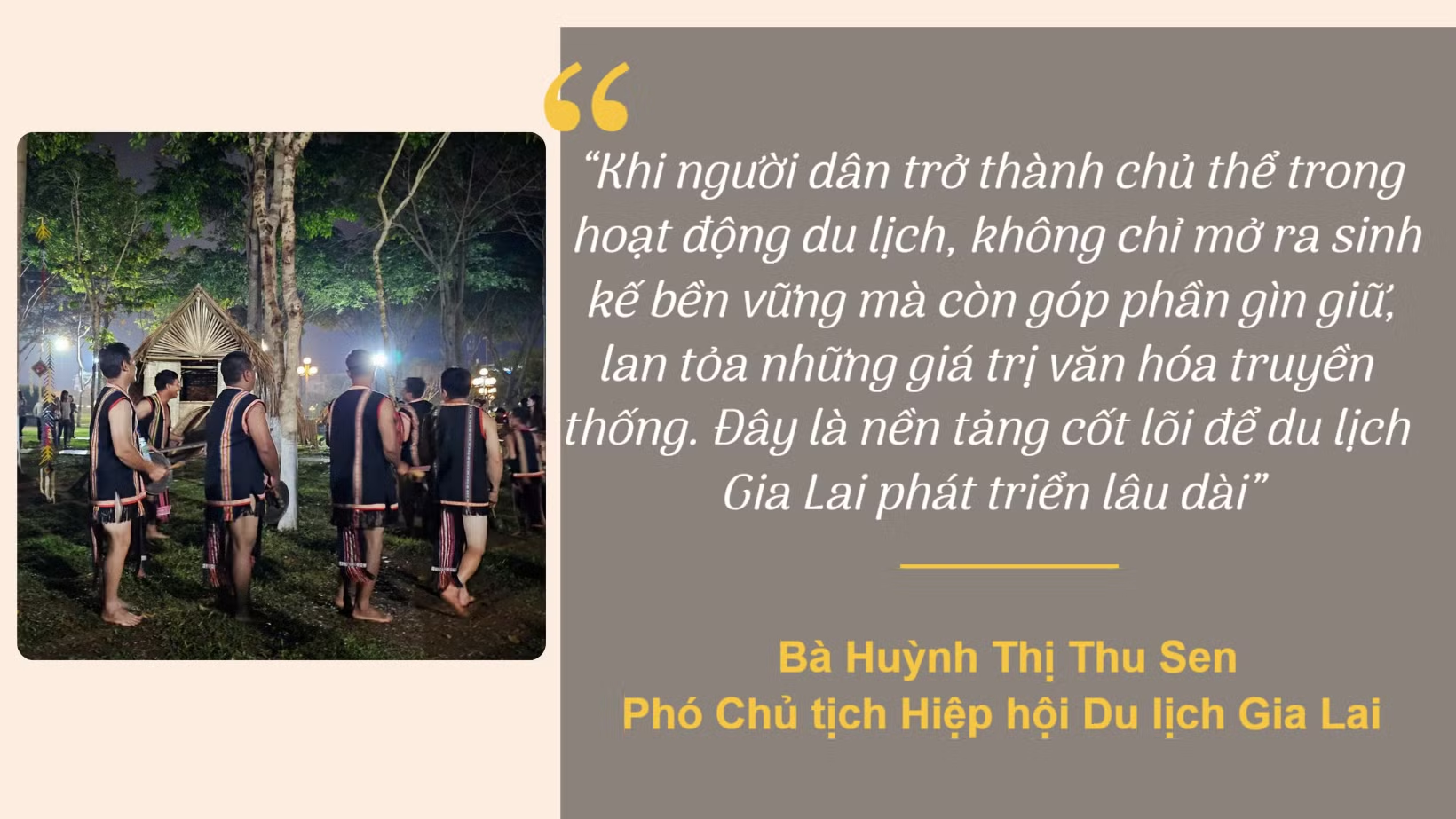
However, developing tourism based on culture also requires a balance. According to Ms. Thu Sen, for tourism to truly flourish, systematic investment is needed in destinations, especially community-based tourism, in a professional manner and operating year-round.
"When local people become the main actors in tourism activities, it not only opens up sustainable livelihoods but also contributes to preserving and spreading traditional cultural values. This is the core foundation for the long-term development of tourism in Gia Lai," Ms. Sen shared.
Mr. Nguyen Van Khoa, Chairman of the Lam Dong Provincial Tourism Association, believes that in the context of increasingly fierce competition, culture is a valuable "soft resource." Not only can it be recreated, but culture also brings long-term economic value if exploited correctly. More importantly, it is a way for each locality to affirm its identity and create its own mark on the tourism map.
Part 1: Unlocking "Soft Resources"
Part 2: Respecting and Preserving Identity
Source: https://giaoducthoidai.vn/ky-3-dong-luc-phat-trien-vung-post778330.html


![[Photo] Opening Ceremony of the National People's Council Conference on the Implementation of Directions and Tasks for the 2026-2031 Term](https://vphoto.vietnam.vn/thumb/1200x675/vietnam/resource/IMAGE/2026/05/28/1779939257690_ndo_br_bnd-1991-jpg.webp)


![[Image] Checking the security conditions at the exam site, ready for the 10th grade exam.](https://vphoto.vietnam.vn/thumb/1200x675/vietnam/resource/IMAGE/2026/05/28/1779943458889_z7872507660648-d764421a26e8cd7b61d70d142a48a685-jpg.webp)



























































Comment (0)