

According to the historical autobiography of Ms. Cong Thi Thu, Ms. Nguyen Thi An (1897-2000) was from Vinh Phuc (now Phu Tho province) and married into a family in Phu Thuong ward, residing at house number 6, alley 319, An Duong Vuong street. Thanks to her hard work, she and her family consistently achieved success in silk production, selling not only in Hanoi but also to foreign customers.
She had four children, including Mr. Cong Ngoc Kha (born in 1922) and Mrs. Cong Thi Su (born in 1930) - who later became a revolutionary and used the name Cong Thi Thu.
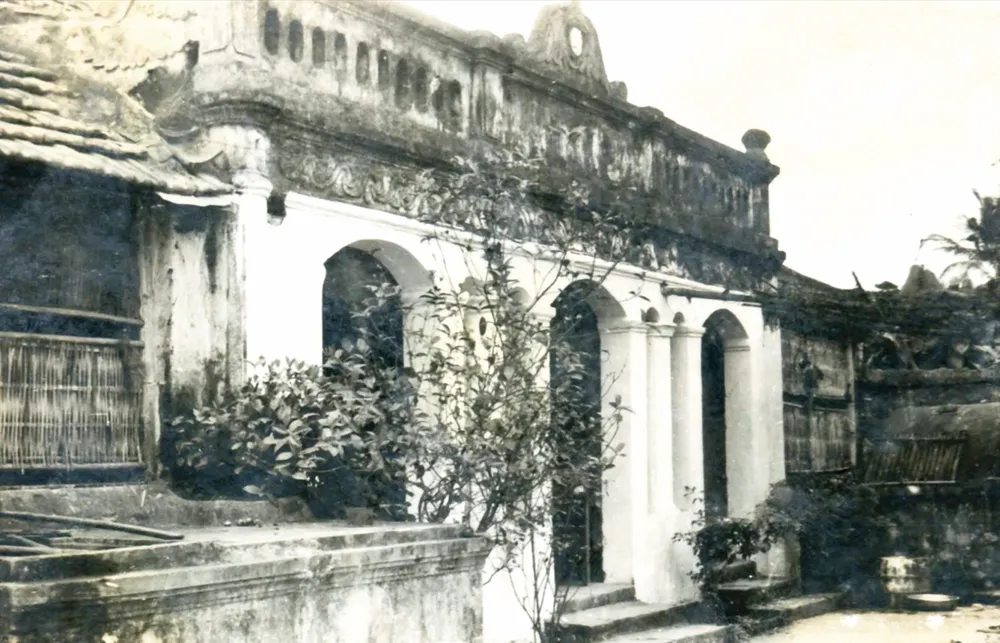
Around 1941-1942, Mrs. Tran Thi Sau, a special liaison for the Central Committee at the time, frequently visited Mrs. Nguyen Thi An's house to enlighten and build revolutionary bases. Mrs. Tran Thi Sau connected like-minded revolutionary individuals in Phu Gia village (including many relatives of Mrs. Nguyen Thi An) with revolutionary bases in the safe zone (ATK), forming a close and secret communication network.
Later, Mrs. Tran Thi Sau introduced Mrs. Nguyen Thi An's family to Comrade Hoang Tung (in charge of the Central ATK) so that Mrs. Nguyen Thi An's house could be used as a base for revolutionary activities. By the end of 1944, Mrs. Nguyen Thi An dedicated a room for Comrade Hoang Tung to live and work in, and from then on, her house became a revolutionary base in the ATK.
On the afternoon of August 23, 1945, Comrade Hoang Tung discussed with Mrs. Nguyen Thi An that the family should prepare to welcome a delegation of over 10 cadres returning from the resistance zone. That same day, Comrade Hoang Tung led the delegation to Mrs. Nguyen Thi An's house. Ho Chi Minh was introduced as "the senior elder," and was arranged to rest on a dignified wooden bed in the central room. "Throughout his stay at my house, the 'senior elder' was weak and tired, only able to eat porridge, sleeping little, and working until late at night at his typewriter and oil lamp on the long bench," Mrs. Cong Thi Thu recalled.
According to Comrade Truong Chinh's account, published in the Nhan Dan newspaper on August 28, 1988 (currently on display at the historical site), on the afternoon of August 25, 1945, Comrade Truong Chinh met with the "senior elder," and they worked together on the long bench of Mrs. Nguyen Thi An's family, before accompanying Uncle Ho back to the inner city.
In a conversation with a reporter from SGGP newspaper, Ms. Cong Thi Thu recounted: “From early morning on September 2, 1945, I led a group of young people to attend the rally. Our group arrived early and was seated near the grandstand, so we had a clear view of the people standing there. After the ceremony, I rushed home and hugged my mother, saying: 'Today, at Ba Dinh Square, I learned that the “senior elder” who visited our home a few days ago was none other than President Ho Chi Minh – the one who read the Declaration of Independence.’ My mother, with tears in her eyes, hugged me tightly and said it was a great blessing for our family.”
On November 24, 1946, President Ho Chi Minh visited the family of Mrs. Nguyen Thi An. That day, he shared a cordial meal with Mrs. Nguyen Thi An's family, and the copper tray used in the meal has been preserved by the family ever since. Because of its immense historical value, on December 3, 2021, Mrs. Nguyen Thi An's house was classified as a National Monument by the Ministry of Culture, Sports and Tourism.
On August 22nd, speaking at the inauguration ceremony of the renovated historical site where President Ho Chi Minh lived and worked at the house of Mrs. Nguyen Thi An, Mr. Bui The Cuong, Vice Chairman of the People's Committee of Phu Thuong Ward, Hanoi City, affirmed: "The historical site of Mrs. Nguyen Thi An's house is a source of pride for the people of Phu Thuong. It is not only a 'red address' for educating future generations about traditions, but also a typical cultural and historical destination of the capital."
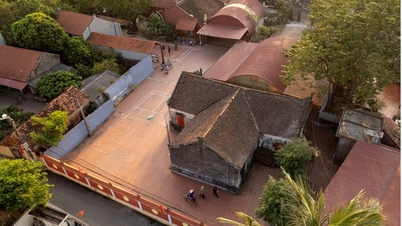
The house has three main rooms, and the two side rooms are exhibition spaces displaying photographs of generations of Vietnamese leaders and historical events of the country. Along with these are artifacts such as the copper pot Uncle Ho used in 1945, the wicker suitcase, and the typewriter he brought back from the Viet Bac war zone. In front of the house are four Chinese characters: "Minh nguyet thanh phong" (Bright moon, gentle breeze). All the artifacts are arranged according to historical progression.
To mark the 80th anniversary of President Ho Chi Minh's stay and work at the home of Mrs. Nguyen Thi An, on August 23rd, at the Pho Hang coffee shop (Hong Ha ward, Hanoi), Mr. Do Anh Duc (the owner) organized a gathering between Mrs. Cong Thi Thu, historian Le Van Lan, and customers of the shop.
The stories of the revolutionary autumn of 1945 from historical witnesses further instill in the younger generation a deeper understanding and pride in their national history.
Source: https://www.sggp.org.vn/ky-uc-ve-cu-gia-thuong-cap-post811284.html

















































Comment (0)