



We arrived at Loi Pass as the early summer sun stretched across the mountain slopes. From above, the road looked like a thread winding across the rocky terrain.
The Dong Thanh – Loi Pass road, nearly 10 km long, has existed through many historical periods and has become a familiar route for the people of Van Linh and Cai Kinh communes.
From historical paths to today's livelihoods
During the war, this was a marching route for the soldiers. We met Mrs. Luong Thi Cau, 102 years old, in Na Teng village, Van Linh commune. She slowly recounted: "Back then, the soldiers marched through the pass and asked to rest. The villagers cooked rice and provided water. I also joined the civilian labor force, carrying rice over the pass. The road was all rocks, very difficult to travel, but everyone tried their best."
In 1972, Loi Pass was still a link in the fuel pipeline serving the battlefield. Mrs. Luong Thi Xay, 71 years old, from Na Teng village, Van Linh commune, recalls: "Back then, I was only 17 years old. Along with the young people in the village, I transported sections of pipe up the pass for the officers to connect. It took half a month to complete."
Those remnants still remain, reminding us of a time when this road was associated with battlefield duties, before becoming a means of livelihood for the local people.
Now, the road continues to serve economic development. Along both sides of the pass, the rocky slopes have been covered with green custard apple orchards. People in the two communes of Van Linh and Cai Kinh have reclaimed the land, forming a production area of about 120 hectares.
However, the consumption of agricultural products still depends heavily on transportation conditions.
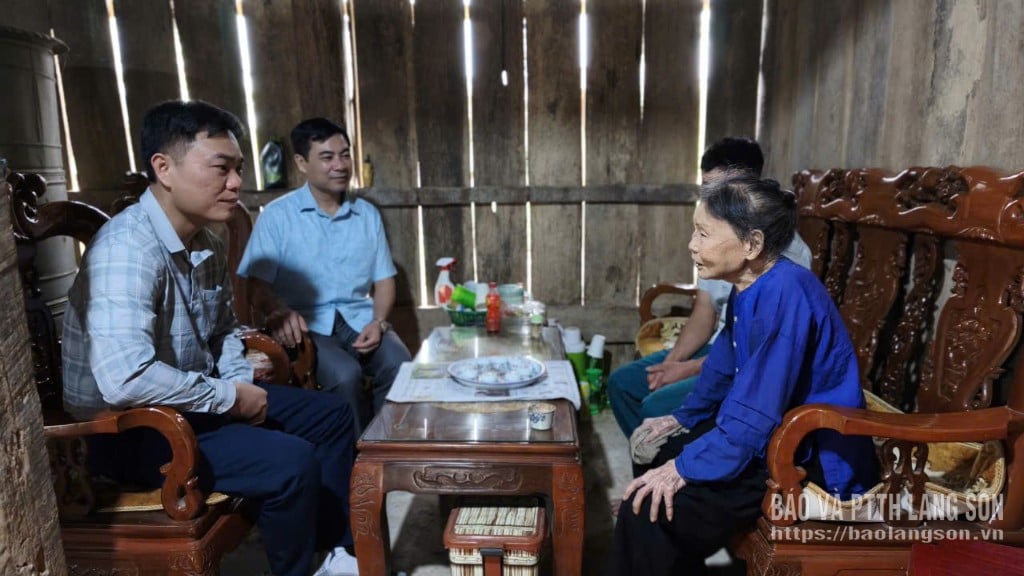
Mr. Le Van Tam, from Na Teng village, Van Linh commune, said: "Initially, my family only planted a few hundred trees as a trial. After seeing that the trees were suitable for the soil conditions, we gradually expanded the area. In 2025, my family earned 100 million dong from custard apple trees, but due to difficult roads and traders not being able to reach the area directly, sales still mainly depend on intermediaries, so prices are unstable."
This is also a common situation for many custard apple growers in the area: with limited road access and difficult transportation, the value of agricultural products is not exploited to its full potential.
We hope for investment in this road project soon.
Currently, most of the Dong Thanh – Loi Pass route remains a dirt and gravel road with a narrow surface and lacks comprehensive investment. The terrain is mainly mountainous and rocky, with steep slopes; during the rainy season, the road surface becomes slippery, posing a significant safety risk. Nearly 3 km of the section through Van Linh commune is still unpaved; towards Cai Kinh, many concrete sections are only 0.5–0.8 m wide, with trees obscuring the path. Particularly, from Km3+600 to Loi village, many sections are only passable on foot.
During each harvest season, locals have to transport custard apples by motorbike, making small trips and transferring them multiple times to a purchasing point located 3-4 km from the pass.
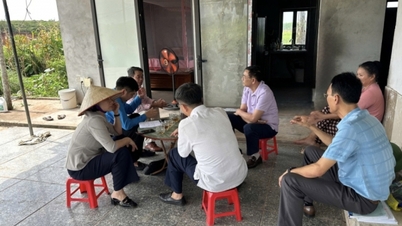
Mr. Luong Van Hau, Party Secretary and Head of Na Teng village, Van Linh commune, said: "The biggest difficulty remains transportation. Transportation has to be done in multiple trips, and trucks cannot reach the site directly, so costs increase and selling prices are often low."
To facilitate the transportation of custard apples down the pass, the locals contributed labor, money, and requested cement to temporarily pave some steep sections with concrete. However, due to the weak roadbed and prolonged heavy rain, many sections were damaged again after only a short time.
The road has been repeatedly raised by residents of the two communes at village and commune meetings. Local authorities have also compiled and proposed investment plans for upgrading it, but due to limited resources, it has not been possible to implement the plan comprehensively.

Mr. Ha Vu Khoi, Chairman of the People's Committee of Cai Kinh commune, said: "The road plays an important role in the production and lives of the people, especially in transporting agricultural products. However, due to limited resources, the locality cannot invest in upgrading it itself, so we request that higher authorities pay attention to supporting its upgrading."
Currently, the road serves more than 1,300 households in 10 villages, with nearly 4,000 residents in the two communes of Van Linh and Cai Kinh.
According to Mr. Trieu Van Thanh, Vice Chairman of the People's Committee of Van Linh commune, if upgraded, the road will shorten travel distances and reduce transportation costs for residents. This will facilitate the movement of goods and gradually connect the road with National Highway 1 and Provincial Road 243.
The route therefore serves not only production but also opens up possibilities for developing trade and tourism , while contributing to ensuring national defense and security in the region.

Following requests from local residents, in mid-March 2026, a delegation from the Provincial People's Council, led by Mr. Duong Xuan Huyen, Member of the Standing Committee of the Provincial Party Committee and Permanent Vice Chairman of the Provincial People's Council, along with representatives from various departments and agencies, conducted a direct survey of the Dong Thanh - Loi Pass route. After the survey, the delegation assessed that investing in a road connecting Van Linh commune with Cai Kinh commune was necessary.
According to the Department of Construction's report, two investment options have been proposed for the road: renovation and expansion combined with new construction along almost the entire 9.4 km stretch; or maintaining the existing concrete section from Km0 to Km3+600 and constructing the remaining 5.8 km section, which includes many sections through rocky mountainous terrain.
Following the survey, the working group instructed the relevant agencies to continue reviewing the current situation and researching suitable options; at the same time, they were tasked with completing the dossier and preparing a report to be submitted to the competent authority for consideration of the investment policy.
From a route associated with the war years to a means of livelihood today, the Dong Thanh - Loi Pass route remains closely linked to the daily lives of the local people. When transportation was still difficult, the potential of the entire region remained largely untapped.
A comprehensively developed road network is not only the aspiration of the people, but also a prerequisite for this area to truly become a driving force for development in the future.
Source: https://baolangson.vn/duong-dong-thanh-deo-loi-khong-chi-la-loi-di-bai-so-gop-30-4-5089092.html









































































Comment (0)