

According to data from the State Bank of Vietnam (SBV), the average interbank overnight VND lending rate (the main rate accounting for approximately 90-95% of transaction value) as of July 14th has decreased to 0.14% per annum. This is the lowest overnight interest rate since the end of January 2021.
Thus, the interbank overnight interest rate has now fallen to its historical low (0.1 - 0.2%/year) established in the second half of 2020.
Not only overnight interbank interest rates but also other short-term rates have fallen sharply.
On July 14th, interbank interest rates for two other key maturities, 1 week and 2 weeks, fell to 0.32%/year and 0.49%/year, respectively. These are both the lowest levels in the past 2.5 years.

Interbank interest rates for 1-month, 3-month, 6-month, and 9-month terms reached 2.3%/year, 4.46%/year, 6.84%/year, and 7.93%/year respectively as of July 14th.
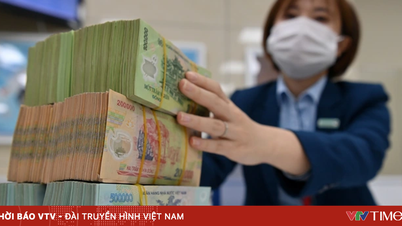
The rapid decline in Vietnamese dong interest rates in the interbank market indicates that liquidity in the banking system is quite abundant, and borrowing costs between banks are very low.
According to SSI Research, during the week of July 10-14, the State Bank of Vietnam only offered VND 15,000 billion through the 7-day term channel, but no members requested this liquidity support package. This indicates a surplus of liquidity.
Interbank interest rates fell sharply following two consecutive cuts to the policy interest rate by the State Bank of Vietnam in less than a month.
After four reductions, many policy interest rates have decreased by a total of 1.5 - 2 percentage points, erasing almost all of the gains from the two adjustments in 2022.
At the government press conference on the afternoon of July 4th, Deputy Governor of the State Bank of Vietnam, Dao Minh Tu, stated that the current lending interest rate for open market operations is only 4% per year, while the interest rate for OMO lending or lending to compensate for temporary shortfalls in the calculations of commercial banks, and overnight lending is only 5%.
These two loan amounts are largely due to the fact that commercial banks already have excess liquidity, making them less interested in the State Bank of Vietnam's loan because it is the last resort when commercial banks need funds from the State Bank of Vietnam.
According to the State Bank of Vietnam's leadership, commercial banks have excess liquidity due to slow credit growth.
According to data from the State Bank of Vietnam, credit growth across the entire economy reached only 4.73% by the end of June, significantly lower than the same period last year.

Source
![[Photo] General Secretary and President To Lam presides over a meeting on preparations for the review of one year of operation of the three-tiered government system.](https://vphoto.vietnam.vn/thumb/1200x675/vietnam/resource/IMAGE/2026/06/02/1780391821195_a1-bnd-4595-9717-jpg.webp)





























































































Comment (0)