


In the context of global strategic competition and technological transformation, rare earth elements are crucial mineral resources and vital "input materials" for cutting-edge technology industries. Efficient exploitation and utilization of these resources has become an urgent requirement to enhance technological self-reliance.
Future technological potential
Rare earth elements are becoming strategic materials for many cutting-edge technologies such as semiconductors, new energy, artificial intelligence, high-tech defense, and green transformation. In response to these new development demands, the Party and State have issued numerous policies and guidelines aimed at effectively exploiting, processing, and utilizing this special resource to serve scientific and technological development and enhance the self-reliance of the economy .
Resolution No. 57-NQ/TW of the Politburo and Decision No. 21/2026/QD-TTg of the Prime Minister clearly demonstrate the development orientation of strategic technologies based on mastering material resources. Recently, at a working session with the Central Policy and Strategy Committee and ministries and agencies on the orientation of materials technology development, General Secretary and President To Lam emphasized the requirement to develop the materials industry as a foundational and strategic industry; in which rare earth materials are identified as one of the priority areas in the coming period.
Many rare earth elements such as Nd, Pr, Dy, Tb, Y, and Eu play important roles in the production of high-performance magnets, energy storage batteries, LEDs, luminescent materials, and high-tech devices. Thanks to their unique physical and material properties, rare earths have been widely applied in the manufacture of magnetic materials, superconductors, special alloys, electronic components, exhaust gas catalysts, petrochemical technology, precision optics, and even high-tech agriculture.
Despite being identified as a special and important resource, Vietnam's rare earth industry has not yet developed to its full potential. The biggest limitation currently is the low rate of deep processing, with activities mainly limited to mining and primary processing; at the same time, a synchronized industrial chain from mining, extraction, refining to material production and high-tech application has not yet been formed… This is the biggest gap between resource potential and national technological capacity.
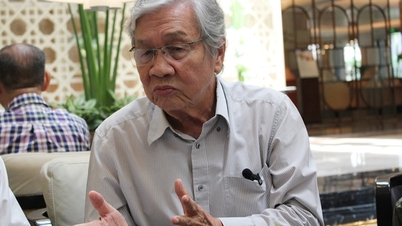
Sharing his views on this issue, Professor, Doctor of Science Dang Vu Minh, Academician of the Russian Academy of Sciences, former President of the Vietnam Academy of Science and Technology, stated: Vietnam is among the countries with relatively abundant rare earth resources, with reserves of approximately 20 million tons of oxides, distributed in various mines such as Dong Pao, Nam Xe, Muong Hum, Yen Phu, and coastal placer deposits. Over the years, the State has invested in research and development, and has guided the exploitation and processing of this strategic mineral resource. However, the rare earth industry has not developed to its full potential due to fragmented investment in science and technology, while the application of rare earths remains limited, resulting in low economic efficiency.
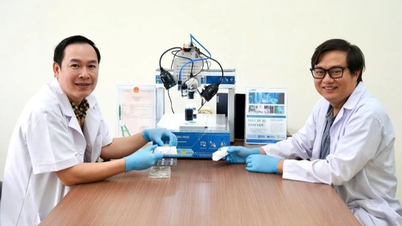
Professor, Dr. Tran Dai Lam, Director of the Institute of Materials Science (Vietnam Academy of Science and Technology), pointed out: A country that possesses rare earth elements but only extracts and exports them in the form of primary ore or concentrates is essentially only selling the lowest part of the value chain. The greatest value lies not in extraction, but in the technology for high-purity extraction and refining, manufacturing rare earth metals, magnetic alloys, luminescent materials, materials for batteries, semiconductor chips, and high-tech components. Therefore, if Vietnam continues to export raw resources, it will not only lose added value but also miss the opportunity to build strategic technological capabilities.
Building national strategic technological capacity
With its great potential, Vietnam has many conditions to develop a modern rare earth industry. The requirement is to shift strongly from a "resource exploitation" mindset to "building strategic technological capacity." Professor and Doctor Tran Dai Lam argues that the principle of "no raw material export" needs to be institutionalized into a clear national policy. This is not aimed at closing the market, but rather at ensuring that rare earth mining projects are linked to deep processing, the application of environmentally friendly technologies, increased localization rates, and a substantial contribution to the domestic materials industry ecosystem.
In the long term, it is necessary to develop a national key science and technology program on rare earths and strategic minerals, covering the entire value chain. Simultaneously, it is essential to establish deep processing complexes in advantageous locations such as Lai Chau, linked to the development of materials and high-tech industries. Furthermore, Vietnam needs to proactively engage in selective international cooperation to acquire modern extraction and refining technologies, but this must be accompanied by technology transfer, human resource training, and the establishment of domestic research facilities; avoiding a repetition of the model of exporting raw resources in exchange for imported equipment.
Resolution No. 68-NQ/TW on the development of the private economy will create an important impetus to encourage technology companies and technology startups to participate in the commercialization of high-tech materials, contributing to the formation of a rare earth industry. Therefore, it is necessary to develop the domestic market for rare earth materials through strategic industries such as energy storage batteries, electric vehicles, electronics, defense, and renewable energy.
To harness the potential of rare earth elements, Professor and Doctor of Science Dang Vu Minh believes that it is necessary to focus on training high-quality human resources, developing a team of experienced experts, and investing in the construction of key laboratories for rare earth technology. In particular, it is crucial to promptly develop a plan for the development of Vietnam's rare earth technology or industry for the period 2025-2030 as a basis for planning and developing a comprehensive system of rare earth mining, processing, and application technologies, gradually forming a national strategic technological capacity.
Source: https://nhandan.vn/lam-chu-tiem-nang-dat-hiem-phuc-vu-cong-nghe-mui-nhon-post966636.html
![[Photo] First session of the 14th Congress of the Vietnam Trade Union](https://vphoto.vietnam.vn/thumb/1200x675/vietnam/resource/IMAGE/2026/06/03/1780465947883_ndo_br_img-3852-jpg.webp)
![[Photo] General Secretary and President To Lam presides over a meeting with the Central Organizing Committee.](https://vphoto.vietnam.vn/thumb/1200x675/vietnam/resource/IMAGE/2026/06/03/1780482764658_a1-bnd-4741-3342-jpg.webp)

![[Photo] Secretary of the National Assembly Party Committee, Chairman of the National Assembly presides over the meeting of the Standing Committee and Executive Committee of the National Assembly Party Committee.](https://vphoto.vietnam.vn/thumb/1200x675/vietnam/resource/IMAGE/2026/06/03/1780480353201_ndo_br_bnd-2585-jpg.webp)





























![[Video] Sunset at Lap An Lagoon – Where the sun sets over the fishing nets](https://vphoto.vietnam.vn/thumb/1200x675/vietnam/resource/IMAGE/2026/05/31/1780192137701_beach-landscape-sea-water-nature-grass-745871-pxhere-com.jpeg)
























Comment (0)