

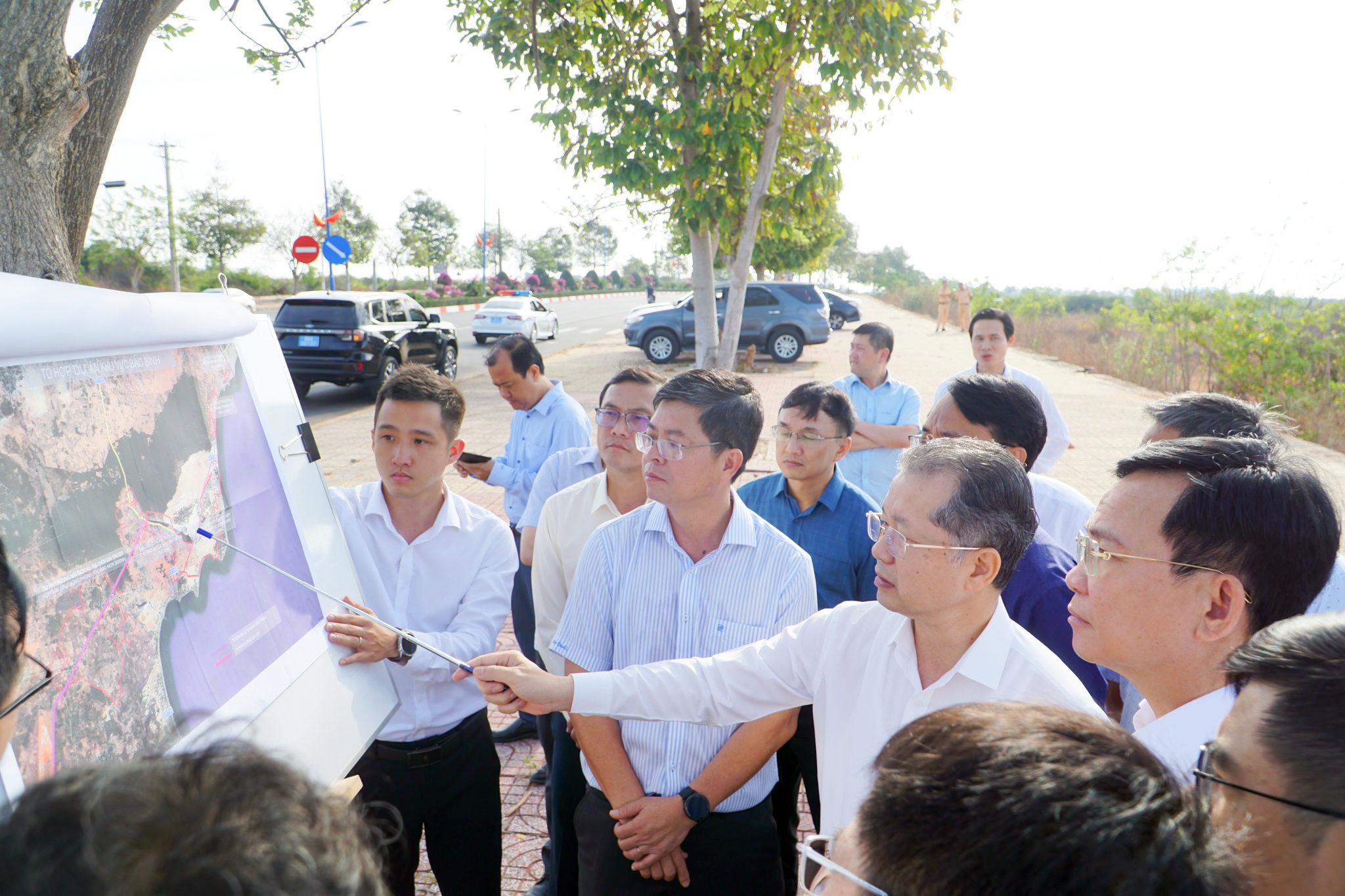
Growth poles form from the coastal zone.
After the merger, Lam Dong became the province with the largest natural area in the country, exceeding 24,000 km2. The province comprises 103 communes, 20 wards, and the Phu Quy Special Economic Zone, with a population of over 3.87 million people. Lam Dong borders the provinces of Dak Lak, Dong Nai, Khanh Hoa, Ho Chi Minh City, and the Kingdom of Cambodia, and has a coastline of 192 km.
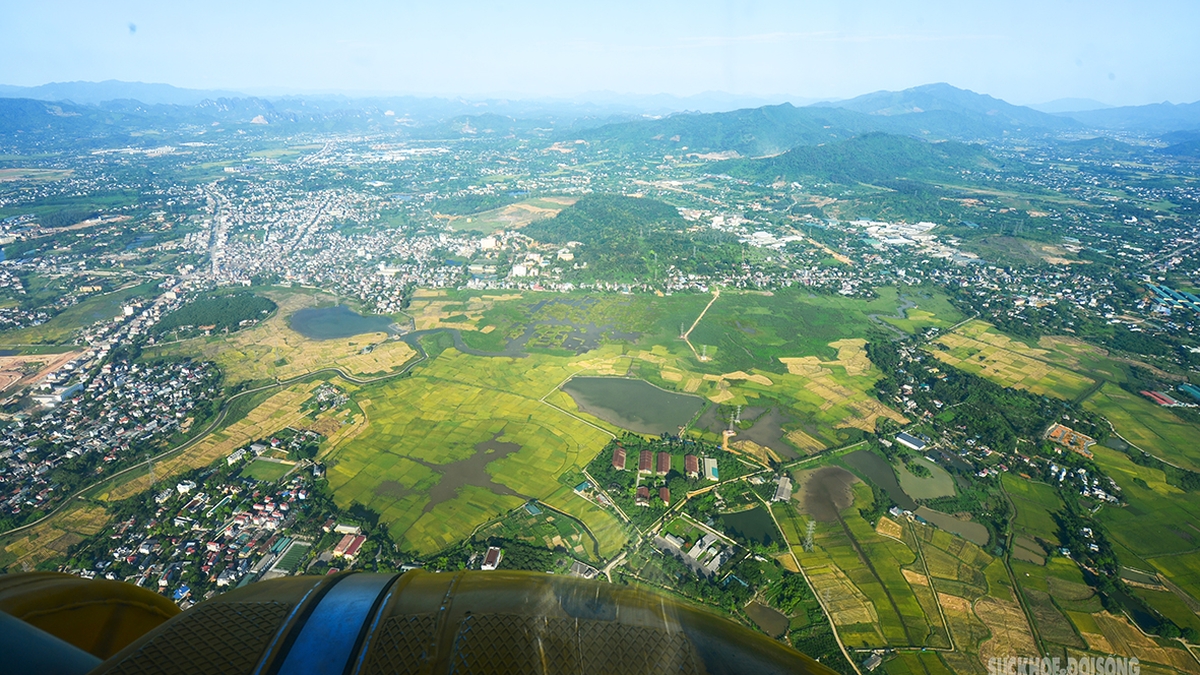
With its advantageous natural conditions, Lam Dong province's development strategy is not limited to its traditional strengths of high-tech agriculture and tourism, but is strongly expanding into the coastal area – a region with many favorable conditions for significant breakthroughs.
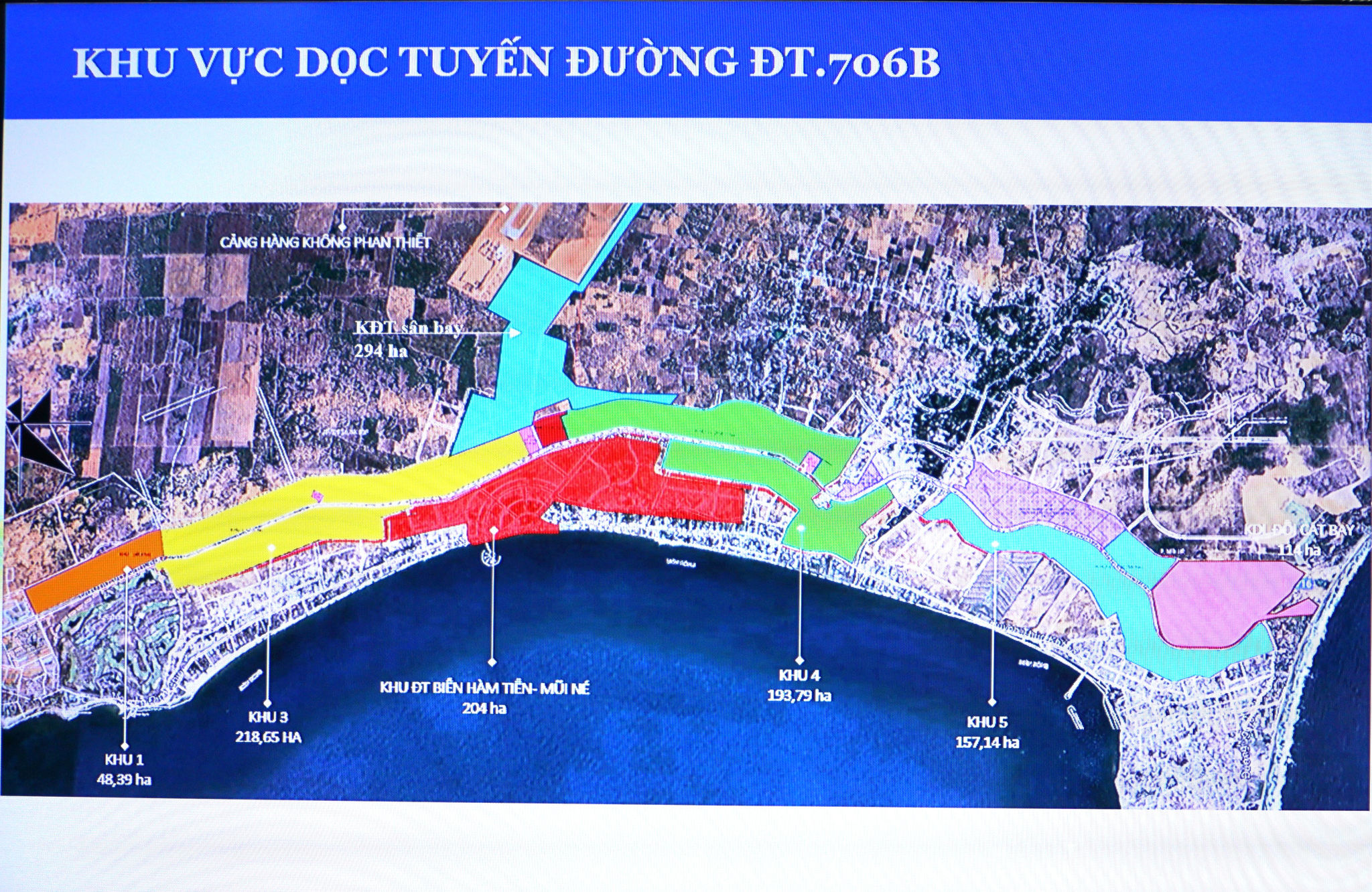
According to the review, the entire coastal area currently has 19 key projects with a total area of over 22,038 hectares, stretching from the DT706B road (Vo Nguyen Giap road), the Bung Thi - Ta Cu area to Hoa Thang. These projects focus on key sectors such as urban development, tourism, infrastructure, and services, with total investment reaching tens of thousands of billions of VND, playing a leading role in the development of the coastal space.
.jpg)
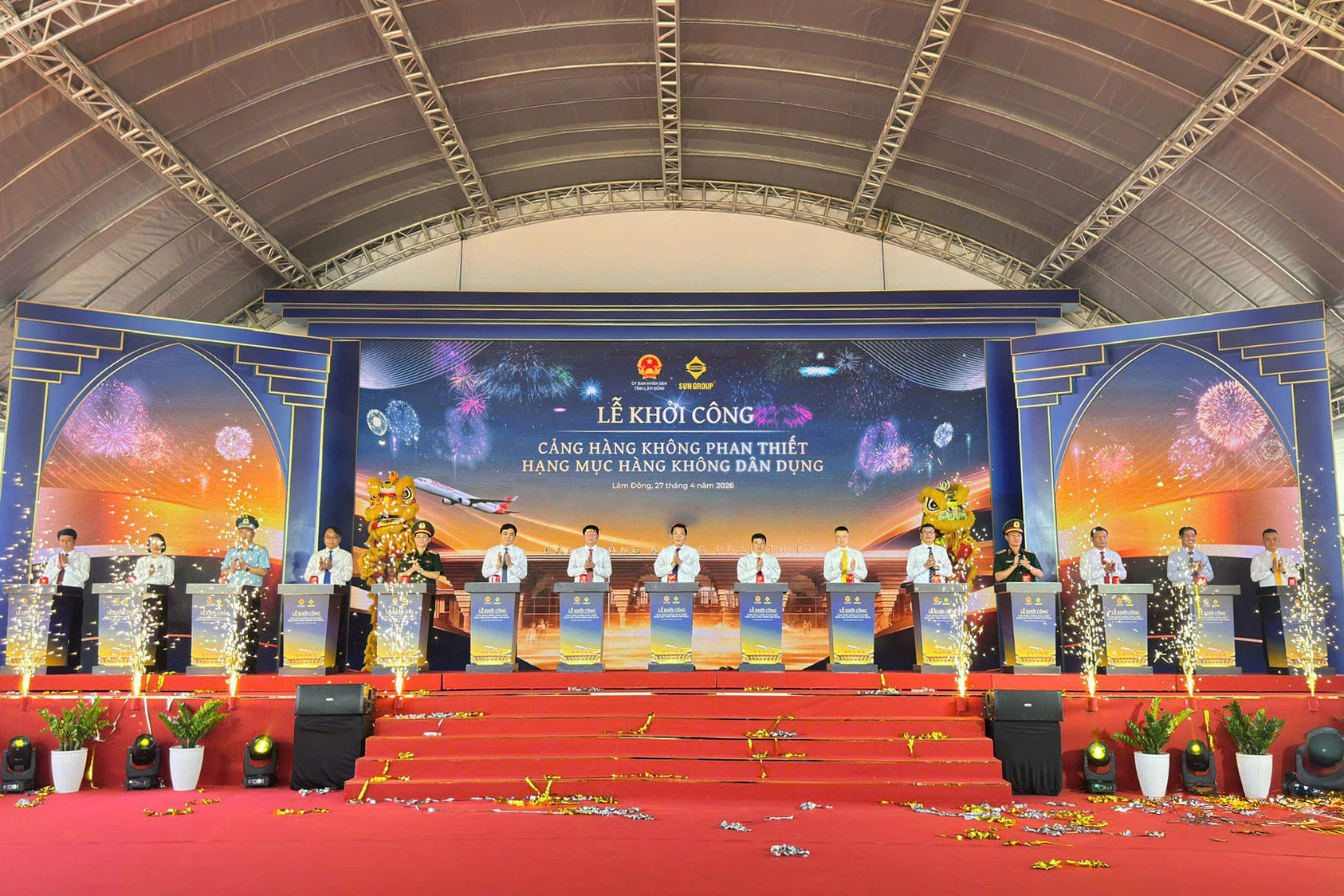
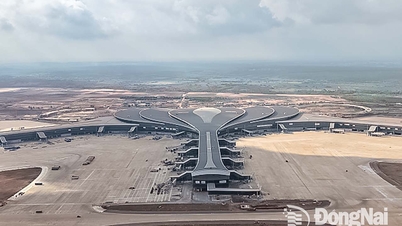
Notably, two projects have had investors selected with a total capital of over 16,000 billion VND, including the Phan Thiet Airport project (civil aviation component), which officially commenced construction at the end of April 2026.
In addition, four other projects are currently in the process of selecting investors with a total capital of over 61,600 billion VND, creating an important foundation for strong development in the coming period.
Alongside key development projects, the province is also urgently developing a plan to establish a Southern Coastal Economic Zone with an estimated scale of approximately 75,000 hectares (including about 67,000 hectares of land and 8,000 hectares of sea surface) spread across six communes and wards: Son My, Ham Tan, Tan Minh, Tan Hai, Phuoc Hoi, and La Gi.
With its large scale and ranking among the leading coastal economic zones in the country, this area is well-suited for development according to a multi-sectoral, multi-field integrated model. The economic zone is oriented towards the synchronized development of functional spaces: industry, seaports - logistics, urban areas - services, energy, and coastal tourism.
Specifically in the industrial sector, it is projected that between 11,987 and nearly 14,000 hectares of land will be developed for industrial parks and clusters, accounting for more than 18.6% of the total area, creating significant potential to attract large-scale manufacturing projects.
In particular, the Son My port area is planned to become an important logistics and seaport center, capable of receiving large-tonnage vessels with a cargo throughput of 5.8 - 6.4 million tons/year, connected to the LNG terminal and the Son My Power Plant with a capacity of 4,500 MW.
From the advantages of the plateau to the driving force of the maritime economy.
While Lam Dong was previously known as a center for high-tech agriculture and ecotourism characteristic of the highlands, now, with a focus on expanding development towards the sea, the province is gradually forming a new economic structure with close linkages between the highlands, coastal areas, industry, logistics, and services.
The formation of the Southern Coastal Economic Zone, linked with key projects, will create a breakthrough in attracting investment, playing a particularly important role in promoting socio-economic development and realizing the goal of double-digit growth; at the same time, it will create a new growth pole, strongly spreading to the entire provincial economy.
Member of the Central Committee of the Party, Deputy Secretary of the Provincial Party Committee, Chairman of the Provincial People's Committee Ho Van Muoi
This new development area is also synchronized by a regional transportation infrastructure system such as the North-South Expressway, National Highway 1A, National Highway 55, and coastal routes, creating favorable conditions for connection with major economic centers.
Located on the southern coastal area, the distance to Cai Mep Port is only about 60 km, Long Thanh Airport about 90 km, and the center of Ho Chi Minh City about 150 km, thus forming a strategic "gateway" connecting Lam Dong with the Southern key economic region.
During a recent working session with Lam Dong province, Nguyen Van Quang, Secretary of the Central Committee of the Communist Party and Chief Justice of the Supreme People's Court, stated that Lam Dong possesses enormous potential and advantages for rapid and sustainable development, especially in the fields of tourism, high-tech agriculture, and marine economy.
Comrade Nguyen Van Quang emphasized that the orientation of coastal development space, linked to key functional areas such as industry, urban areas, services, seaports - logistics, energy, tourism, and free trade zones, has affirmed the strategic vision of the provincial leadership and serves as a foundation for attracting large-scale, dynamic projects.
According to forecasts, the population of the southern coastal region will reach approximately 300,000 people by 2030 and around 400,000 people by 2050, leading to a significant demand for urban infrastructure, services, and high-quality human resources.
With clear direction and key projects underway, it is believed that the coastal economy will become a powerful growth pole for Lam Dong province; simultaneously enhancing competitiveness and affirming the province's position in the inter-regional and national economic network in the coming period.
Source: https://baolamdong.vn/lam-dong-mo-huong-ra-bien-dinh-vi-khong-gian-de-but-pha-439975.html
![[Photo] Ba Lang An Lighthouse - the "eye of the sea" amidst the "rock museum" of Quang Ngai province.](https://vphoto.vietnam.vn/thumb/1200x675/vietnam/resource/IMAGE/2026/05/29/1780038698840_anh-man-hinh-2026-05-29-luc-14-10-42.png)
![[Image] Pleasant weather helps students enter the 10th grade entrance exam with confidence.](https://vphoto.vietnam.vn/thumb/1200x675/vietnam/resource/IMAGE/2026/05/29/1780034401612_ngay-1-thi-lop-10-minh-duy-8-5009-jpg.webp)


































































Comment (0)