

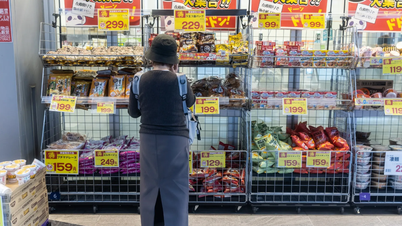
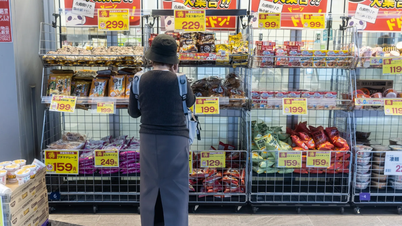
High food prices and a weak yen caused Japan's core consumer price index (CPI) to rise 3.1% in 2023.
Official figures released on January 19th showed that Japan's core inflation (excluding fresh food prices) last year was 3.1%, the highest since 1982. The main causes were rising food prices and a weak yen, making imports more expensive.
In December alone, core inflation was 2.3%, down from 2.5% in November. This means the rate has exceeded the Bank of Japan's (BOJ) 2% target for the 21st consecutive month.
The December figures also matched the forecasts of economists in a Reuters survey. According to Japan's Ministry of Internal Affairs and Communications, hotel room prices in Japan rose 59% in December, while electricity prices fell 20.5%.
December figures show inflation is trending downwards. Kanako Nakamura, an economist at the Daiwa Research Institute, said that compared to 2022, the rate of food price increases has slowed. Food prices here have risen sharply due to increased import costs, logistics, and domestic labor wages.
The inflation figures were released at a time when the Japanese government was urging businesses to raise wages ahead of annual talks between executives and unions. The report also came amid market expectations that the Bank of Japan would end its negative interest rate policy early this year.
"The question now is whether consumption can accelerate to keep prices rising. Weak consumption will drag inflation down, making the 2% target more difficult to achieve this year," said Yoshiki Shinke, an economist at the Dai-ichi Life Research Institute.
However, observers believe the BOJ will not change its monetary policy at next week's meeting. The benchmark one-year interest rate is currently -0.1%.
Ha Thu (according to Nikkei Asia Review, Kyodo News)
Source link








































































































Comment (0)