

According to Kaspersky's telemetry monitoring data, by 2025, the rate of spam had increased to an alarming level, accounting for 44.99% of total global email traffic.
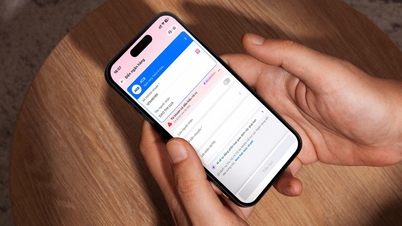
Notably, spam is no longer limited to simple advertising content but is increasingly becoming a tool for spreading sophisticated forms of cyberattacks. Many emails are used as a "cover" for online scams, phishing, or malware distribution, targeting both individual users and businesses.
Kaspersky alone recorded over 144 million malicious or potentially dangerous email attachments, an increase of approximately 15% compared to the previous year. These files are often disguised as invoices, transaction notices, contracts, or internal documents, making recipients easily unaware and prompting them to open the files.

Kaspersky predicts a 15% increase in malicious email attacks in 2025.
In its annual analysis report, Kaspersky predicts that spam and email phishing campaigns will continue to increase in 2026, with increasingly sophisticated and difficult-to-detect methods. A prominent trend is the combination of multiple communication channels: attackers use email as a starting point, then lure victims to messaging apps or direct phone calls to continue the scam, especially in fraudulent investment scenarios.
In addition, cybercriminals are increasingly using new forms of disguise, such as embedding QR codes in emails or PDF files to bypass traditional security systems and trick users into interacting with them on their mobile devices.
Some individuals are also exploiting legitimate platforms to spread spam, or reusing scams through calendar invitations sent to businesses.
Alarmingly, business email phishing (BEC) attacks are becoming increasingly sophisticated, with fake emails cleverly embedded into existing communication threads, making it difficult to verify authenticity.
According to Roman Dedenok, an anti-spam analyst at Kaspersky, one in ten attacks targeting businesses originates from email phishing, with many of these being targeted and prolonged attacks.
To minimize risks, Kaspersky recommends that users and businesses always be wary of unwanted emails, even if they appear to come from a trustworthy source; carefully check links before clicking on them and avoid opening attachments from unknown sources.
Source: https://nld.com.vn/lua-dao-qua-email-da-den-muc-bao-dong-196260225161337716.htm


![[Image] Nearly 125,000 Hanoi students completed the Literature exam for the 10th grade entrance exam.](https://vphoto.vietnam.vn/thumb/1200x675/vietnam/resource/IMAGE/2026/05/30/1780117233041_ndo_br_thiet-ke-chua-co-ten-2-png.webp)

















![[Video] Sunset at Lap An Lagoon – Where the sun sets over the fishing nets](https://vphoto.vietnam.vn/thumb/800x450/vietnam/resource/IMAGE/2026/05/31/1780187239592_2222.jpeg)










































![[Video] Sunset at Lap An Lagoon – Where the sun sets over the fishing nets](https://vphoto.vietnam.vn/thumb/402x226/vietnam/resource/IMAGE/2026/05/31/1780187239592_2222.jpeg)









































Comment (0)