Many policies support maintaining replacement fertility levels.
At a press conference announcing the President's Order on the laws recently passed by the 15th National Assembly at its 10th session, Deputy Minister of Health Nguyen Thi Lien Huong stated that the Population Law, effective from July 1, 2026, comprises 8 chapters and 30 articles. It inherits relevant provisions from the 2003 Population Ordinance and selectively references international legal experiences from several countries to develop new regulations suitable to Vietnam's specific conditions.
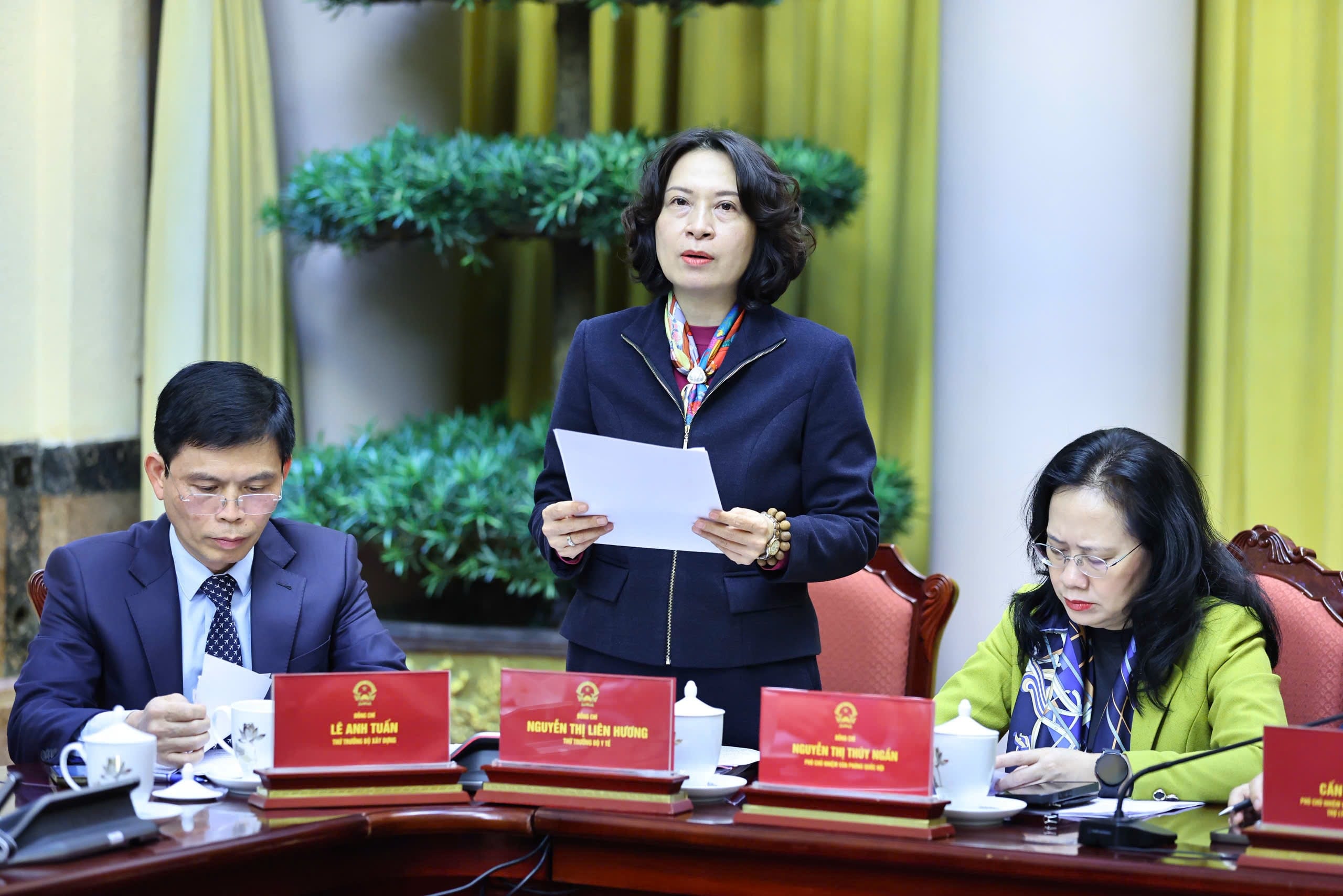
Deputy Minister of Health Nguyen Thi Lien Huong introduced the Population Law at the press conference announcing the President's Order on draft laws passed by the 15th National Assembly at its Tenth Session.
Compared to the Population Ordinance, the Population Law provides more specific regulations on policies and measures to improve population quality, communication, advocacy, and education on population issues. The state's population policies are regulations of a principled and general nature, reflecting the overall, macro-level policies of population work, closely adhering to the Party's guidelines and policies.
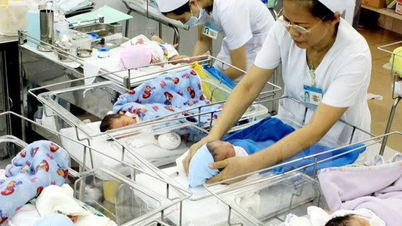
The law also includes provisions on maintaining replacement fertility levels, adapting to population aging, improving the quality of the population through a life-cycle approach, and ensuring long-term, fundamental, and feasible measures based on practical assessments and selection of international experiences.
Highlighting some new provisions of the Law compared to the regulations of the Population Ordinance, the Deputy Minister stated that the Law contains many regulations and policies on maintaining replacement fertility rates; minimizing gender imbalance at birth; adapting to population aging; and improving the quality of the population.
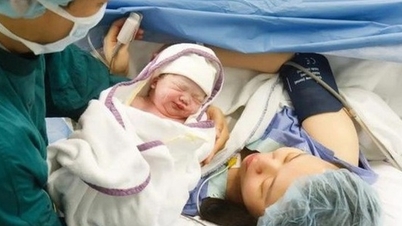
Specifically, the Law stipulates that, in the case of a second child, the maternity leave period for female workers is 7 months; for male workers, it is 10 working days when their wives give birth; financial support for childbirth for women from ethnic minority groups with very small populations; financial support for childbirth for women in provinces and cities with birth rates below the replacement level; financial support for childbirth for women who have two children before the age of 35; priority in purchasing, renting, or leasing social housing as prescribed by the law on housing for people with two or more children; and other measures as decided by the Government.
Providing further information on policies to maintain replacement fertility rates, Deputy Director of the Population Department, Ministry of Health, Pham Vu Hoang, said that in addition to framework, fundamental, and long-term regulations, the Law also includes specific provisions such as adding eligible groups to purchase, lease-purchase, or rent social housing according to the law on housing.
The Deputy Director of the Population Department stated that the Ministry of Health is currently advising the Government on the development of decrees and circulars to guide the implementation of the Law; and is coordinating with the Ministry of Construction to develop a Circular amending and supplementing Circular 05/2024/TT-BXD detailing some provisions of the Housing Law on the form of documents proving eligibility and conditions for receiving social housing support policies, expected to be completed before May 15, 2026.

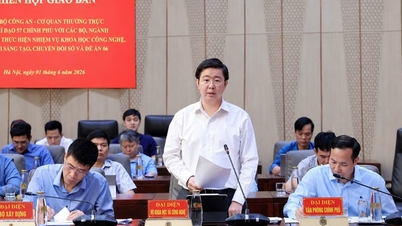
Scene from the press conference.
Proactively adapting to population aging.
Deputy Minister of Health Nguyen Thi Lien Huong also clarified that the new and groundbreaking regulation of the Population Law is the shift in the focus of population policy from "family planning" to "population and development". Content related to population and development is reflected in the aim of comprehensively addressing issues of population size, population structure, adaptation to population aging, improving population quality, and placing them in the context of their reciprocal impact on the socio-economic development of the entire country and each locality, contributing to ensuring sustainable national development.
To adapt to an aging population, the Law introduces proactive provisions for preparing for old age, such as: preparing in terms of health, finances, and psychology; participating in social insurance and health insurance; participating in learning and improving knowledge and skills to maintain physical and mental health and social functioning; and participating in activities supporting the care of the elderly.
The law stipulates the care of the elderly, developing diverse forms of elderly care, such as self-care, home care, and community care; it also regulates the development of human resources for elderly care based on the separation of formal and informal care groups, thereby establishing mechanisms to support and train elderly care skills appropriate for each group.
To improve the quality of the population, the Law encourages men and women to proactively access pre-marital counseling and health check-up services; and encourages prenatal and neonatal screening for congenital diseases for pregnant women and newborns according to the list of diseases requiring screening.
In order to promote decentralization and delegation of power, the Law stipulates the responsibility of provincial-level local governments to proactively and flexibly decide on a number of policies and measures to maintain replacement fertility rates, minimize gender imbalance at birth, and bring the sex ratio at birth back to a natural balance based on the population situation and dynamics.
The law also stipulates the responsibility of provincial-level local governments to proactively plan their budgets and determine the timing of implementing measures in accordance with the State Budget Law, taking into account the socio-economic situation of the locality.
Representatives from the Ministry of Health emphasized that population is a paramount factor in the cause of national construction and defense. Population and development have an organic and close relationship, serving as both goals and driving forces for each other. Population is central to, and serves as the goal and driving force of, socio-economic development, creating conditions for improving the quality of the population; therefore, the population factor is integrated into strategies, plans, and development programs at all levels.
Source: https://daibieunhandan.vn/luat-dan-so-giai-quyet-dong-bo-cac-van-de-ve-dan-so-va-phat-trien-10405002.html































![[Photo] Reception to welcome General Secretary and President To Lam and his wife on their State visit to the Philippines](https://vphoto.vietnam.vn/thumb/1200x675/vietnam/resource/IMAGE/2026/06/01/1780295488620_vna-potal-chieu-dai-chao-mung-tong-bi-thu-chu-tich-nuoc-to-lam-va-phu-nhan-tham-cap-nha-nuoc-toi-philippines-8798060-7855-jpg.webp)































































Comment (0)