

This is considered a crucial foundation for the capital city to transform its growth model, moving towards an innovative urban center and a national knowledge development hub.
Granting exceptional mechanisms to make Hanoi a center of innovation.
In the competitive landscape of major cities worldwide, science and technology, innovation, and digital transformation are increasingly becoming decisive factors in determining competitiveness.
In Hanoi – a city with a large concentration of universities, research institutes, technology companies, and high-quality human resources – the lack of flexible mechanisms over the years has been considered a barrier preventing its potential from being fully exploited.
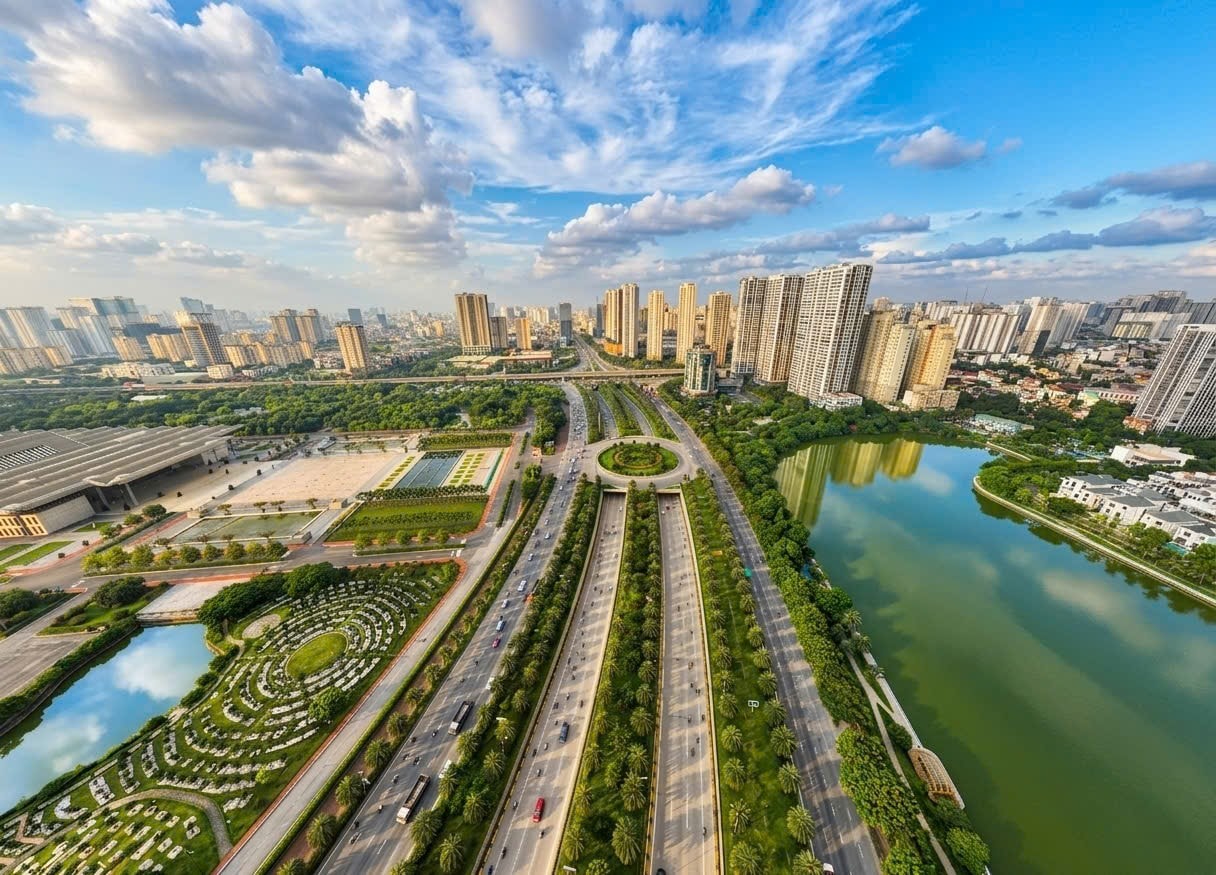
The Capital City Law of 2026 dedicates an entire chapter to the development of science and technology, innovation, and digital transformation, with many outstanding policies.
According to Article 18, Hanoi is authorized to develop its own mechanisms for the development of science and technology, the development of digital assets, the commercialization of research results, innovative startups, and the application of artificial intelligence in urban management.
A key feature is the controlled testing (sandbox) mechanism in Article 19. Accordingly, the city can allow testing of new technologies, business models, solutions, or products within a defined scope and timeframe, even in cases where existing legislation is not fully regulated or is no longer appropriate.
This opens up huge opportunities for fields such as artificial intelligence, digital data, fintech, smart logistics, healthcare technology, digital education , and smart transportation.
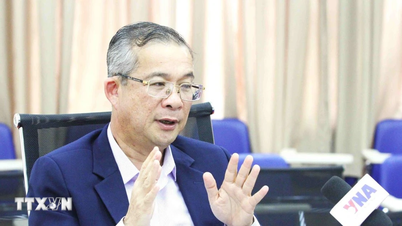
Highly appreciating the regulations on controlled testing mechanisms (sandboxes) in science, technology, and digital transformation, National Assembly representative Trinh Thi Tu Anh (Lam Dong delegation) said that this is a modern legislative approach, opening up a flexible space for Hanoi to experiment with new technology models and breakthrough fields.
Experts believe that, if operated effectively, Hanoi could become the country's "innovation laboratory," similar to the model adopted by many major cities around the world.
In particular, the Law allows the establishment of venture capital funds using the city budget to support the innovative startup ecosystem, accepting risks according to market principles.
This is a groundbreaking step because, in the technology field, failure is a normal part of the testing process, but without the right financial mechanisms, it is very difficult to form large-scale technology companies.
In addition, businesses are allowed to deduct research and development expenses when determining taxable income, up to a rate of 200% of the actual expenses.
Economic experts believe that this policy will create a significant incentive for businesses to invest more heavily in research and development of new products and technologies.
Article 20 also lays the foundation for Hanoi to develop a high-tech ecosystem, in which Hoa Lac High-Tech Park becomes a key national center for research, testing, training of high-tech human resources, and innovation.
Towards a higher quality of life
Beyond focusing on economic growth, the 2026 Capital City Law places people at the center of development.
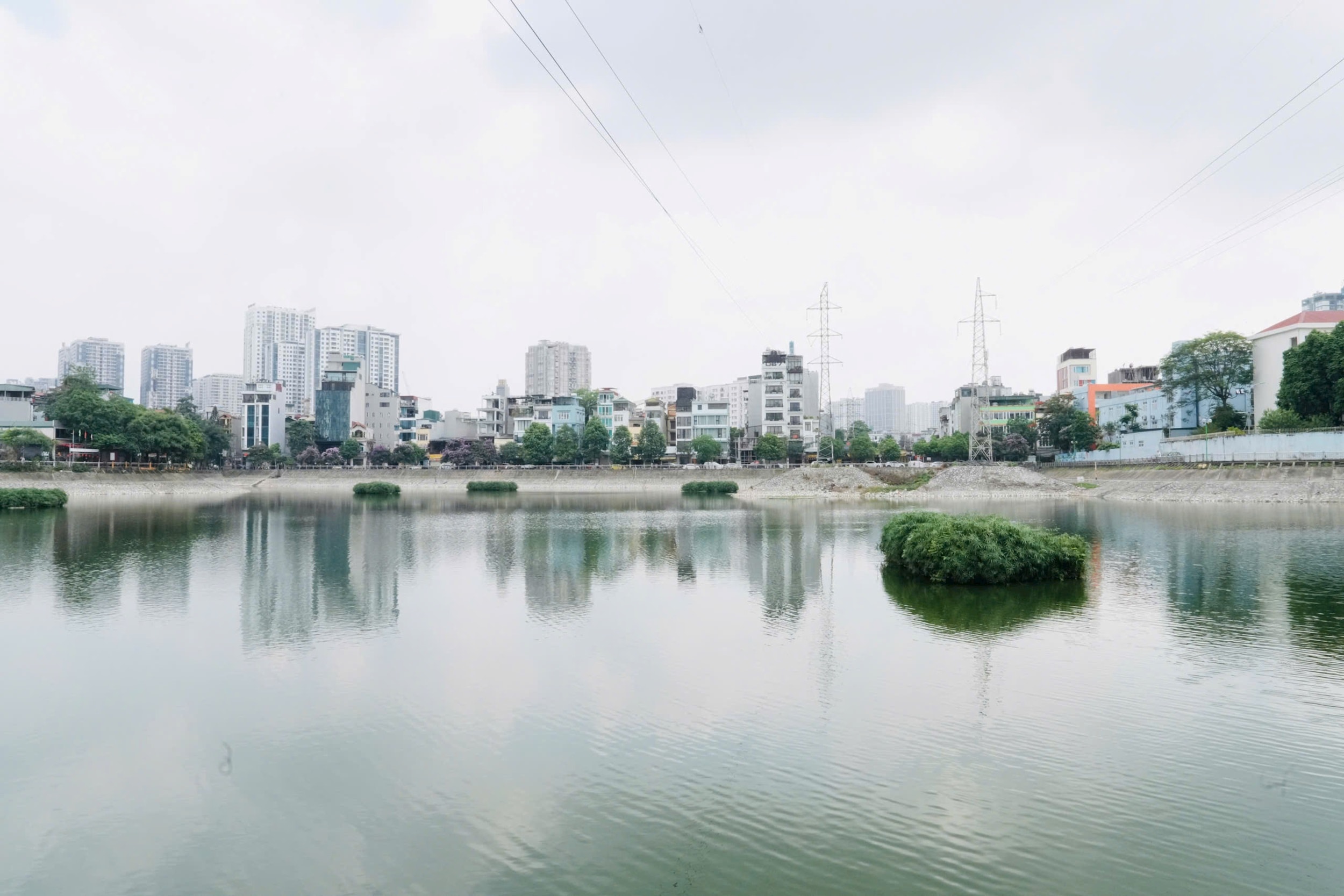
Articles 15, 16, and 17 introduce many new mechanisms concerning culture, education, health, and social welfare aimed at improving the quality of life for the people.
In the field of education, Hanoi has been given greater autonomy in building high-quality school models, establishing international educational partnerships, and developing specialized training programs tailored to the capital's development needs.
This gives the city more flexibility in building an advanced education system and training high-quality human resources.
In the healthcare sector, a notable new development is that the city can support the payment of medical expenses outside the scope of health insurance according to a suitable roadmap; develop telemedicine services, pre-hospital emergency care, and free routine health check-ups for residents.
Many experts believe that, if implemented effectively, this will be a major step forward in ensuring social security and public health care.
In addition, Hanoi is also empowered to develop expanded social welfare policies, increasing support for vulnerable groups, disadvantaged people, and areas facing difficulties.
In the cultural field, the Law opens up stronger mechanisms for preserving, restoring, and exploiting heritage values, while also developing the cultural industry – a sector considered a particular strength of Hanoi.
One of Hanoi's biggest obstacles over the years has been the issue of resources.
Developing metro systems, digital infrastructure, renovating old apartment buildings, addressing environmental issues, or investing in high-quality healthcare and education all require substantial capital.
Article 21 of the Law is considered a breakthrough in financial mechanisms as it allows Hanoi to retain additional revenue from the budget and gives it more autonomy in managing public finances.
The city is entitled to receive all of certain revenue streams such as land use fees, land lease fees, carbon credit transaction fees, and specific fees and charges issued by the City People's Council.
At the same time, Hanoi is allowed to issue local government bonds, green bonds, and infrastructure bonds to mobilize resources for key projects.
Notably, the Law also allows for more flexible budget management, proactively allocating funds to urgent or strategically important projects.
According to experts, the most important aspect of the new financial mechanism is not "how much money can be retained," but rather creating conditions for Hanoi to be more proactive in investment and development, and not miss out on growth opportunities.
It is clear that the 2026 Capital City Law is not only a new legal framework but also a long-term development strategy for Hanoi. From science and technology, innovation, education, healthcare, culture to finance and budget, the new mechanisms all aim towards a larger goal: building Hanoi into a smart, modern, livable city with international competitiveness.
The regulations on science, technology, innovation, and digital transformation in the 2026 Capital City Law have opened up a specific legal framework, facilitating the removal of administrative bottlenecks. The strong decentralization of power to the Hanoi government will enable policies to respond more quickly to development demands, limit the "legalization" of technical content, and create a flexible institutional space to attract investment, talent, and high-tech businesses.
National Assembly representative Tran Van Dang (Bac Ninh delegation)
Source: https://hanoimoi.vn/luat-thu-do-nam-2026-dong-luc-moi-de-ha-noi-but-pha-976466.html

![[Photo] Solemn bathing ceremony and Buddha procession in Hue](https://vphoto.vietnam.vn/thumb/1200x675/vietnam/resource/IMAGE/2026/05/31/1780228263543_1-jpg.webp)

![[Photo] Admire the coral "masterpiece" amidst the million-year-old heritage of Dak Lak province.](https://vphoto.vietnam.vn/thumb/1200x675/vietnam/resource/IMAGE/2026/05/31/1780221235105_anh-man-hinh-2026-05-31-luc-16-53-27.png)
![[Photo] The General Secretary, President and his wife begin their state visit to the Philippines.](https://vphoto.vietnam.vn/thumb/1200x675/vietnam/resource/IMAGE/2026/05/31/1780230559452_anh-man-hinh-2026-05-31-luc-19-28-11.png)















![[Video] Sunset at Lap An Lagoon – Where the sun sets over the fishing nets](https://vphoto.vietnam.vn/thumb/340x192/vietnam/resource/IMAGE/2026/05/31/1780192137701_beach-landscape-sea-water-nature-grass-745871-pxhere-com.jpeg)


![[Live] News program May 31st: Talented people today](https://vphoto.vietnam.vn/thumb/402x226/vietnam/resource/IMAGE/2026/05/31/1780229174610_ts.jpeg)


































![[Photo] Admire the coral "masterpiece" amidst the million-year-old heritage of Dak Lak province.](https://vphoto.vietnam.vn/thumb/402x226/vietnam/resource/IMAGE/2026/05/31/1780221235105_anh-man-hinh-2026-05-31-luc-16-53-27.png)





























Comment (0)