

2026 was once expected to be the year when robotaxis officially moved out of the testing phase and became a familiar part of American urban life. Major technology companies such as Alphabet's Waymo, Tesla, and Amazon's Zoox were all aggressively expanding their services with the ambition of making self-driving cars the future of passenger transportation.
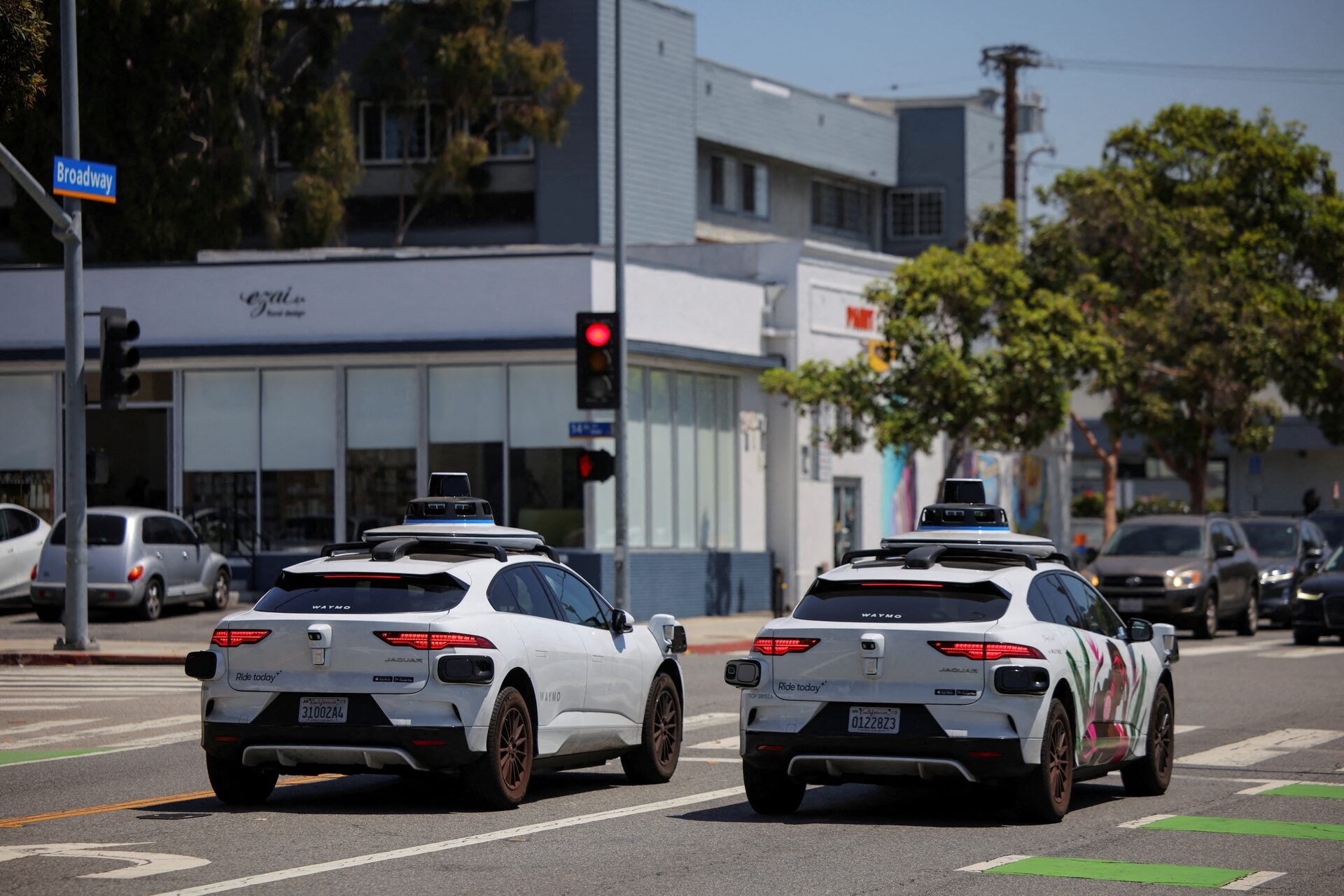
However, as more and more robotaxis appear on the streets, debates about the safety and adaptability of this technology are also increasing. This suggests that the biggest challenge facing the autonomous vehicle industry today may no longer lie in technical capability but in gaining the trust of society.
Waymo, the leading robotaxi provider in the US, currently operates services in 11 cities and aims to expand to 19 more in the near future. Tesla is also gradually rolling out robotaxi services in Texas, while many other companies such as Zoox, Motional, and Nuro continue to invest heavily in a sector that is projected to account for approximately 30% of the US ride-hailing market by 2032.
Behind these ambitious plans lies the belief of these companies that self-driving cars can be safer than humans. Waymo claims that comparative studies on the same routes show that self-driving cars have an 80% lower rate of accidents resulting in injuries compared to cars driven by humans.
But the actual operation is revealing a more complex picture.
In recent months, robotaxis have repeatedly appeared in police reports, regulatory investigations, and on social media. Some self-driving vehicles have been found stuck in flooded areas, struggling to navigate construction sites, or obstructing emergency vehicles in unusual situations.
Most of these incidents did not have serious consequences. However, they highlighted a core problem in the autonomous vehicle industry: the ability to handle rare but high-risk situations, often referred to by engineers as “exceptional situations.”
In fact, this is the most difficult problem for artificial intelligence in the field of transportation. The system can learn from millions of kilometers of normal driving data, but it is very difficult to predict every unexpected situation that may occur on real roads.
The debate about robotaxis is therefore not just a story for the transportation industry. It reflects a broader question being raised about artificial intelligence.
While AI has proven its ability to create content, analyze data, or support decision-making in the digital environment, giving AI control over a moving vehicle in real life is a completely different step. Mistakes in the digital environment can be corrected, but mistakes on the road can directly affect human lives.
The difference between how engineers and the public perceive risk is also becoming a significant challenge for the robotics industry. For businesses, success is measured by reducing the number of accidents per kilometer operated. But for the public, even a single unusual incident can raise doubts about the safety of the entire system.
The paradox lies in the fact that a technology that can help reduce the total number of traffic accidents still faces strong opposition if its flaws receive more public attention than everyday human errors. This is also why individual incidents involving robotaxis often have a much larger social impact than their actual significance.
These concerns are beginning to influence policy decisions. Some localities in the U.S. have considered implementing stricter regulations on robotaxi operations, while regulators continue to closely monitor the deployment of this new technology.
It's noteworthy that even the most optimistic have become more cautious. Billionaire Elon Musk recently admitted that robotaxi still struggles in many atypical traffic situations, from construction zones to unexpected changes in routes.
Nevertheless, the trend towards self-driving cars is almost irreversible. The rapid advancement of artificial intelligence is helping businesses train systems more effectively, while also expanding their ability to handle complex real-world situations.
However, the history of technological development shows that success is not determined solely by technical capability. Commercial aircraft, electronic payments, and online transactions all require years to build user trust before widespread adoption.
Therefore, the competition in the robotics industry in the coming years may not just be a race for algorithms or data. More importantly, it will be a race to win the trust of society in a generation of technology that is gradually moving away from computer screens to be present in daily life.
Source: https://hanoimoi.vn/robotaxi-van-mac-ket-truoc-rao-can-niem-tin-976474.html

![[Photo] The General Secretary, President and his wife begin their state visit to the Philippines.](https://vphoto.vietnam.vn/thumb/1200x675/vietnam/resource/IMAGE/2026/05/31/1780230559452_anh-man-hinh-2026-05-31-luc-19-28-11.png)
![[Photo] Admire the coral "masterpiece" amidst the million-year-old heritage of Dak Lak province.](https://vphoto.vietnam.vn/thumb/1200x675/vietnam/resource/IMAGE/2026/05/31/1780221235105_anh-man-hinh-2026-05-31-luc-16-53-27.png)
![[Photo] Solemn bathing ceremony and Buddha procession in Hue](https://vphoto.vietnam.vn/thumb/1200x675/vietnam/resource/IMAGE/2026/05/31/1780228263543_1-jpg.webp)

















![[Video] Sunset at Lap An Lagoon – Where the sun sets over the fishing nets](https://vphoto.vietnam.vn/thumb/340x192/vietnam/resource/IMAGE/2026/05/31/1780192137701_beach-landscape-sea-water-nature-grass-745871-pxhere-com.jpeg)

































![[Photo] Admire the coral "masterpiece" amidst the million-year-old heritage of Dak Lak province.](https://vphoto.vietnam.vn/thumb/402x226/vietnam/resource/IMAGE/2026/05/31/1780221235105_anh-man-hinh-2026-05-31-luc-16-53-27.png)































Comment (0)