

1. The global trend of digital transformation leaves no country untouched. Therefore, the challenge for all nations and individuals is to prepare themselves to face and utilize it to improve their lives.
When the country embarked on reforms in the late 1980s, a strong wave of European and American culture flooded into Vietnam, at times causing us to worry about cultural invasion. Age-old customs and traditions faded, young people seemed to neglect family and village traditions, and began to chase after vulgar tastes. Many exclaimed: "It's ruined!"
 |
| The painting "Mother Hen and Chicks" depicts a mother hen caring for her chicks. The painting symbolizes family warmth, fertility, and the reunion of descendants. |
Cultural administrators, researchers, ethics experts, and older generations deeply committed to national traditions are understandably worried about the future. What will become of their children and grandchildren? Where will they go in this turbulent world ? From workshops, forums, and clubs to discussions on social media groups and personal conversations over drinks, a common sentiment of anxiety prevails.
Fortunately, in accordance with the Eastern philosophy of "when things reach a dead end, change is inevitable," recent events have once again shown us that the country's natural course of events remains intact: the inevitable development of history, and culture is being preserved and developed in new directions.
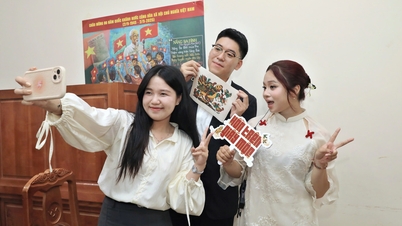
The clearest evidence is the 50th anniversary celebration of the liberation of Southern Vietnam and the reunification of the country (A50 event), which yielded significant cultural results. A fervent patriotic spirit blazed among the younger generation, demonstrating solidarity and national pride through parades, marches, and artistic performances. These activities not only enhanced the younger generation's understanding of history but also helped preserve and promote Vietnamese cultural values. Immediately following this was the 80th anniversary celebration of the successful August Revolution and National Day of the Socialist Republic of Vietnam (A80 event), organized on an unprecedented scale and with exceptional quality. What is noteworthy here is the surge of national spirit across all generations. From a cultural perspective, we see something far greater than pride revealed: the feelings, humanity, and beliefs of people throughout the country, demonstrating national unity, love, support, and close ties between people, between different regions, regardless of age or status.
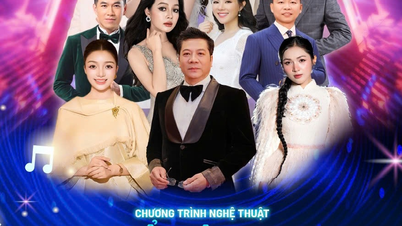
Even more encouraging are the music events (which young people call "national concerts") such as "Homeland in My Heart," "V Concert - Radiant Vietnam," etc., held at My Dinh National Stadium (Hanoi), the National Exhibition Center (Dong Anh, Hanoi), etc., with the participation of tens of thousands of people, mostly young people. This shows that they are not indifferent to or forget the history and culture of their ancestors, but rather appreciate and honor history, demonstrating solidarity, respect, and gratitude towards those who have contributed to protecting our lives today. This is a gentle yet profound and culturally rich way of educating, deeply ingrained in the hearts of every young person. Thus, tradition is not only not lost but is also developing to a new level in modern society, suitable for the lives and people of today. The younger generation does not reject the culture of their ancestors; within it flows a genetic pool—a national bloodline—smoldering in the bodies of the young generation of Vietnam. As long as the culture endures, the nation will survive, because there are those who continue to preserve the national spirit in the era of rapid technological development.
The reality of artistic life shows that the more someone knows how to exploit the value of their traditional culture, the more prominent they become among the world's renowned musicians. This also contributes to the diversity and richness of culture in general and world music in particular. Famous country music pieces, songs with influences from Europe, Africa, Latin America, Asia, or Oceania all demonstrate this. When these works establish themselves within their national culture and then reach the world stage, they become universally accessible to all of humanity and become a shared world heritage. It is evident that when competing on the international cultural stage, those who best utilize their national culture will have a prominent position and gain international recognition. The reality of Vietnamese music has also proven this.
 |
| "Glory and Wealth" is a famous pair of paintings from the Dong Ho folk painting style. The paintings depict two children holding chickens and ducks, considered a blessing for the pursuit of glory and wealth, wishing the family a prosperous and affluent life. |
2. The golden generation of music from the pre-war period, through the two wars of national independence, reunification, and defense of the Fatherland, has shown that works exploiting folk music and the national spirit have achieved certain successes because they have deeply resonated with the public. In the post-war period, the generation of musicians such as Tran Tien, Nguyen Cuong, Pho Duc Phuong... composed famous works that exploited folk elements. This generation can be said to have also fulfilled its responsibility to the country.
Encouraging signs are beginning to emerge among the 70s, 80s, and 90s generations, including musicians and singers who are exploring and creating new works in the era of Industry 4.0 and the current digital age . The compositions of Le Minh Son, Ho Hoai Anh, Duc Tri... and most recently Nguyen Van Chung and several other young musicians demonstrate this.
What's special about this generation is the collaboration between musicians and singers to express works on both cultural and artistic levels. Two prime examples are: "Bac Bling," composed by young musician Tuan Cry (Nguyen Sy Tuan) in collaboration with singer Hoa Minzy and Meritorious Artist Xuan Hinh, inspired by Bac Ninh folk culture with a blend of folk music and modern hip hop; and "Phu Dong Thien Vuong" by Ho Hoai Anh and Duc Phuc. They leverage technology in their artistic works, using it to elevate the songs and spread them, making a strong impression on the audience. This has attracted millions of viewers, creating a powerful musical and cultural impact. Therefore, traditional culture is present in everyone's life as naturally as breathing the air we breathe every day. This method of education is gentle, deeply ingrained in the soul and consciousness of each individual, not through grandiose slogans or eloquent speeches. The soul of traditional culture, the spirit of the nation, is expressed through works of art with folk melodies, images of the country, and age-old legends that permeate the consciousness of listeners thanks to the talent and creativity of the artists.
Every era has its own culture and cultural norms. The question is how to ensure that the precious traditional cultural heritage of our nation survives, develops, serves its time, and contributes to world culture?
Our nation has always survived, developed, and risen strongly despite a thousand years of Chinese rule and countless wars of resistance against invaders, thanks to the enduring nature of our national culture. This enduring culture is always linked to innovation to adapt to each era and contribute to the country's development. The enduring aspect lies in preserving the national spirit throughout all ages, a fact even more essential in this era of national progress.
Source: https://www.qdnd.vn/van-hoa/doi-song/mau-dan-toc-sang-bung-บน-giay-diep-1025438

![[Photo] Solemn bathing ceremony and Buddha procession in Hue](https://vphoto.vietnam.vn/thumb/1200x675/vietnam/resource/IMAGE/2026/05/31/1780228263543_1-jpg.webp)
![[Photo] Admire the coral "masterpiece" amidst the million-year-old heritage of Dak Lak province.](https://vphoto.vietnam.vn/thumb/1200x675/vietnam/resource/IMAGE/2026/05/31/1780221235105_anh-man-hinh-2026-05-31-luc-16-53-27.png)











![[Video] Sunset at Lap An Lagoon – Where the sun sets over the fishing nets](https://vphoto.vietnam.vn/thumb/340x192/vietnam/resource/IMAGE/2026/05/31/1780192137701_beach-landscape-sea-water-nature-grass-745871-pxhere-com.jpeg)



























![[Photo] Admire the coral "masterpiece" amidst the million-year-old heritage of Dak Lak province.](https://vphoto.vietnam.vn/thumb/402x226/vietnam/resource/IMAGE/2026/05/31/1780221235105_anh-man-hinh-2026-05-31-luc-16-53-27.png)





























Comment (0)