

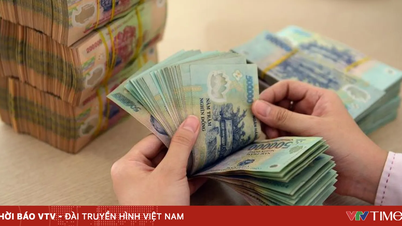
Encourage businesses to avoid cash transactions.
From March 5th of this year, Decree 68 came into effect, marking a major turning point in efforts to increase transparency in the household economic sector through the shift from lump-sum tax to declaration-based tax. Along with this, it encourages payments via bank transfer instead of cash to ensure all transactions are clear and transparent. Although there were some initial concerns, in reality, this new approach has proven to be very convenient.
At a pho restaurant in Hai Phong City , instead of struggling with change or making mistakes during busy periods, the owner simply uses a QR code. Customers scan the code after finishing their meal, and the cash register automatically records the correct amount. The owner has also implemented various methods to encourage customers to pay by bank transfer, but not all customers opt for this method.
Mr. Dinh Van Hai, owner of Pho Duc restaurant in Hai Phong City, said: "We are using POS software, which will ensure transparency in payment. Along with cash, there will be difficulties for customers, especially the elderly and children who tend to pay with cash."
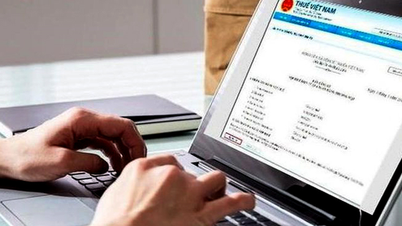
When using electronic invoices generated from a cash register, the data is sent directly to the tax authorities. This helps tax officials track actual revenue on the same day, assisting businesses in accurately declaring their income.
Mr. Pham Tuan Anh, Deputy Head of the Tax Department of Hai Phong City, said: "This also helps the tax authorities control the cash flow and revenue of business households, thereby guiding them to declare taxes through suggested forms and instructing them to declare and pay taxes in a timely manner."
However, some households still deliberately avoid electronic payments to conceal their revenue. These businesses need time to adapt to this new payment method, so encouraging voluntary adoption remains the fundamental solution.
Mr. Nguyen Van Duoc, General Director of Trong Tin Accounting and Tax Consulting Company, Ho Chi Minh City, stated: "Through our interactions with individual business owners, we believe the key issue is not technology. Rather, it lies in the psychological reluctance of small business owners to accept cashless payments, which require transparency in both financial matters and tax obligations. The long-standing habit of using cash also leads small business owners to feel that cash is more convenient and easier to control."
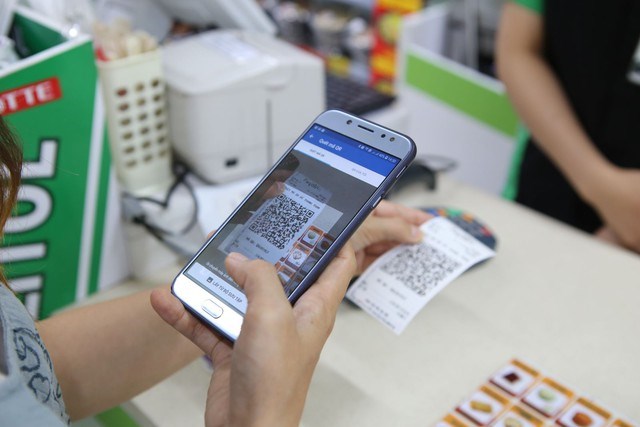
Encourage businesses to avoid cash transactions.
A supportive legal framework
The consequences of revenue concealment extend beyond budget losses to create unfair competition in the market. In the long run, this situation undermines the transparency of the business environment, hindering the government's efforts to build a modern, open market and reduce cash payments.
To overcome these obstacles, the State has issued a system of policies that encourage cashless payments instead of imposing them. Laws No. 48 and 67 stipulate that "households and individuals engaged in business must notify the tax authorities of their account numbers/electronic wallets related to their production and business activities."
According to Circular 25 of the State Bank of Vietnam, effective from March 1, 2026, bank accounts used by business households for business activities must be in the name registered on the Business Registration Certificate, instead of using personal accounts as before. In particular, the recently issued Decree 68 is a significant "boost" with the view that the State will not use administrative orders to ban cash, but rather create convenience to encourage people to voluntarily change.
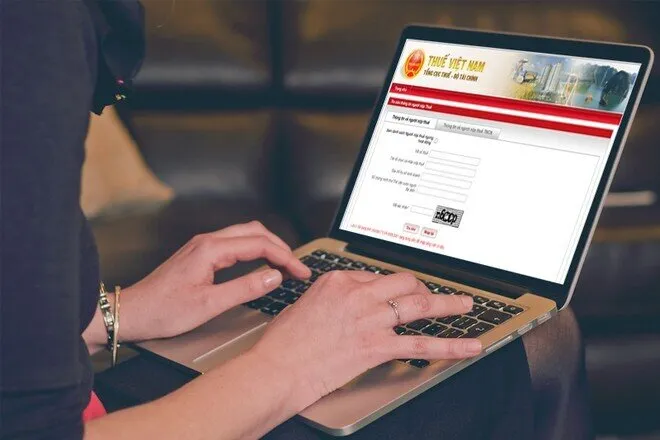
The requirement for business households to declare and notify the tax authorities of their bank account and e-wallet numbers is a significant step in the modernization of tax management.
Tax management in the digital age
Every day, people and businesses are becoming increasingly accustomed to transferring money, scanning QR codes, or making payments directly on their phones instead of using cash. Behind these seemingly simple transactions lies a continuously connected and updated stream of data. When all transactions are "identified" on a digital platform, revenue management becomes more transparent and accurate, allowing tax authorities to monitor transactions promptly without deeply interfering with people's business operations.
Furthermore, cashless payments not only offer convenience and security for users but also help businesses reduce the burden of declarations and minimize cumbersome procedures. The seamless connection between banking data and tax authorities is also contributing to a fairer and more transparent business environment, accelerating society's progress towards a modern digital economy.
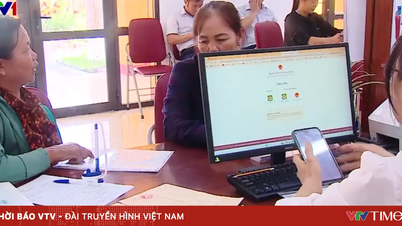
In Hanoi, the transition is underway with great enthusiasm. Tax and banking officials have been going directly to people's homes to assist them in opening accounts and installing the electronic tax application.
Ms. Nguyen Thi Hanh, a fruit vendor at 17 Nguyen Thai Hoc Street, Son Tay Ward, Hanoi, shared: "The bank supported me in opening an account under my business name and provided a free speaker. When I transfer money, the speaker announces it, so I don't have to waste time looking at my phone, and neither do the customers; they just hear the speaker and the transaction is complete."
Ms. Nguyen Thi Ha, who runs a clothing business at 54 Le Loi Street, Son Tay Ward, Hanoi, said: "Previously, there were many cash payments, and sometimes I made mistakes. Now, people pay by bank transfer, so there are no more errors."
With the second-largest number of household businesses nationwide, Hanoi Tax Department has standardized the household business directory, developed AI to support tax declaration creation on the Etax Mobile application, and created community Zalo groups to support household businesses.
Ms. Do Ngoc Dung, Deputy Head of Tax Office 16, Hanoi City Tax Department, stated: "Organizing numerous conferences and training sessions, and establishing support teams comprising tax officials, bankers, and solution providers to directly assist business households in installing and using Etax Mobile and opening online business accounts on-site, will help business households separate personal expenses from their production and business revenue."
Ms. Nguyen Thi Phuong Hao, Head of Personal Banking Department, Vietnam Investment and Development Bank, Son Tay Branch, shared: "The goal is to make transactions as convenient and streamlined as possible with the lowest cost for all customers, minimizing cash transactions and supporting government agencies in easier management."
The requirement for business households to declare and notify tax authorities of their bank account and e-wallet numbers is a significant step in the modernization of tax management. This information will provide tax authorities with additional data to help reduce revenue losses.
Ms. Nguyen Thi Lan Anh, Head of the Legal Department of the Tax Department, stated: "The tax sector also needs the cooperation of relevant ministries, departments, and agencies such as banks, the Ministry of Public Security, and other related units in building a large database. From this database, we will analyze to identify compliant taxpayers so that we can provide timely support, and identify non-compliant taxpayers for appropriate legal action."
It is clear that the transition from lump-sum tax to electronic data-based declaration has begun to create noticeable changes. Just two months after implementation, the number of cashless transactions at many businesses has increased significantly, and importantly, revenue data is being updated transparently. Notably, instead of creating pressure or coercion, promoting cashless payments is demonstrating tangible benefits for both individuals and businesses.
From the government's perspective, data-driven tax management, supported by AI and Big Data, also helps authorities track revenue more accurately and fairly, reduce cumbersome procedures, and create a foundation for a more modern, transparent, and civilized business environment.
Source: https://vtv.vn/minh-bach-hoa-khu-vuc-kinh-te-ho-gia-dinh-100260507000534336.htm
![[Photo] Ba Lang An Lighthouse - the "eye of the sea" amidst the "rock museum" of Quang Ngai province.](https://vphoto.vietnam.vn/thumb/1200x675/vietnam/resource/IMAGE/2026/05/29/1780038698840_anh-man-hinh-2026-05-29-luc-14-10-42.png)



![[Image] Pleasant weather helps students enter the 10th grade entrance exam with confidence.](https://vphoto.vietnam.vn/thumb/1200x675/vietnam/resource/IMAGE/2026/05/29/1780034401612_ngay-1-thi-lop-10-minh-duy-8-5009-jpg.webp)










































































Comment (0)