

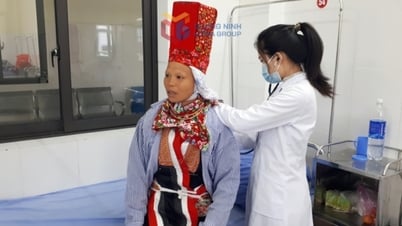
Over the years, the provincial Social Insurance agency has proactively advised the province on many specific support mechanisms tailored to local conditions. In addition to the general support stipulated by the central government, the province has supplemented funding for health insurance for households engaged in agriculture, forestry, and fisheries with average living standards; provided 100% funding for ethnic minority communities in communes that have recently emerged from the category of extremely difficult areas; and supported elderly people aged 70 to under 80 and near-poor households. These flexible and humane policies contribute to strengthening the pillar of social security, creating conditions for people to access timely medical services and reducing the financial burden when they are sick.

With some outdated policies expiring, Resolution No. 91 continues to support vulnerable groups while expanding the scope of beneficiaries, notably including the elderly aged 65 to under 70 and newly lifted-out-of-poverty households. These groups are particularly vulnerable to falling back into poverty if they experience health risks, due to their unstable incomes.
In Binh Lieu commune, immediately after Resolution No. 91/2025/NQ-HĐND was passed, the Binh Lieu Social Insurance agency coordinated with the commune government to promptly review and compile a list of beneficiaries to ensure the policy is implemented in a timely manner from January 1, 2026. Communication efforts were intensified, focusing on direct, easy-to-understand methods tailored to each target group.
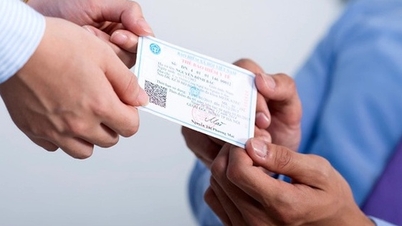
In Binh Cong 2 village (Binh Lieu commune), many elderly people expressed their joy at receiving free health insurance cards under the new policy. Previously, many had to pay for health insurance cards themselves annually because they did not receive pensions or regular allowances. Mr. Nguyen The Dinh (69 years old, Binh Cong 2 area) said: "I have always proactively purchased voluntary health insurance for myself. Now that the Party and the State have shown concern and provided support with health insurance cards, I am truly delighted."

Not only the elderly, but also newly impoverished households have received timely support. After moving out of the near-poverty category, many families have to pay the entire cost of health insurance cards themselves, while their income remains unstable. Resolution No. 91, with its appropriate support mechanism, has helped them maintain their right to medical examination and treatment, reducing the risk of falling back into poverty due to medical expenses. For families in the transitional phase, this is considered an important "pillar" to stabilize their lives and focus on economic development.
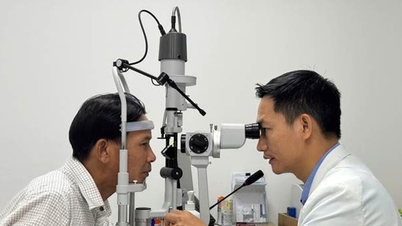
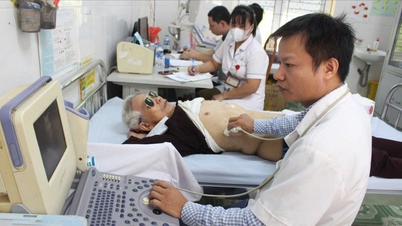
The policy of expanding health insurance support also facilitates the role of the grassroots healthcare system. The Luc Hon Commune Health Station receives an average of 15-20 patients daily for examination and treatment of common illnesses and management of chronic diseases. 100% of the people who come for examination have health insurance cards, helping to reduce the financial burden and encouraging people to proactively take care of their health at the primary level. According to Dr. Le Thi Yen, Director of the Luc Hon Commune Health Station, for cases requiring specialized treatment, doctors base their guidance on the patient's condition to ensure their rights are protected.
According to Resolution No. 91, in addition to maintaining support for vulnerable groups, the province has increased the support level to 80% of the contribution for households engaged in agriculture, forestry, and fisheries with an average standard of living (including support from the central and local governments). At the same time, the provincial budget provides an additional 30% of the contribution for several other target groups to expand coverage. This is a practical way to share the burden with the workforce that has unstable incomes and is often affected by natural disasters, epidemics, and market fluctuations.

The effectiveness of the policy roadmap is demonstrated by concrete figures. By the end of 2025, the entire province will have over 1.3 million people participating in health insurance, with a coverage rate of 95.76% of the population; the target is to raise this to 96.6% by the end of 2026. These results show the province's strong determination to realize the goal of universal health insurance.
Deputy Director of the Provincial Social Insurance Agency, Nguyen Huy Thong, affirmed: Resolution No. 91 demonstrates Quang Ninh 's clear determination to place people's health at the center of its development policies. Beyond providing immediate support, the resolution also creates a long-term foundation for people, especially those in disadvantaged groups, to access healthcare services fairly and sustainably.
With the coordinated efforts of all levels and sectors, and the consensus of the people, Quang Ninh is gradually consolidating its social security system, placing people's health at the center of its development policies.
Source: https://baoquangninh.vn/mo-rong-bao-phu-bhyt-toan-dan-3397289.html



![[Image] Close-up view of the interchange connecting the two expressways and Long Thanh Airport.](https://vphoto.vietnam.vn/thumb/1200x675/vietnam/resource/IMAGE/2026/05/25/1779703378210_ndo_br_z7863716673926-224453a31600126cce10622af6290afd-4549-jpg.webp)

![[Image] Hanoi's urban life under the challenge of a "scorching hot" environment](https://vphoto.vietnam.vn/thumb/1200x675/vietnam/resource/IMAGE/2026/05/25/1779706979265_nang-nong-t5-2026-minh-duy-7-4636-jpg.webp)

























































































Comment (0)