

 |
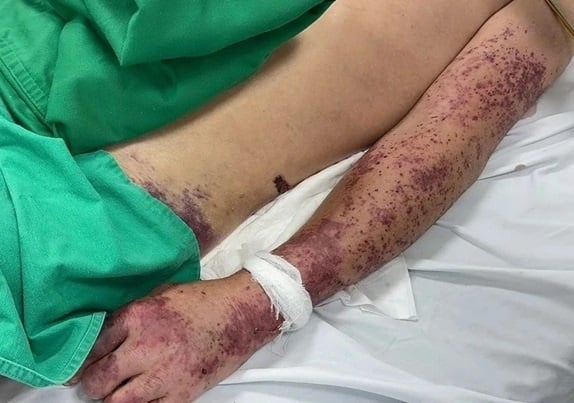
The patient is infected with Streptococcus suis. Photo: Provided by the hospital . |
Patient HNM (58 years old, residing in Nghe An province ) was admitted to Vinh City General Hospital in a state of severe hypotension, septic shock, and severe metabolic acidosis.
Just about an hour after admission, scattered pale purple patches appeared on the patient's extremities – a warning sign of dangerous sepsis.
Upon reviewing the patient's medical history, doctors noted that approximately three days prior to the onset of the illness, the man had consumed pig's intestines.
After conducting necessary tests and expert consultations, the doctors found that the patient exhibited many typical symptoms of streptococcal infection in pigs. Immediately, the treatment team proceeded with intubation, administered broad-spectrum antibiotics, and implemented hemodialysis to control the infection.
However, the disease progressed rapidly. Just one day after treatment, the patient developed multiple organ failure and disseminated intravascular coagulation (DIC) – a severe, potentially life-threatening complication. The prognosis at this point was assessed as very poor, with a high risk of death.
Faced with a critical situation, doctors in the Intensive Care and Toxicology Department continuously held consultations and closely monitored the patient's condition to adjust the treatment protocol accordingly.
The patient was treated with antibiotics based on the results of the antibiotic susceptibility test, received blood product transfusions, and underwent continuous hemodialysis using an M100 filter to control coagulation disorders and systemic inflammatory responses.
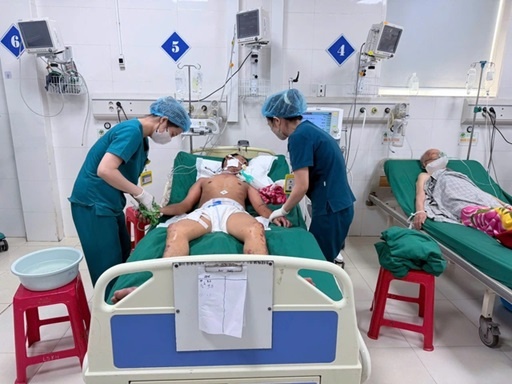 |
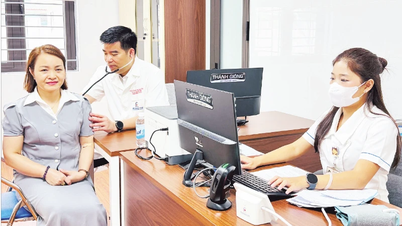
Medical staff caring for patients. Photo: Provided by the hospital. |
After 72 hours of a tense race against death, positive signs began to appear. The patient's hemodynamics gradually stabilized, and infection indicators decreased.
Dr. Ngo Nam Hai, Head of the Intensive Care Unit at Vinh City General Hospital, said that the patient was admitted in an extremely critical condition, with a very rapid progression of the disease and a constant risk of death.
"Thanks to timely intervention, the use of antibiotics within the first hour combined with continuous hemodialysis and intensive care, the patient gradually overcame the most critical stage."
After 10 days of intensive treatment, the patient was fully conscious, responsive, and in significantly improved condition, with no remaining signs of infection or blood clotting disorders.
According to Dr. Ngo Nam Hai, streptococcal infection in pigs is an acute bacterial infection caused by Streptococcus suis. This disease is zoonotic, primarily transmitted from infected pigs to humans.
The disease can be transmitted through direct contact with infected pigs during farming, slaughtering, transportation, or by consuming undercooked pork products such as blood pudding, raw meat, or offal. The bacteria can also enter the bloodstream through open wounds or mucous membranes, causing severe infection.
After contracting Streptococcus suis, patients typically experience symptoms such as high fever, headache, altered consciousness, subcutaneous bleeding, or purpura (purpura on the skin). When purpura appears on the skin, the disease has usually progressed to a severe stage with a high mortality rate or the risk of serious sequelae such as deafness, joint stiffness, and kidney damage.
Doctors advise people to absolutely refrain from slaughtering, processing, or consuming sick or dead pigs; and to avoid eating raw blood pudding, undercooked pork, or offal that has not been thoroughly cooked. Only use pork from a reliable source that has undergone veterinary inspection.
When handling raw pork or participating in slaughtering, full protective equipment such as gloves, goggles, and boots must be used; avoid processing food if there are open wounds that have not been safely treated. At the same time, wash hands with soap, clean food processing equipment thoroughly, and ensure a well-ventilated and hygienic farming environment.
Source: https://znews.vn/mon-khoai-khau-khien-nguoi-dan-ong-nguy-kich-post1656311.html


![[Photo] General Secretary and President To Lam presides over a meeting with the Central Organizing Committee.](https://vphoto.vietnam.vn/thumb/1200x675/vietnam/resource/IMAGE/2026/06/03/1780482764658_a1-bnd-4741-3342-jpg.webp)
![[Photo] Secretary of the National Assembly Party Committee, Chairman of the National Assembly presides over the meeting of the Standing Committee and Executive Committee of the National Assembly Party Committee.](https://vphoto.vietnam.vn/thumb/1200x675/vietnam/resource/IMAGE/2026/06/03/1780480353201_ndo_br_bnd-2585-jpg.webp)











![[Photo] First session of the 14th Congress of the Vietnam Trade Union](https://vphoto.vietnam.vn/thumb/1200x675/vietnam/resource/IMAGE/2026/06/03/1780465947883_ndo_br_img-3852-jpg.webp)


















![[Video] Sunset at Lap An Lagoon – Where the sun sets over the fishing nets](https://vphoto.vietnam.vn/thumb/1200x675/vietnam/resource/IMAGE/2026/05/31/1780192137701_beach-landscape-sea-water-nature-grass-745871-pxhere-com.jpeg)






















Comment (0)