

The American forces involved in the fighting were the 1st Airborne Cavalry Division (from Chu Prong district, Gia Lai province) in late 1965; and the 4th Infantry Division and the 173rd Airborne Brigade (from Dak To district, Kon Tum province) in 1967, 1969, and 1972. Despite their overwhelming numerical superiority and superior equipment and weaponry, the American forces suffered such a devastating defeat that it later became a terrifying "syndrome" not only for the soldiers who fought but also for American society at the time. This is one of the successful novels that directly depicts the battlefield, with the opposing side primarily being the American army. Without directly fighting in the war against the Americans, the author would find it difficult to create such realistic descriptions.
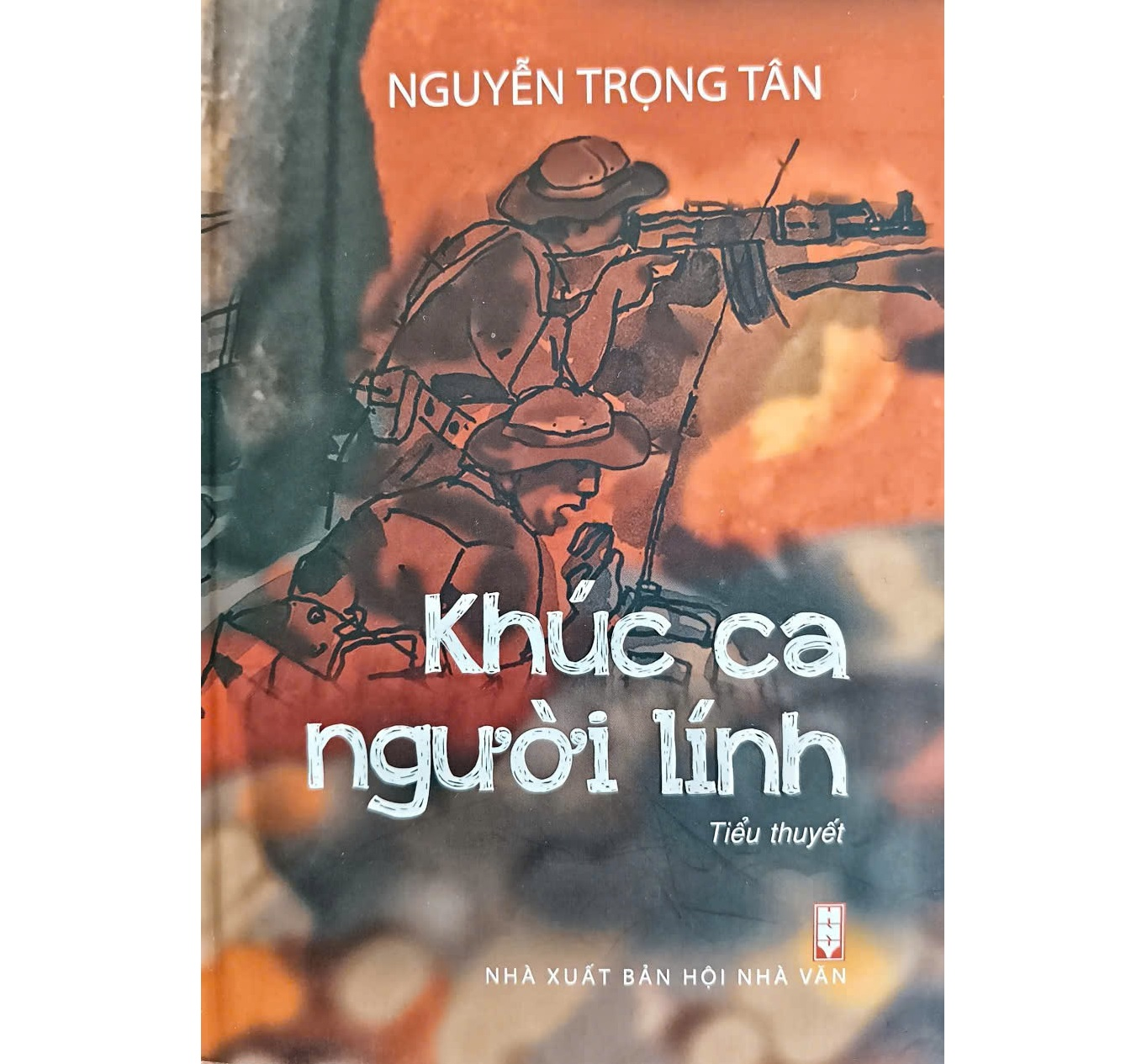 |
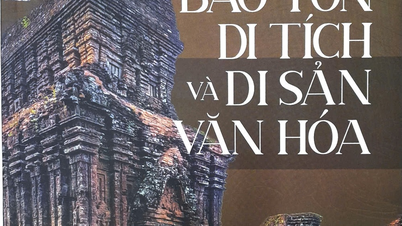
| The book cover. |
The artistic purpose of the novel is to create a monument to the soldier through prose. They enter the war with the ideal of defending the homeland, possessing qualities of resilience, courage, and profound humanistic values. Not only do they face hardship and loss, but the soldiers also experience profound inner turmoil and inevitable emotional upheavals due to their first encounter with the Americans. The soldier's (Truong Quoc Nguyen) statement reflects the sentiments of many at that time: "I think fighting this guy will be difficult. Our most powerful weapon is the shoulder-mounted weapon. He has artillery, tanks, armored vehicles, and all kinds of aircraft..." The question, "Can we defeat the Americans?" was answered by practical experience. From practical experience, theory was formulated. Commander and Political Commissar of Front B3, Chu Huy Man, affirmed with unwavering conviction: "It will be fierce. It will be extremely fierce. The sacrifices will be immense. There will certainly be great losses. But there is no other way. The enemy has invaded our country. The only way is to sacrifice ourselves to defend it." Those soldiers fought with all their youth, love, reason, and courage. They wrote the glorious revolutionary history of the nation.
The novel's quality is clearly evident in its polyphonic and multifaceted nature. It is an epic about patriotism, ideals, and the value of peace. It is a heroic ballad about the indomitable spirit. It is a love song about the love of life, camaraderie, love, and the yearning for peace. It is a triumphant song. It is a celebration of victory. There are also tragic songs about losses and sacrifices. The novel's scope is expanded, encompassing not only the battlefield and friendly relations but also the rear areas. It is set within the Ho Chi Minh Trail on land, and extends to the Ho Chi Minh Trail at sea. Alongside the scenes of death and destruction are scenes of soldiers' humorous and optimistic daily lives, serving as a balance... Following the principle of adhering closely to reality, the novel depicts commanders such as Chu Huy Mân, Nguyễn Hữu An, and Đặng Vũ Hiệp; and commanding officers such as Lưu Đức Phổ and Tạ Đăng Huy...
With its convoluted structure, the story alternates between the present and the past, creating multiple layers and levels. Through these layers of structure lies the beautiful love story between Ta Dang Huy and Hoang Doan My. After the war, their love blossomed and bore fruit. There is a special relationship between two soldiers: Ta Dang Huy and the American Lieutenant, Terry Allen. In 1993, Colonel Ta Dang Huy returned to the Ia Drang Valley to welcome a delegation of American veterans visiting the old battlefield. That day, Huy spared Terry Allen's life and bandaged his wounds. Now, they meet again. Huy's act of returning his soldier's ID card to Terry Allen is a way of returning the past, preserving and cherishing it together, using it as a foundation to move towards peace and friendship with all sincerity.
Source: https://www.qdnd.vn/van-hoa/sach/mot-khuc-ca-ve-nguoi-linh-1042635
![[Photo] Secretary of the National Assembly Party Committee, Chairman of the National Assembly presides over the meeting of the Standing Committee and Executive Committee of the National Assembly Party Committee.](https://vphoto.vietnam.vn/thumb/1200x675/vietnam/resource/IMAGE/2026/06/03/1780480353201_ndo_br_bnd-2585-jpg.webp)
![[Photo] General Secretary and President To Lam presides over a meeting with the Central Organizing Committee.](https://vphoto.vietnam.vn/thumb/1200x675/vietnam/resource/IMAGE/2026/06/03/1780482764658_a1-bnd-4741-3342-jpg.webp)































![[Video] Sunset at Lap An Lagoon – Where the sun sets over the fishing nets](https://vphoto.vietnam.vn/thumb/1200x675/vietnam/resource/IMAGE/2026/05/31/1780192137701_beach-landscape-sea-water-nature-grass-745871-pxhere-com.jpeg)




















Comment (0)