

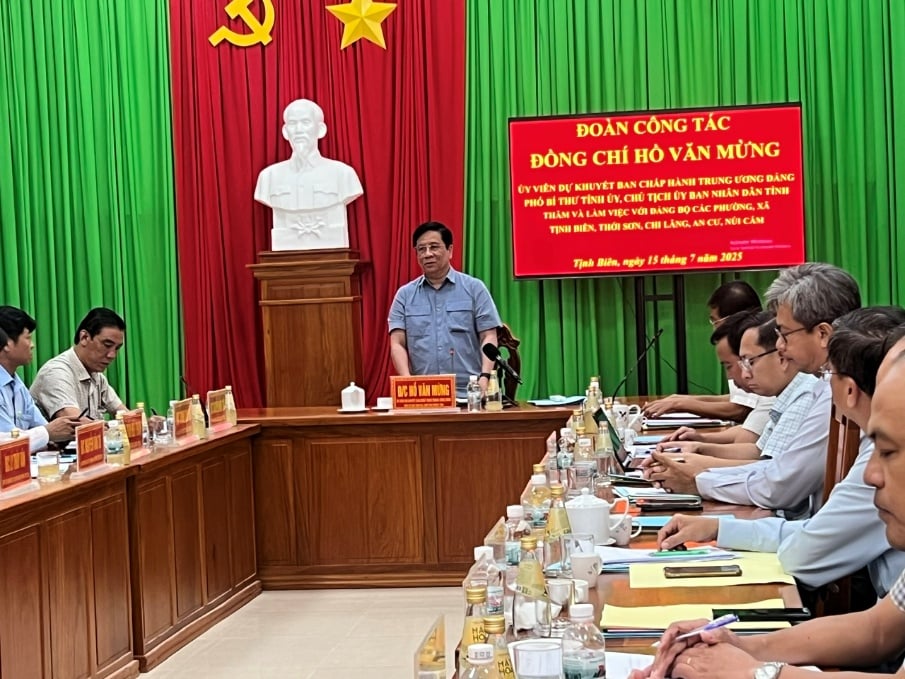
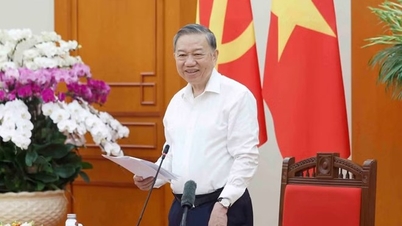
Mr. Ho Van Mung, Chairman of the People's Committee of An Giang province, delivers a directive speech in Tinh Bien ward. Photo: TB
Opportunities to innovate management methods.
July 1, 2025 marks a significant turning point in the process of reorganizing commune-level administrative units in An Giang province. The merger and streamlining of the former administrative systems of Kien Giang and An Giang provinces will reduce the number of communes, wards, and special zones to 102. Among these, special units such as Rach Gia ward, with over 250,000 inhabitants – the largest in the country – present a major challenge in terms of management, organizational structure, and ensuring the rights of the people.
However, after only one month of implementation, the two-tiered government apparatus in An Giang province has proven its effectiveness, practicality, and people-serving nature. From urban to rural areas, the new communes, wards, and special zones have operated stably, public services have not been interrupted, and people's lives have not only remained unaffected but have also shown signs of improvement.
To promptly address issues arising over the past month, the Standing Committee of the An Giang Provincial Party Committee directed the Provincial Party Committee's Organization Department to coordinate with the Department of Internal Affairs and relevant agencies to review commune-level civil servants, especially those in specialized departments and offices, in order to strengthen and supplement their workforce to meet job requirements, particularly in addressing the needs of the people.
Mr. Nguyen Nhu Anh, Director of the Department of Internal Affairs of An Giang province, shared: “We clearly understand that this is not just an administrative boundary rearrangement, but also an opportunity to innovate methods of state management and improve the quality of service to the people. The decisive involvement of the entire political system has helped the transition process to proceed smoothly, synchronously, and effectively.”
New government: Closer to the people, better service.
One of the notable highlights is the proactive and decisive spirit of the officials and civil servants after the merger. The newly merged communes, wards, and special zones quickly streamlined their administrative structures, clearly assigned tasks, and operated in a more efficient and effective manner. In particular, the application of digital technology , administrative procedure reform, and listening to feedback and suggestions from the people have been significantly promoted.
Commune-level officials have also been assigned additional tasks, but they don't see it as pressure; rather, it's an opportunity to demonstrate their work capacity and qualities. Mr. Thai Van Phuc, Secretary of the Long Thanh Commune Party Committee, commented: “With the merger of the three communes of Long Thanh, Vinh Thanh, and Vinh Phu, with a population of 36,254 people, the workload has increased, and the area is larger. However, thanks to the thorough preparation by the Commune Party Committee and People's Committee, along with the post-merger professional training, commune officials have quickly adapted to their new roles. We have increased our efforts to engage with the public, going down to the hamlets to listen to people's feedback and suggestions, and resolving issues promptly within our authority.”
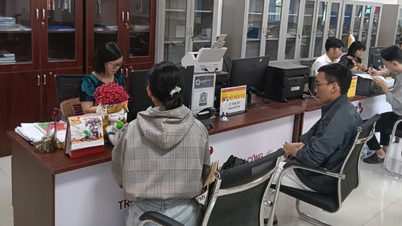
Accordingly, from July 1st to July 31st, the Long Thanh Commune Public Administrative Service Center received 399 applications, resolved 207 applications (191 resolved ahead of schedule), and the remaining applications are still being processed. There were 16 delayed applications due to initial network errors and inconsistencies in procedures and software during the initial operating days.
Speaking about Long Thanh commune's future plans, Secretary Thai Van Phuc emphasized that the commune will continue to strengthen coordination between the Public Administrative Service Center and specialized departments to avoid delays in processing applications; continue to digitize application components, achieving 100% completion rate for administrative procedures; and achieve 100% online payment rate.
Simultaneously, strictly control the implementation of procedures and coordination among relevant departments in handling administrative procedures, and update amended, supplemented, and abolished procedures. Direct the community digital technology teams in hamlets and the youth volunteer teams to support and guide the people in carrying out the steps and procedures for submitting online applications.
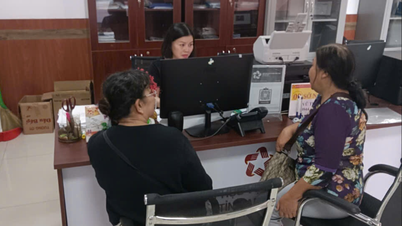
Ms. Le Thi Bich, a small business owner, said: “I went to get my grandchild's birth certificate, and it was done in just 20 minutes. Before, I had to run back and forth, which was very time-consuming. Now that everything is unified, I just go to the Public Administrative Service Center of the commune and the officials guide me attentively and friendly.”

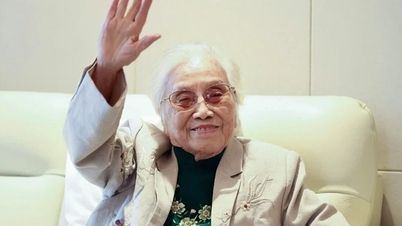
Mr. Ho Van Mung, Chairman of the People's Committee of An Giang province, meets with residents in Tinh Bien ward. Photo: TB
The Rach Gia 'Test': The most populous country, yet operating smoothly.
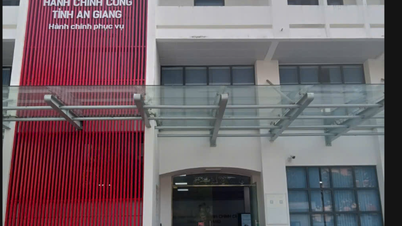
With over 250,000 inhabitants, the largest in the country today, Rach Gia ward is the clearest test of the effectiveness of the two-tiered government system. Not only does it ensure smooth state management activities, but the ward is also a leader in digital transformation and administrative reform.
Mr. Mai Hoang Khoi, a member of the Standing Committee of the Provincial Party Committee and former Chairman of the Inspection Committee of the former Kien Giang Provincial Party Committee, who was assigned to be the Secretary of the Party Committee of Rach Gia Ward, said: “We established the Ward's Public Administrative Service Center, directly connecting with residential groups and self-governing groups through the Zalo system and management software. People only need to report issues, and we receive and process them immediately. Despite the large area and dense population, no administrative procedures or documents are delayed for the people. The ward has built a model of support and guidance teams for people processing online documents in 14 out of 61 residential areas, quickly processing online documents for people such as social welfare, civil registration, household registration, etc.”
According to the Vice Chairman of the Rach Gia Ward People's Committee, Duong Hong Tuan, the ward receives over 300 applications daily, not including those from the ward police. In the first month alone, the ward received and processed over 9,031 administrative applications of all types (5,853 submitted online, reaching 78.3%), with 99.12% of applications processed on time. The ward police also strengthened coordination in maintaining security and order, especially in boarding houses and densely populated residential areas.
Residents in the ward, such as Mr. Tran Van Thanh, a small business owner at Rach Gia market, commented: "At first, when I heard about the merger, I was worried about overlapping responsibilities leading to delays in people's affairs. But now it seems very good. People can submit documents online, and someone answers the phone immediately. Security and order are better, and the ward officials are very friendly now."
Seamless and uninterrupted connectivity benefits the people.
Not only at the commune level, but the provincial-level agency system in An Giang also operates smoothly thanks to thorough preparation. According to the An Giang Provincial Department of Internal Affairs, the entire province has organized training courses on management and administrative skills for more than 102 officials and civil servants in communes, wards, and special zones. The Provincial Public Administration Service Center has organized 3 training courses for communes, and the Department of Science and Technology has opened 3 courses. Currently, the Department of Internal Affairs is preparing to open 6 more courses for officials in communes, wards, special zones, and provincial departments, with approximately 700 participants.
In addition, the Department of Internal Affairs of An Giang province has built a common database system, updating information on the boundaries, population, and organizational structure of each new administrative unit. Thanks to this, departments and agencies can easily coordinate to resolve issues, avoiding overlapping responsibilities or delays in resolving matters for citizens.
One of the most challenging procedures for citizens when dealing with administrative agencies is land-related paperwork. However, anticipating these difficulties, the Department of Agriculture and Environment of An Giang province has promptly provided necessary guidance to citizens when carrying out this procedure at the newly established commune level.
According to Le Huu Toan, Director of the Department of Agriculture and Environment of An Giang province: “The Department's Board of Directors and heads of units, along with officials from the Department of Agriculture and Environment, regularly visit communes, wards, and special zones to provide timely support and guidance to commune-level officials in receiving and processing land-related documents for the people. In particular, the implementation of receiving and returning results according to the principle of "non-administrative boundaries" has greatly facilitated people by eliminating the need for long-distance travel and high costs, as residents in one commune can still obtain land ownership certificates in another.”
It can be said that the people are the most obvious beneficiaries of the reorganization of commune-level administration. When the locality is reorganized rationally, the administrative centers of communes, wards, and special zones are invested in and become more modern, making them more accessible to the people. Administrative procedures are strongly digitized, reducing travel and saving costs for the people.
Mr. Nguyen Huu Phuc, a farmer in Kien Luong commune, happily said: “My commune has been merged, but the new commune officials are very diligent in coming down to the hamlets to guide people in preparing documents for social welfare, land ownership certificates, and household registration. I have never felt so close to the government as I do now.”
In addition to providing better services, the new government has created a more flexible mechanism for receiving and processing social welfare policies and supporting socio-economic development at the local level. As a result, poverty reduction programs, agricultural and fisheries extension services, and support for production households have been implemented more effectively.
The right approach: Effectiveness stems from practical experience.
The smooth and efficient operation of the two-tiered government after the merger is the clearest evidence of the correctness of the central government's policy on reorganizing commune-level administrative units. It not only streamlines the apparatus and saves budget, but more importantly, it enhances the effectiveness and efficiency of state management and serves the people.
According to Associate Professor Dr. Bui Van Huyen, Director of the Institute of Economics, Society and Environment (Ho Chi Minh National Academy of Politics), "The issue lies not only in the consolidation of administrative boundaries, but also in changing management thinking, reorganizing the government apparatus in a rational, flexible, and people-oriented manner. In particular, changing management thinking is extremely important, focusing on results and efficiency with a spirit of serving the people."
The draft Political Report submitted to the An Giang Provincial Party Congress also identifies the application of science and technology and digital transformation as one of the three strategic breakthroughs. This breakthrough is not general, but focuses on applying science and technology and digital transformation to the operations of the leadership and management apparatus, aiming at two goals: improving the effectiveness and efficiency of the apparatus and, more importantly, better serving the people and businesses.
It is also important to emphasize that An Giang does not define "high-quality human resources, including leadership and management personnel" as a breakthrough, but rather as the "leading force" for three strategic breakthroughs: marine economy, infrastructure, and the application of science and technology and digital transformation. With this approach, the initial results of the two-tiered government system are the result of a change in leadership and management thinking, as well as decisive implementation measures in practice, with a spirit of service-oriented government, aiming towards the set development goals.
With these positive initial results, An Giang is becoming a model in the current process of reorganizing commune-level administrative units.
Mai Thanh Binh - P.CCHC
Source: https://snv.angiang.gov.vn/mot-thang-thuc-hien-chinh-quyen-hai-cap


![[Image] Close-up view of the interchange connecting the two expressways and Long Thanh Airport.](https://vphoto.vietnam.vn/thumb/1200x675/vietnam/resource/IMAGE/2026/05/25/1779703378210_ndo_br_z7863716673926-224453a31600126cce10622af6290afd-4549-jpg.webp)

![[Image] Hanoi's urban life under the challenge of a "scorching hot" environment](https://vphoto.vietnam.vn/thumb/1200x675/vietnam/resource/IMAGE/2026/05/25/1779706979265_nang-nong-t5-2026-minh-duy-7-4636-jpg.webp)









































































Comment (0)