

 |
I have three older brothers who participated in the resistance against the French in the Duong Hoa war zone. In 1954, they relocated to the North, living and working in Thanh Hoa. My brother, Nguyen Van Duyen, a police major, was assigned to Hue immediately after March 26, 1975, to help stabilize security and order in the ancient capital, so he celebrated Tet with his family after more than 20 years of separation. Therefore, besides traditional Hue sticky rice cakes, printed cakes, and ginger jam, the Tet treats also included Hai Ha candy, Ba Dinh packaged tea, Dien Bien cigarettes, and Hanoi lemon wine. Especially noteworthy is the story of 20 years of celebrating Tet in both the North and South, all converging in this first Tet, a joy that lingered and then burst forth, like the lyrics of a musician writing for that spring: “The mother looks at her children who have returned / That longed-for spring is arriving first / Tears on his shoulder, warming his shoulders / The joy of the moment is sparkling.” A special guest at my family's Tet celebration in the year of the Dragon (1976) was Professor Ho Tan Trai, a lecturer at Hanoi University. He used to live in Long Tho and studied in Phuong Duc with my uncle Xuan, who taught in the neighborhood. My uncle passed away in 1973. Celebrating his first Tet in his hometown, he came to light incense for my uncle Xuan and visit my family to offer New Year greetings.
Professor Ho Tan Trai used the pen name Pham Van Si, the name of his fellow soldier. Knowing he only had a short time left to live, his friend entrusted Ho Tan Trai with the care of his wife for the remainder of her life. Therefore, Professor Ho Tan Trai used his friend's name as his pen name when writing articles and publishing literary books. He lived with his wife until the end of his life, although they had no children. Professor Ho Tan Trai was one of the first people to lay the foundation for the establishment of Hue University in 1977 (now Hue University of Science ), and was also the head of the Faculty of Literature and History.
Other special guests who came to my family to wish us a Happy New Year were soldiers. A unit of the 6th Regiment (Phu Xuan Regiment), the main force of the Tri Thien Military Region, was stationed in my village. They hoisted their flag on the Hue Citadel on March 26, 1975. Every soldier wanted to celebrate Tet (Lunar New Year) with their loved ones back home, and every family wanted their children to return for their first Tet after years away. But the soldiers' duty was still to protect the spring of the nation. Therefore, they wrote letters home to encourage their families and stay in Hue to celebrate Tet. These soldiers had accompanied and helped the people during the great floods in Hue in October 1975, and continued to beautify the village to celebrate the spring and welcome Tet. Besides the candied fruits and sticky rice cakes, there were also packets of military-style dried biscuits, with a unique and delicious flavor.
Le Huy Tap, originally from Nam Dinh province, was a soldier in the 6th Regiment that advanced towards Hue on March 26, 1975. He carried the half-red, half-blue liberation flag from the upper reaches of the Perfume River, crossing it to gather at Tu Duc Mausoleum, where the troops hoisted it on the Hue Citadel on March 26. Because of his beautiful singing voice, after the reunification of the country, he joined the Tri Thien Military Region's performing arts troupe stationed in Tay Loc and toured the southern provinces and cities, only returning to Hue near Tet (Lunar New Year). Le Huy Tap married a woman from Hue and composed many works about Hue, including famous lines of poetry and music such as: "If there were no Perfume River / The poem of Hue would be lost along the way."
Recalling his first Tet (Lunar New Year) in Hue, musician Le Huy Tap said that the Tet atmosphere was quite peaceful but already had the color of a new life, with cultural and artistic activities organized by military units and the military administration. During Tet Binh Thin (1976), the people and soldiers of the whole country were still brimming with the joy of victory, so the spring songs were mainly heroic songs praising the soldiers, the achievements of the revolution, and the overwhelming joy of the entire nation.
That dreamy spring, I was a 7th-grade student at Quoc Hoc High School, a Young Pioneer, singing a song from that era to celebrate the arrival of spring: "The ancient capital, once adorned with red scarves, is now young again / We joyfully welcome a new day that has arrived / Independence and freedom, North and South united in song." Along with the rest of the country, Hue entered spring with the land, the sky, and the hearts of its people, as in the song "The First Spring": "Then spring gently arrives with the swallows / The ordinary season, the joyful season, has now arrived / That dreamy spring is coming first / With smoke rising over the river, roosters crowing at noon by the river, a sunny noon for so many souls."
The inspiration for composer Van Cao's song "The First Spring" also came from the shared joy of the people. He wrote this song to celebrate the reunification and reunion of the country, to celebrate the Spring of the Year of the Dragon (1976), when people throughout the country could live a normal life filled with human kindness, family love, and romantic love in their beautiful homeland. The melody is melodious and gentle, the imagery is beautiful, and the lyrics are soft yet heartfelt and deeply moving: "From now on, people will know how to care for each other / From now on, people will know how to love each other"...
In 2025, we will celebrate 50 years of peace and national reunification, welcoming the Spring of 2026, the Year of the Horse, marking 50 years since the first spring we dreamed of, and also 50 years since the inspiration for Van Cao's song "The First Spring".
All of this conveys a heartfelt message: we must cherish and preserve the peaceful spring of our country and homeland forever.
Source: https://huengaynay.vn/van-hoa-nghe-thuat/mua-xuan-mo-uoc-ay-162629.html
![[Photo] General Secretary and President To Lam and General Secretary and President Xi Jinping meet with youth from both countries.](https://vphoto.vietnam.vn/thumb/1200x675/vietnam/resource/IMAGE/2026/04/15/1776245687540_vna-potal-tong-bi-thu-chu-tich-nuoc-to-lam-va-tong-bi-thu-chu-tich-nuoc-tap-can-binh-gap-go-thanh-nien-hai-nuoc-8702371-jpg.webp)
![[Photo] General Secretary and President To Lam and his wife, along with General Secretary and President Xi Jinping and his wife, attending a tea party.](https://vphoto.vietnam.vn/thumb/1200x675/vietnam/resource/IMAGE/2026/04/15/1776245678527_vna-potal-tong-bi-thu-chu-tich-nuoc-to-lam-va-phu-nhan-cung-tong-bi-thu-chu-tich-nuoc-tap-can-binh-va-phu-nhan-du-tiec-tra-8702812-9829-jpg.webp)
![[Image] Overview of the Tam Trinh-Giai Phong connecting road section after land clearance is completed.](https://vphoto.vietnam.vn/thumb/1200x675/vietnam/resource/IMAGE/2026/04/15/1776245679644_ndo_br_dji-0195-jpg.webp)
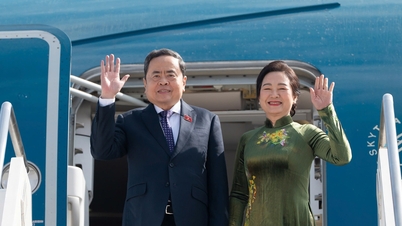
![[Photo] National Assembly Chairman Tran Thanh Man concludes official visit to Italy, departs for IPU-152](https://vphoto.vietnam.vn/thumb/1200x675/vietnam/resource/IMAGE/2026/04/15/1776253436109_vna-potal-chu-tich-quoc-hoi-ket-thuc-tham-chinh-thuc-italy-len-duong-du-ipu-152-tai-tho-nhi-ky-8702876-7969-jpg.webp)
![[Image] Current status of the land area of over 5.5 hectares that Ho Chi Minh City is considering reclaiming.](https://vphoto.vietnam.vn/thumb/1200x675/vietnam/resource/IMAGE/2026/04/15/1776245690095_1-3102-8409-jpg.webp)
![[Photo] Capturing each moment at the "People We Meet" photography exhibition.](https://vphoto.vietnam.vn/thumb/1200x675/vietnam/resource/IMAGE/2026/04/15/1776245695648_1-8944-jpg.webp)





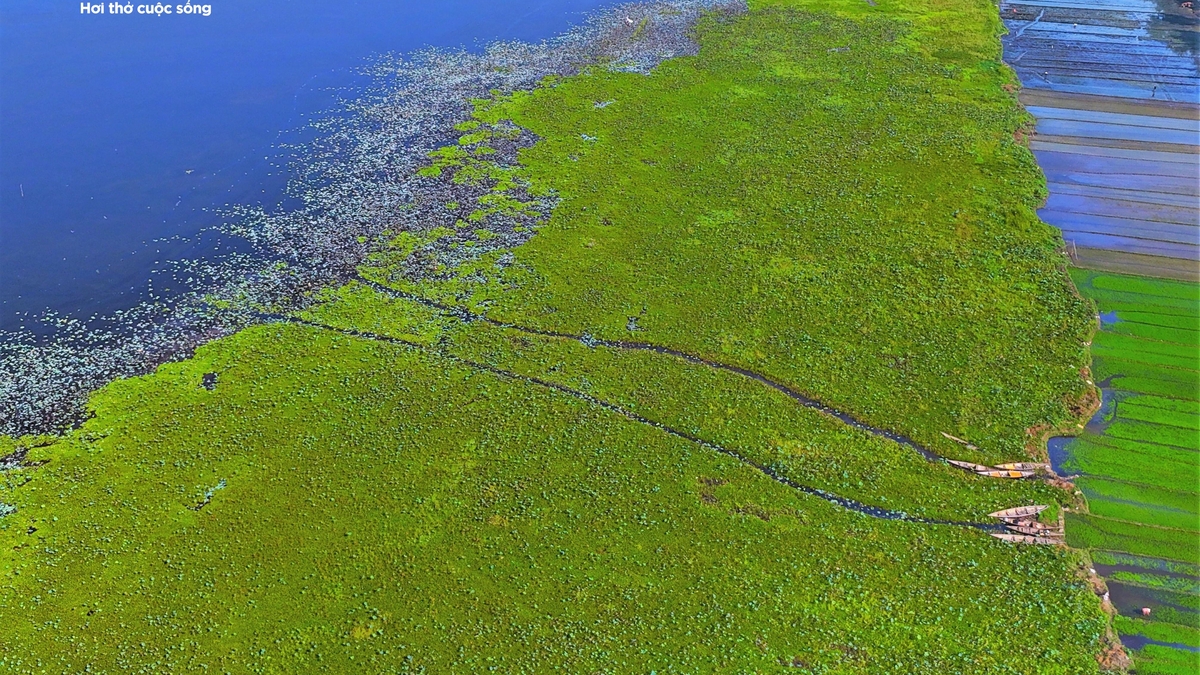
![[E-Magazine]: The Warmth of the Changing Seasons](https://vphoto.vietnam.vn/thumb/402x226/vietnam/resource/IMAGE/2026/03/27/1774616373750_e-magazine-hoi-w1200t0-di2612d199d5171010t11920l1-hagm-027.webp)










![[Photo] Mrs. Ngo Phuong Ly meets and exchanges views with Mrs. Peng Li Yuan](https://vphoto.vietnam.vn/thumb/1200x675/vietnam/resource/IMAGE/2026/04/16/1776277858080_phu-nhan-1-jpg.webp)
![[Photo] My Son at night: A thousand-year-old heritage site amidst the Milky Way](https://vphoto.vietnam.vn/thumb/1200x675/vietnam/resource/IMAGE/2026/04/15/1776261039184_ndo_br_chon6-jpg.webp)
![[Photo] The General Secretary, President and his wife meet with Vietnamese-Chinese friendship leaders.](https://vphoto.vietnam.vn/thumb/1200x675/vietnam/resource/IMAGE/2026/04/15/1776264829725_vna-potal-tong-bi-thu-chu-tich-nuoc-to-lam-gap-mat-nhan-sy-huu-nghi-viet-nam-trung-quoc-8703641-3130-jpg.webp)
![[Photo] National Assembly Chairman Tran Thanh Man attends the opening session of IPU-152](https://vphoto.vietnam.vn/thumb/1200x675/vietnam/resource/IMAGE/2026/04/16/1776277863731_ctqh5-jpg.webp)
![[Photo] National Assembly Chairman Tran Thanh Man arrives in Türkiye to attend IPU-152](https://vphoto.vietnam.vn/thumb/1200x675/vietnam/resource/IMAGE/2026/04/15/1776261003665_tnk10-jpg.webp)





































Comment (0)