


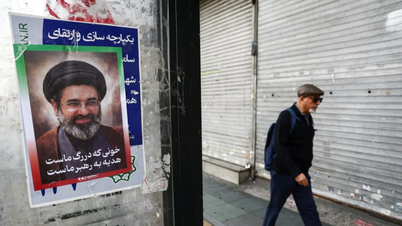
Mr. Qalibaf will coordinate areas of cooperation between Iran and China.
Establishing an “indirect veto power”
The appointment announcement, made just two days after the conclusion of the US-China summit, reflects how Iran has quickly capitalized on Beijing's firm stance to strengthen its strategic partnership with the country.
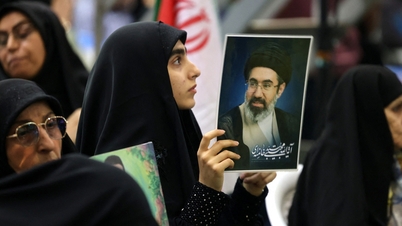
Iran's official reason for selecting Qalibaf was the need for a "new world order." Immediately after his appointment, Qalibaf declared: "The world is on the threshold of a new order, and the future belongs to the nations of the Southern Hemisphere." This statement reflects Tehran's view that maintaining close ties with Beijing is crucial to breaking Washington's unilateral dominance.
Trump's visit to China also coincided with a broader U.S. strategy to propose major defense and technology deals with Gulf states such as Saudi Arabia and the United Arab Emirates (UAE).
By reaching agreements in the fields of artificial intelligence (AI) and air defense, Washington aims to establish an “indirect veto” to prevent the expansion of Chinese companies into strategic infrastructure in the Middle East.
Saudi Arabia and the UAE have signed massive technology contracts with American corporations such as NVIDIA and AMD to build advanced data centers and modern digital infrastructure. Microsoft alone has invested $1.5 billion in the UAE technology company G42 and announced plans to invest over $15 billion in the country between 2023 and 2029 to support the development of cloud infrastructure and AI.
As for Saudi Arabia, during President Trump's visit to the Gulf last year, the country's AI company, Humain, decided to purchase 18,000 NVIDIA AI chips for use in its data centers and announced a $10 billion partnership with AMD.
On the other hand, the US is also seeking to tighten control over technology in order to limit China's influence in sensitive areas of the region.
China's influence in the region
Through infrastructure, industrial investment, and long-term financing, Chinese enterprises and policy banks have become indispensable partners in the development of the Middle East. Projects under the Belt and Road Initiative include port modernization in the UAE, the development of industrial parks along Egypt's Suez Canal corridor, upgrades to railways and telecommunications in the Gulf and North Africa, as well as EPC (design-procurement-build) contracts undertaken by Chinese state-owned enterprises.
Beyond economic benefits, these projects also help Chinese companies become closely integrated into the region's logistics, transportation, and industrial networks, thereby creating long-term dependence and expanding their influence.
As the world's largest importer of crude oil, China has forged long-term relationships with Saudi Arabia, Iraq, the UAE, Kuwait, and Oman, while investing in refining and downstream industries. Joint ventures with Gulf national oil companies create a two-way interdependence, helping Beijing secure energy flows and market access. Partnerships also extend to hydrogen, renewable energy, and integrated petrochemical complexes.
Diplomatically, China maintains relations with all parties in the region, including adversaries, and has leveraged this "neutral" stance to promote the 2023 Saudi Arabia-Iran normalization agreement. Mechanisms such as the China-Arab Cooperation Forum (CASCF) and the growing strength of the BRICS group of emerging economies open channels for economic coordination, development financing, and political cooperation, thereby enhancing Beijing's coordinating role.
Significantly, technological cooperation is becoming increasingly important. Chinese telecommunications companies are providing 5G infrastructure (Huawei is deploying 5G networks in Saudi Arabia and the UAE), smart city platforms, AI collaborations, digital payment systems, and integration with the Beidou global satellite navigation system.
These projects help to embed Chinese technology standards into the national digital system and could create a “technological lockdown,” including through large-scale surveillance infrastructure.
HANH NGUYEN (Based on Modern Diplomacy, Middle East Institute)
Source: https://baocantho.com.vn/my-trung-dau-nhau-tai-vung-vinh-a205154.html

![[Image] Hanoi's urban life under the challenge of a "scorching hot" environment](https://vphoto.vietnam.vn/thumb/1200x675/vietnam/resource/IMAGE/2026/05/25/1779706979265_nang-nong-t5-2026-minh-duy-7-4636-jpg.webp)
![[Image] Close-up view of the interchange connecting the two expressways and Long Thanh Airport.](https://vphoto.vietnam.vn/thumb/1200x675/vietnam/resource/IMAGE/2026/05/25/1779703378210_ndo_br_z7863716673926-224453a31600126cce10622af6290afd-4549-jpg.webp)








































































Comment (0)