

Faced with the increasingly complex reality of climate change, with natural disasters, storms, and floods occurring with greater frequency and intensity, directly impacting agricultural production, the Department of Agriculture and Environment of the province has proactively reformed its thinking, shifting from "agricultural production" to "agricultural economy ," considering the enhancement of value chains and adaptability as the essential path to sustainable development.
Amidst mounting difficulties, the entire sector has demonstrated unwavering resilience, simultaneously working diligently to mitigate the consequences of natural disasters and restore production, while vigorously innovating the growth model towards ecological practices, applying high technology, and empowering the people as key players in building new rural areas. Following these challenges, the province's agriculture sector has achieved a breakthrough, with the value of agricultural, forestry, and fisheries production projected to increase by 2.9% in 2025 compared to 2024, further affirming its pivotal role in the province's socio-economic development.
 |
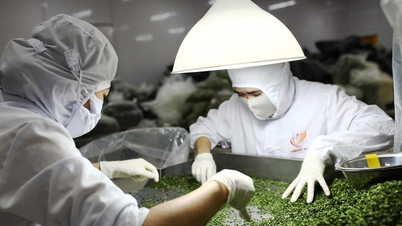
| An Xuan Organic Medicinal Herb Garden and Value Chain Production Linkage Model (Cam Lo Commune) - Photo: HC |
According to Tran Quoc Tuan, Director of the Department of Agriculture and Environment, a prominent achievement in recent times has been the vigorous and substantive restructuring of the agricultural sector. Commercial agriculture has developed significantly, with many concentrated production areas linked to the province's key products gradually taking shape. As a result, the fragmented, small-scale production mindset has been replaced by a chain-linked approach, contributing to increased added value and competitiveness of Quang Tri's agricultural products in the market.
The province currently has 417 high-tech production facilities; annually, they produce approximately 230 hectares of organic rice and over 900 hectares of rice grown organically; over 80% of the rice area and 70% of the corn area use high-quality varieties. The livestock sector has 1,021 farms, many of which are organic farms applying advanced, closed-loop farming processes according to VietGAP standards.
Beyond agriculture and livestock farming, innovations in the sector have spread strongly to forestry, irrigation, and resource and environmental management. Currently, 100% of the province's forest area has been digitized on GIS platforms, combined with unmanned aerial vehicles (drones), contributing to improved forest management and protection efficiency. The irrigation sector is gradually modernizing with a WebGIS flood mapping system, automatic monitoring stations at reservoirs and hydrological stations; many mobile applications supporting disaster prevention and control have been put into use. Land and environmental management have been strengthened through the digitization of all cadastral maps and an automatic environmental monitoring system, aiming for sustainable development.
In today's fields and farms, digital technology is no longer unfamiliar to farmers in Quang Tri. Drones have been deployed on over 22,000 hectares of rice paddies, and water-saving irrigation systems have been applied to approximately 5,000 hectares of crops. Along with production, quality management has also been tightened with 72 registered growing areas and over 200 establishments applying traceability using QR codes.
The province's agriculture has gradually improved the value chain and built brands for many key products. Many production models adapted to climate change have yielded clear results, including high-tech shrimp farming, organic rice, low-emission rice linked to carbon credits, large-timber forest planting, FSC-certified forests, ecological coffee, and agroforestry models.
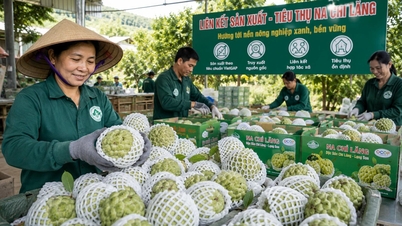
In particular, value chain linkage models between businesses, cooperatives, and farmers are increasingly expanding, helping to stabilize output, increase income, and reduce risks for producers. The "One Commune, One Product" (OCOP) program continues to create a widespread impact, becoming a highlight in the province's rural economic development. Many OCOP products have established their brands, reaching domestic and international markets, contributing to enhancing the value of Quang Tri's agricultural products.
"The achievements from shifting production thinking towards an agricultural economy, linking production with environmental protection and climate change adaptation, not only contribute to increasing the added value of agricultural products and improving people's income, but also create a solid foundation for a modern, sustainable agriculture in the future."
"With a determination to enhance the value chain and proactively adapt to climate change, the Department of Agriculture and Environment of Quang Tri province is gradually realizing the goal of building an ecological agriculture, a modern rural area, and civilized farmers, making an important contribution to the rapid and sustainable development of the province in the new period," affirmed Tran Quoc Tuan, Director of the Department of Agriculture and Environment.
Hien Chi
Source: https://baoquangtri.vn/kinh-te/202601/nang-cao-chuoi-gia-tri-thich-ung-bien-doi-khi-hau-0b470e9/



![[Photo] General Secretary and President To Lam presides over a meeting on preparations for the review of one year of operation of the three-tiered government system.](https://vphoto.vietnam.vn/thumb/1200x675/vietnam/resource/IMAGE/2026/06/02/1780391821195_a1-bnd-4595-9717-jpg.webp)























































Comment (0)