

This decree stipulates raising the tax-exempt revenue threshold for household businesses from 500 million VND to 1 billion VND per year. Raising this taxable income threshold will partially address the immediate difficulties faced by household businesses.
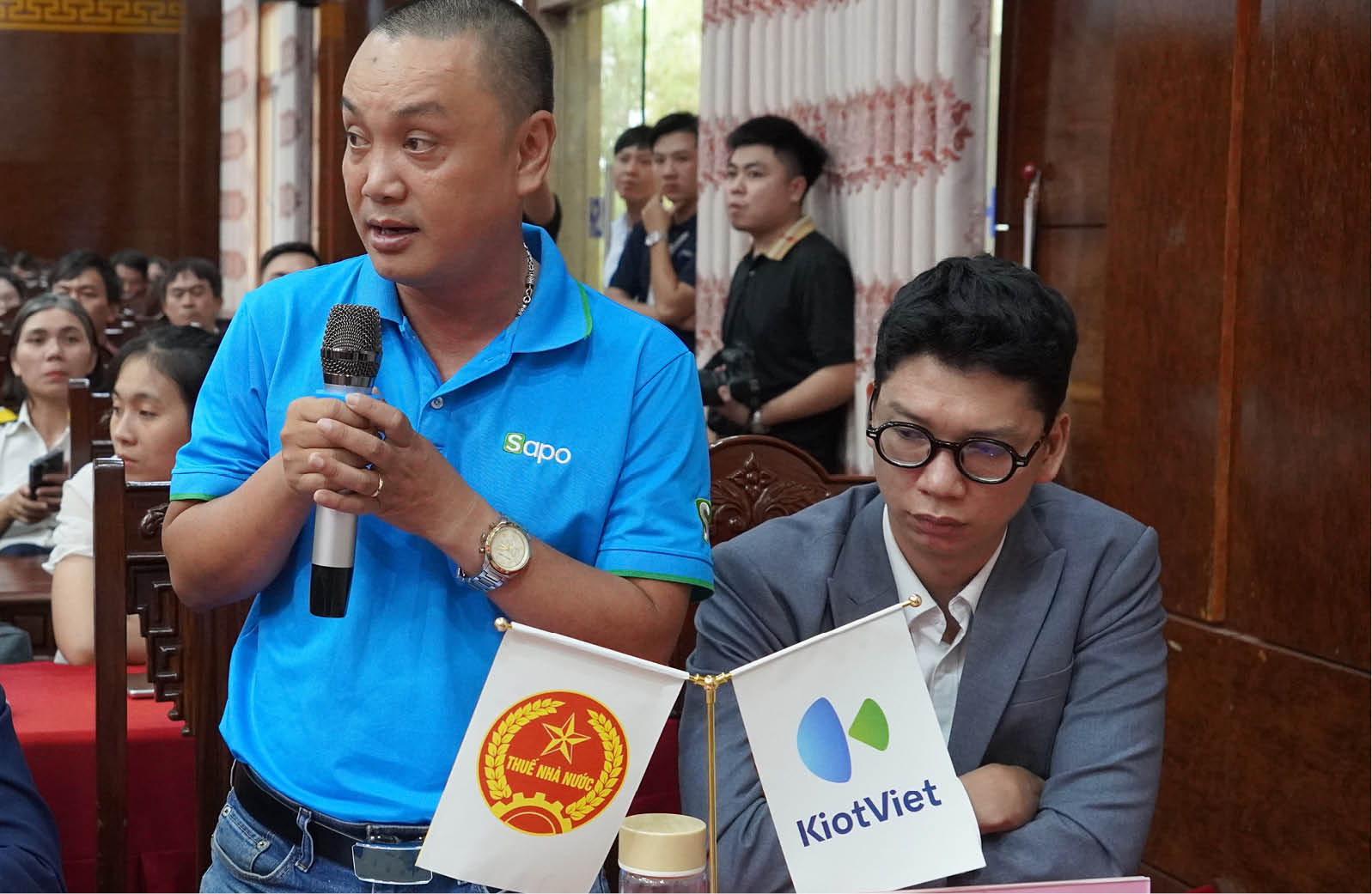 |
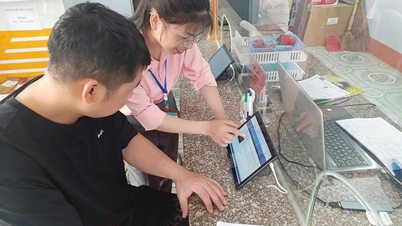
| Solution providers participate in supporting household businesses. |
Timely
According to Decree 68/2026 dated March 5, 2026, regulating tax policies and tax management for household businesses and individual businesses (collectively referred to as household businesses), household businesses determine their revenue and fulfill their tax declaration and payment obligations based on different revenue thresholds. A key point of concern for household businesses is that from January 1, 2026, household businesses with annual revenue of VND 500 million or less will be exempt from Value Added Tax (VAT) and Personal Income Tax (PIT). Household businesses with annual revenue exceeding VND 500 million must declare and pay VAT and PIT as prescribed. Even with tax exemption, household businesses with annual revenue below VND 500 million must still declare taxes and maintain proper accounting records.
After its issuance, the aforementioned decree attracted considerable public attention, with the majority believing that the tax-exempt income threshold of under 500 million VND for household businesses was too low. Responding to these opinions, the Government recently issued Decree 141 to raise the taxable revenue threshold for household businesses from 500 million VND to 1 billion VND per year.
Mr. Tran Minh Duc, Director of Hong Duc Center for Financial, Accounting, and Tax Training and Consulting, said that raising the tax-exempt revenue threshold for small and micro-enterprises to 1 billion VND/year is a very timely and significant policy. Currently, small and micro-enterprises, operating primarily on family labor, face increasing costs for rent, goods, labor, utilities, and transportation. While their book revenue may be several hundred million VND per year, their actual profit is not substantial. Therefore, raising the tax threshold is not just about "reducing taxes," but also about creating more room for small and micro-enterprises to have additional resources to maintain their businesses, accumulate capital, expand investments, and gradually adapt to the new tax management model.
Transparent
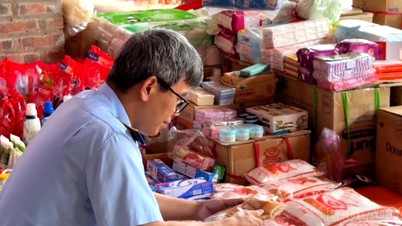
A small survey conducted at markets such as An Cuu and Dong Ba, where a significant number of small businesses have revenues under 1 billion VND, revealed that the majority of business owners were pleased with the increase in the tax threshold to 1 billion VND per year. This policy will effectively support small businesses, reducing their tax burden given their limited management and accounting capabilities. However, it cannot be denied that raising the tax threshold also creates considerable pressure on tax administration.
In response to this situation, the tax authorities have developed a monitoring mechanism; strengthened the application of information technology, analyzed big data, and closely coordinated with credit institutions to cross-check and verify cash flows related to taxpayers' business activities, thereby clarifying signs of revenue concealment. New regulations issued by the Ministry of Finance and the State Bank of Vietnam regarding the transparency of cash flows, management of household business accounts, and the use of personal accounts in business also create a legal framework for transparency in business.
Accordingly, the current issue for household businesses is not just about how much tax to pay, but about proving revenue, expenses, cash flow, and the origin of goods. Therefore, household businesses need to take advantage of this period to shift their mindset from habitual trading to a business with proper records, data, and management. In the long term, when household businesses grow to a larger scale, have stable revenue, and need to convert to a formal enterprise, this transparent foundation will facilitate the conversion process.
Mr. Tran Minh Duc recommended that, even with the raised taxable income threshold, household businesses with revenue under 1 billion VND should still record daily revenue, including cash sales, bank transfers, and sales via social media and e-commerce platforms; retain invoices, purchase documents, lease agreements, payment documents, bank account statements, and other documents related to business operations. Household businesses should separate personal accounts and business cash flow as much as possible.
For households using electronic invoices, cash registers, sales software, or QR payment, it's crucial to ensure that there isn't a significant discrepancy between actual sales figures, invoices, records, and bank accounts without clear justification. Households approaching the 1 billion VND/year mark or with a tendency towards rapid growth should prepare a management foundation similar to a small business: maintaining proper accounting records, having a designated accountant/tax officer, established sales processes, inventory management, and record keeping.
Source: https://huengaynay.vn/kinh-te/nang-nguong-thu-nhap-chiu-thue-165798.html




![[Photo] National Assembly Chairman Tran Thanh Man working with the Standing Committee of the Law and Justice Committee](https://vphoto.vietnam.vn/thumb/1200x675/vietnam/resource/IMAGE/2026/05/21/1779378929214_ndo_br_1-4610-jpg.webp)
![[Photo] General Secretary and President To Lam presides over a working session with the Central Policy and Strategy Committee on the development of the materials industry.](https://vphoto.vietnam.vn/thumb/1200x675/vietnam/resource/IMAGE/2026/05/21/1779359935432_a3-bnd-3129-1412-jpg.webp)


























































































Comment (0)