

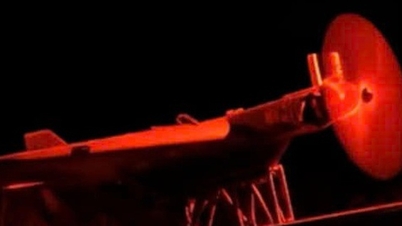
In a video released on May 20, Iskander-K missile systems are seen moving in convoys escorted by attack helicopters before deploying to field positions amidst densely wooded areas. After securing their positions, the units begin practicing the procedure for preparing to launch cruise missiles.
According to the Russian Ministry of Defense , soldiers are training to use nuclear weapons "under conditions of aggression," while emphasizing that all three components of Russia's nuclear triad are participating in this exercise.
The exercise was massive, involving approximately 64,000 soldiers, 7,800 military vehicles, 200 missile launchers, 140 aircraft, 73 surface warships, and 13 submarines. Forces from the Northern Fleet and the Pacific Fleet, which houses all of Russia's nuclear submarines, also participated.
The Iskander-K is currently one of Russia's most highly-regarded missile systems, particularly after its use in the Ukraine conflict. The system entered service in the mid-2010s and underwent a major upgrade in the early 2020s with the new 9M729 cruise missile.
According to military assessments, the 9M729 missile has a range of 1,500 to 2,000 km, far exceeding previous versions. This missile is believed to be a variant developed from the Russian Navy's Kalibr 3M14 cruise missile and is capable of carrying both conventional and nuclear warheads.
With this range, the Iskander-K can strike numerous targets across Europe from within Russian territory. The system's mobile launchers also allow for rapid repositioning after firing, increasing its survivability against counterattacks.
Another major advantage of cruise missiles like the 9M729 is their ability to fly along complex terrain, making them more difficult for radar to detect and track compared to ballistic missiles.
Although it doesn't reach the extremely high speeds of ballistic missiles, the Iskander-K is still considered an important tool in Russia's tactical nuclear deterrence strategy.
For many years, the Iskander-K was virtually Russia's primary long-range ground-based strike system for tactical nuclear missions. By the end of 2025, Moscow further enhanced its capabilities by introducing the Oreshnik medium-range ballistic missile into service.
Following the Cold War, Russia became increasingly reliant on its nuclear arsenal to counterbalance NATO's conventional military superiority. Russian leaders have repeatedly asserted that nuclear deterrence is vital to national security.
Speaking in January, Russian Security Council Deputy Chairman Dmitry Medvedev declared: "Without nuclear weapons, it is very likely that our country would no longer exist." Many Western officials and experts have also acknowledged that Russia's nuclear arsenal is a factor that has led NATO to avoid direct involvement in the Ukraine conflict.
In November 2024, Admiral Rob Bauer, then Chairman of the NATO Military Committee, stated that if Russia did not possess nuclear weapons, NATO could have directly deployed troops to Ukraine to repel Russian forces.
By November 2025, former NATO Secretary General Jens Stoltenberg also argued that the risk of direct hostilities with a nuclear power was the main reason the West was not engaging in large-scale conflict in Ukraine.
Source: https://suckhoedoisong.vn/nga-trien-khai-ten-lua-iskander-k-san-ready-to-attack-targets-across-europe-169260521082936107.htm
![[Photo] Secretary of the National Assembly Party Committee, Chairman of the National Assembly presides over the meeting of the Standing Committee and Executive Committee of the National Assembly Party Committee.](https://vphoto.vietnam.vn/thumb/1200x675/vietnam/resource/IMAGE/2026/06/03/1780480353201_ndo_br_bnd-2585-jpg.webp)
![[Photo] General Secretary and President To Lam presides over a meeting with the Central Organizing Committee.](https://vphoto.vietnam.vn/thumb/1200x675/vietnam/resource/IMAGE/2026/06/03/1780482764658_a1-bnd-4741-3342-jpg.webp)
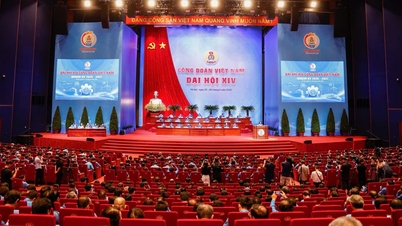
![[Photo] First session of the 14th Congress of the Vietnam Trade Union](https://vphoto.vietnam.vn/thumb/1200x675/vietnam/resource/IMAGE/2026/06/03/1780465947883_ndo_br_img-3852-jpg.webp)








































![[Video] Sunset at Lap An Lagoon – Where the sun sets over the fishing nets](https://vphoto.vietnam.vn/thumb/1200x675/vietnam/resource/IMAGE/2026/05/31/1780192137701_beach-landscape-sea-water-nature-grass-745871-pxhere-com.jpeg)






























Comment (0)