

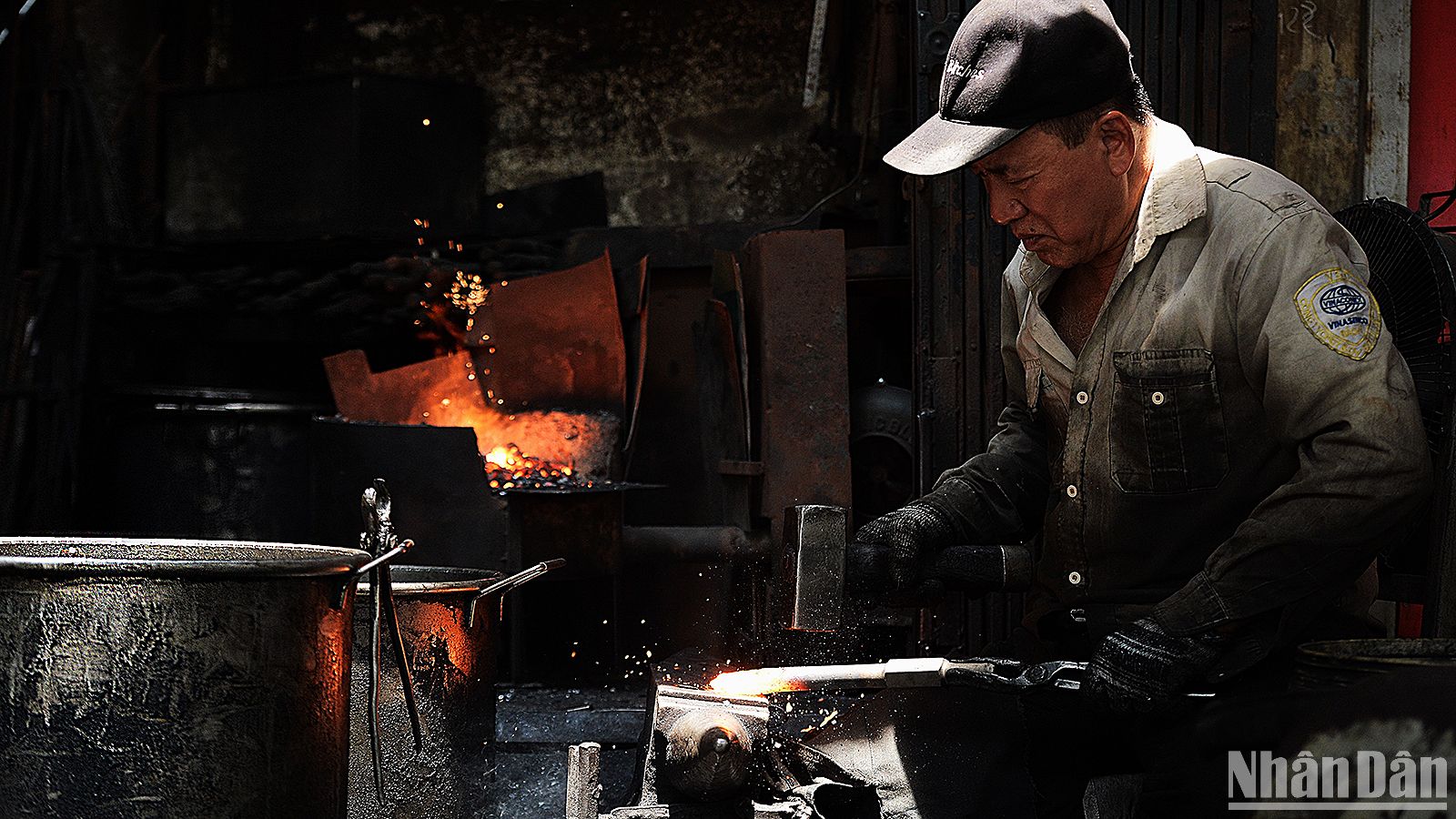
Mr. Nguyen Phuong Hung, also known as "Hung the Blacksmith," lights the furnace every day to preserve the traditional craft.
Hanoi's 36 streets are often known for their interwoven narrow lanes, associated with many traditional crafts that have become a distinctive cultural feature, such as Hang Bong, Hang Bac, Hang Vai, and Thuoc Bac. Among them, Lo Ren Street is famous for its products used in agricultural production, such as plows, hoes, shovels, knives, and scissors.
In the memory of Mr. Nguyen Phuong Hung, also known to many as "Hung the blacksmith," a few decades ago, the furnaces on this small street were always ablaze with fire. From a few dozen meters away, one could easily hear the clanging of hammers, the hurried sounds of laughter, and the bustling activity of buying and selling.
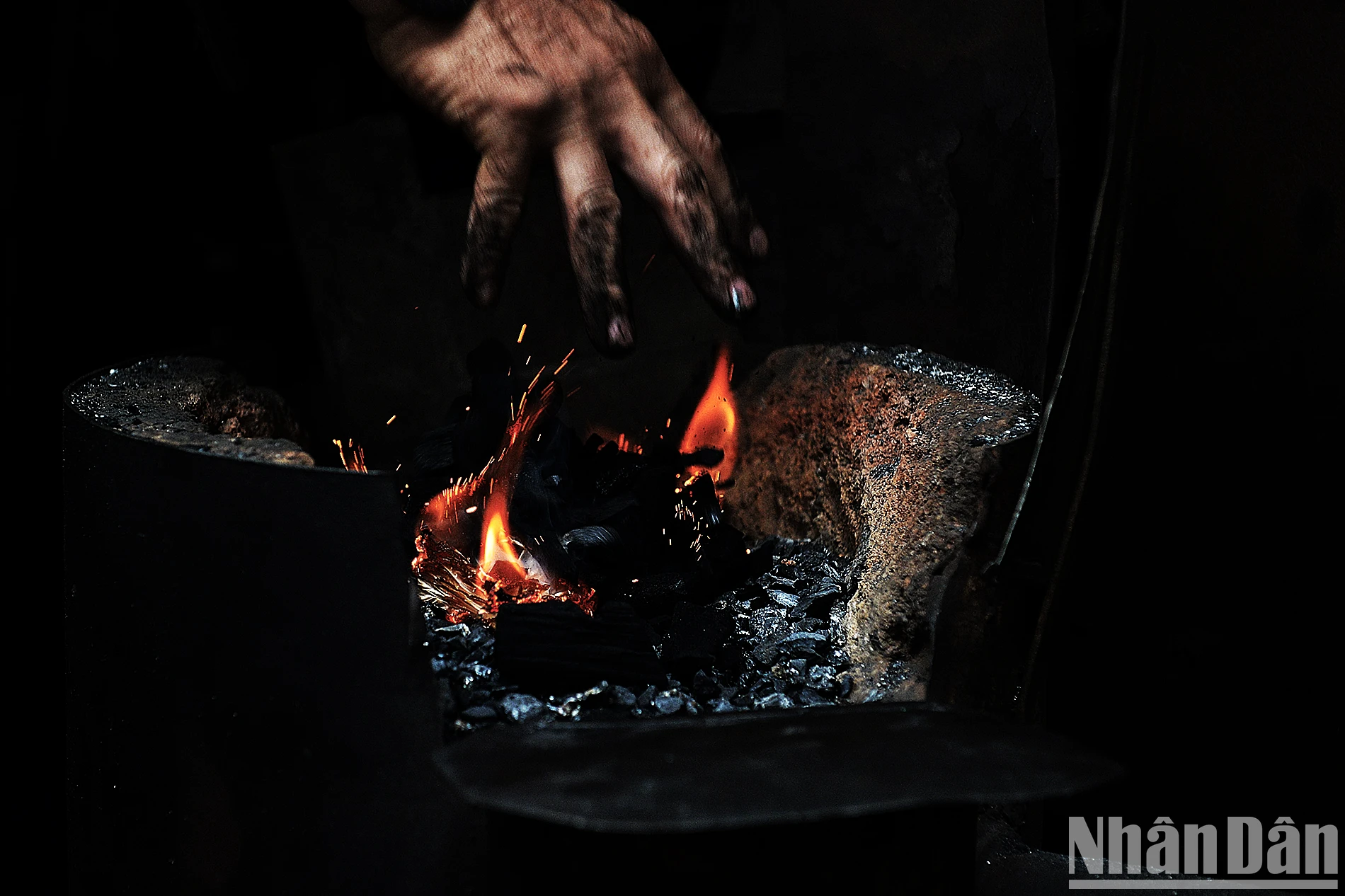 |
Mr. Hung lit the bellows in his traditional forge at the corner of Lo Ren and Hang Dong streets.
Like other children of that time, from the age of 10, Mr. Hung had to help his father gather coal, light fires, and prepare tools. However, few people know that young Nguyen Phuong Hung once hated his grandfather's and father's traditional blacksmithing trade "because it was hot, gave him headaches, and he was always sweating, covered in soot, and metal dust."
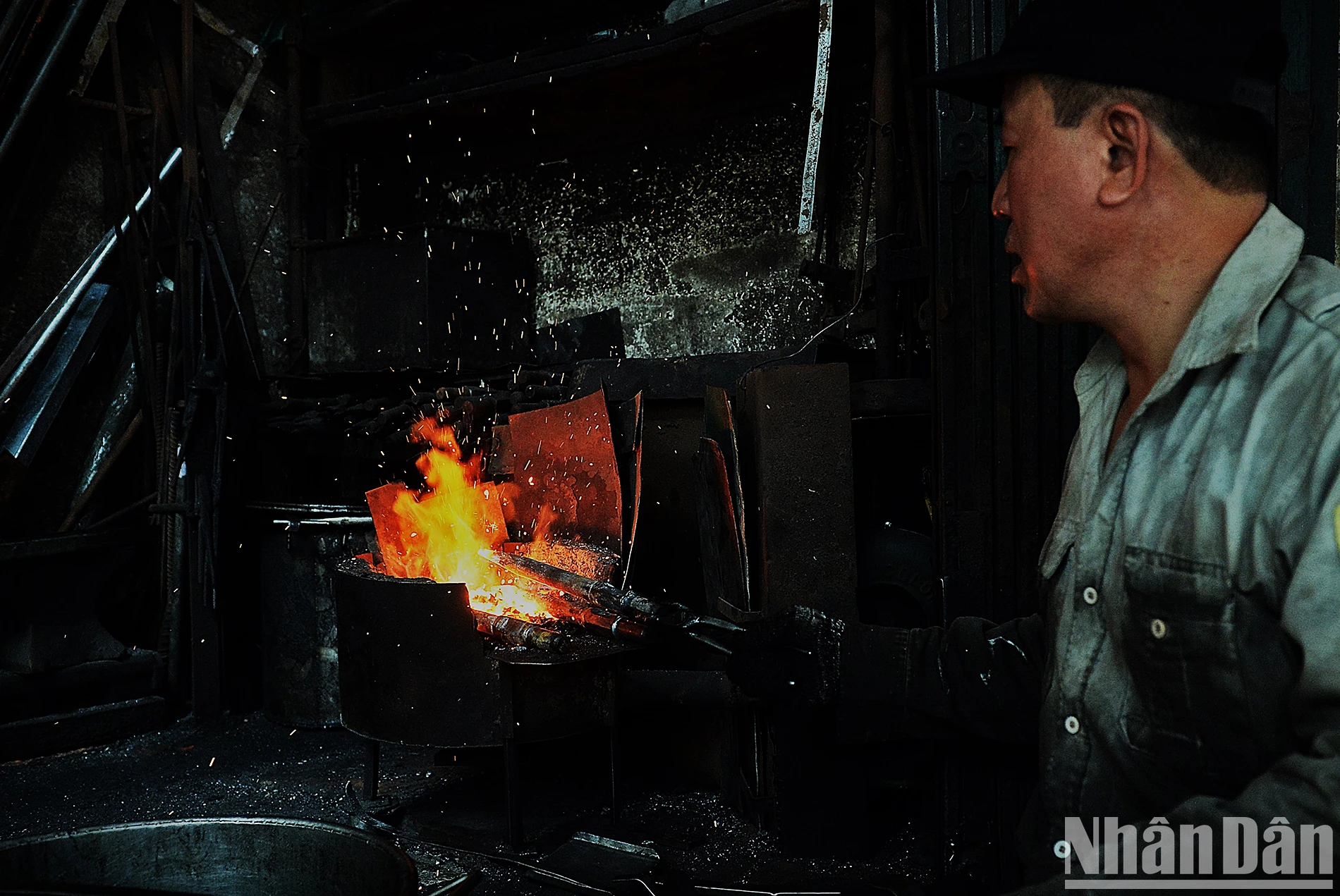 |
Mr. Hung's most common job is repairing and refurbishing drill bits and chisels used in construction machinery.
Therefore, after graduating from high school, young Nguyen Phuong Hung decided to study mechanics and then work at an automobile repair shop. Hung's life would probably have been intertwined with automobile parts if, before his death, his father hadn't called his children together and instructed them: "Only Hung can carry on the family business."
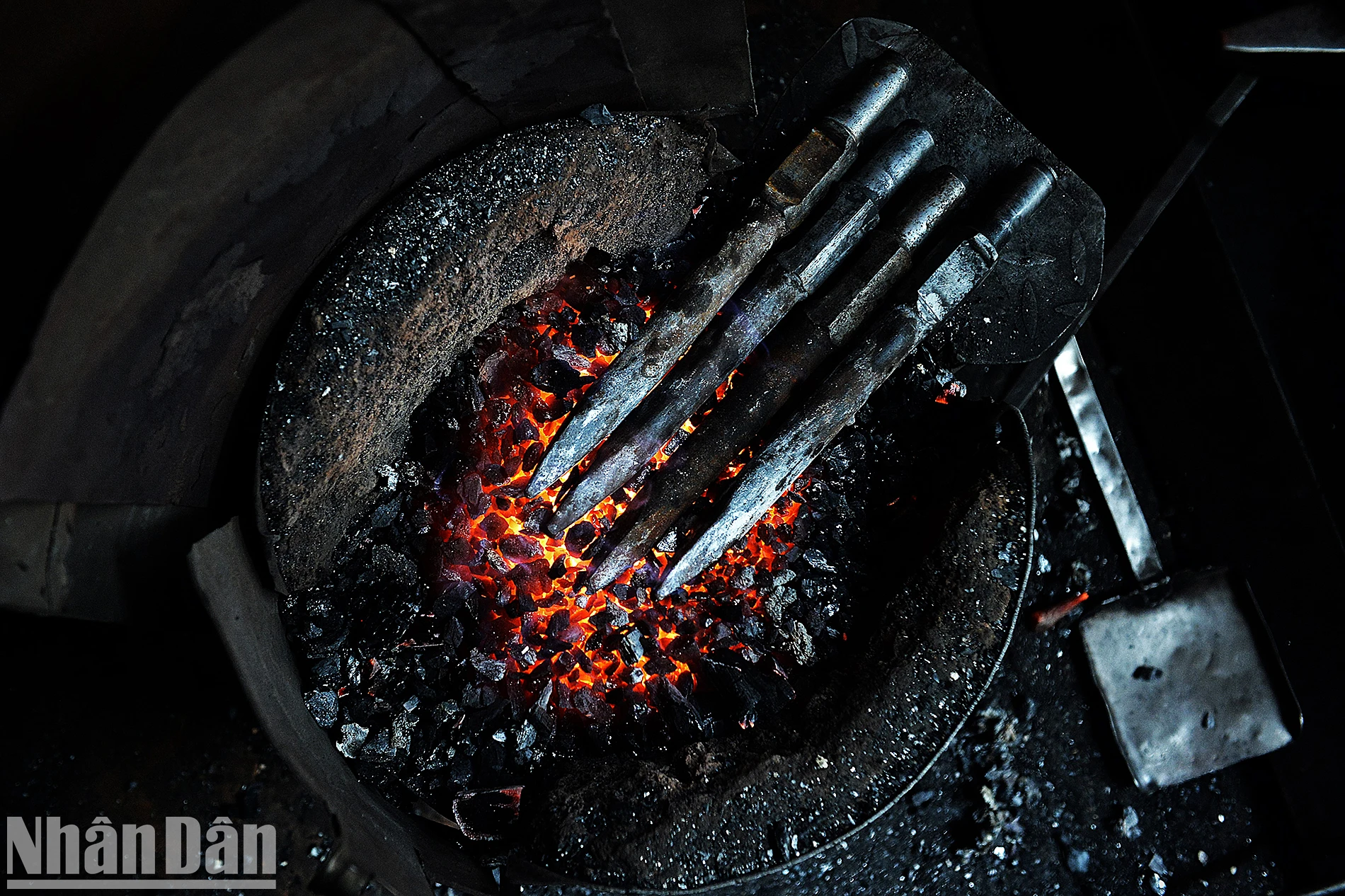 |
The traditional blacksmith's forge glows red as it welcomes new "projects".
At that moment, Mr. Hung had an epiphany. He realized that, with that same forge, his father had raised seven children, providing them with a good education and turning them into respectable individuals. He officially took over the family business, becoming the third-generation craftsman to keep the ancestral forge burning.
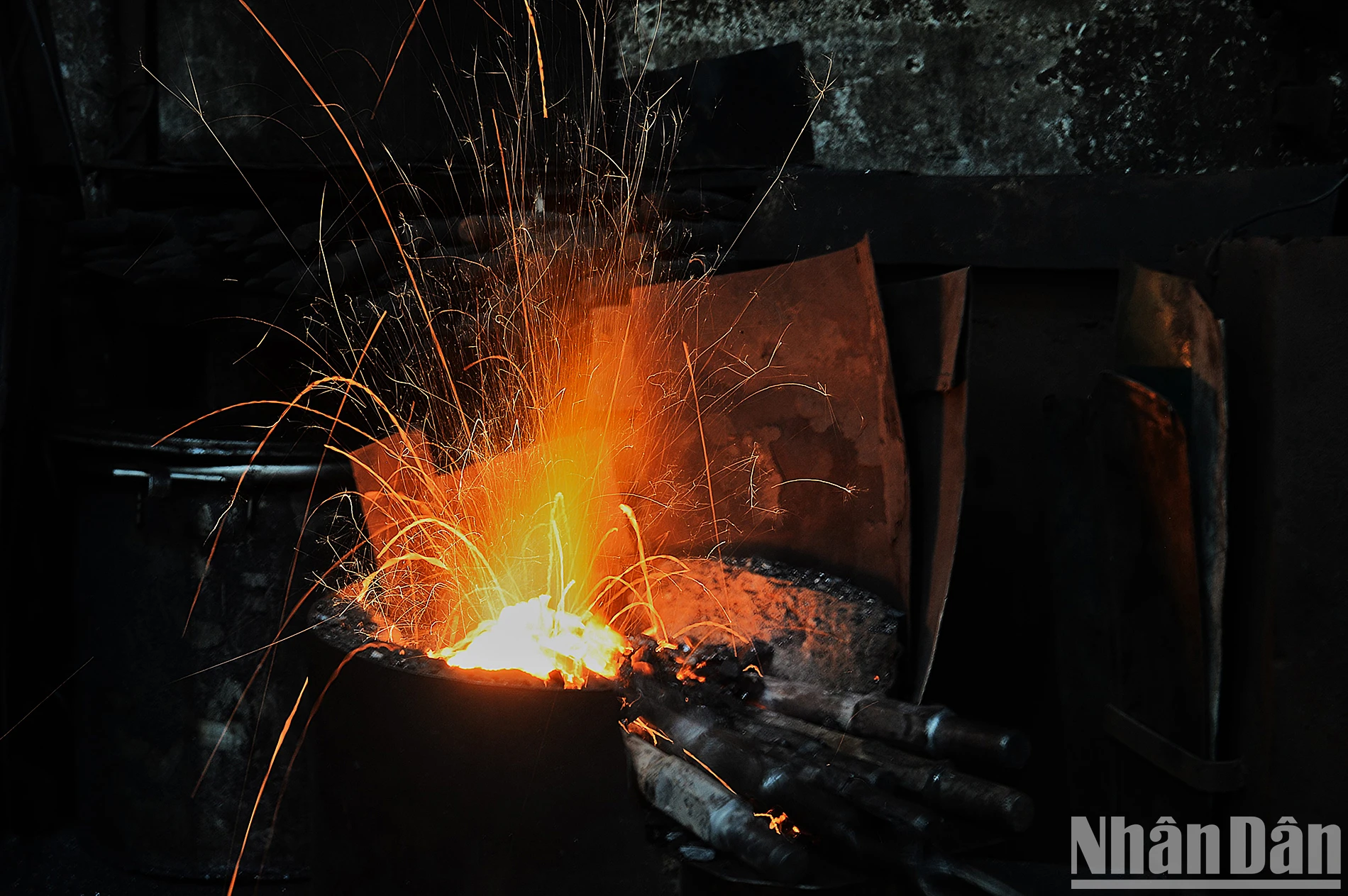 |
The crackling "fire flowers" signal when the raw materials are ready for processing.
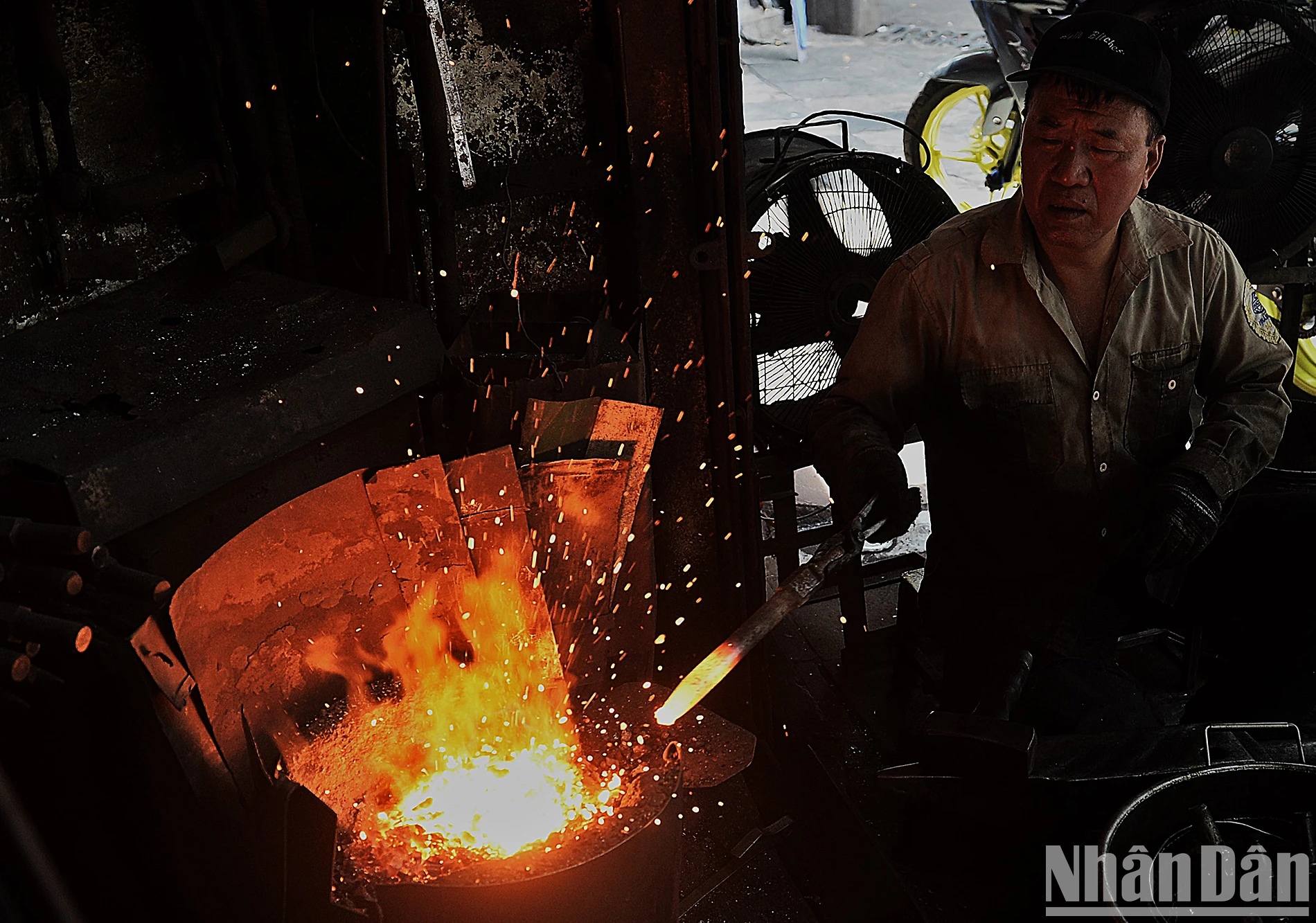 |
At this point, Mr. Hung will remove the raw materials from the oven.
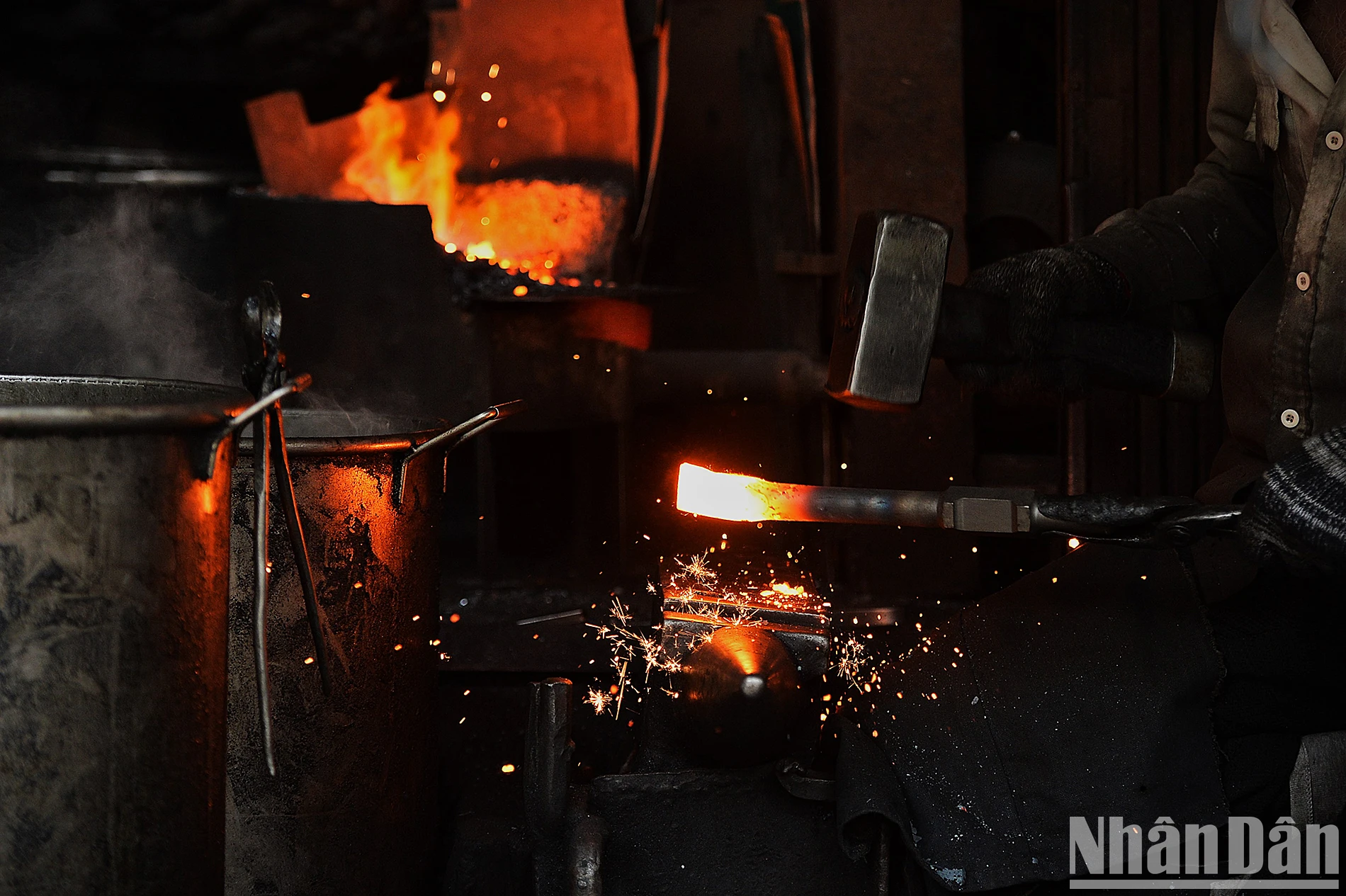 |
Each sharp, resonant sound of the hammer striking the wood signifies another step in the product's development and vitality.
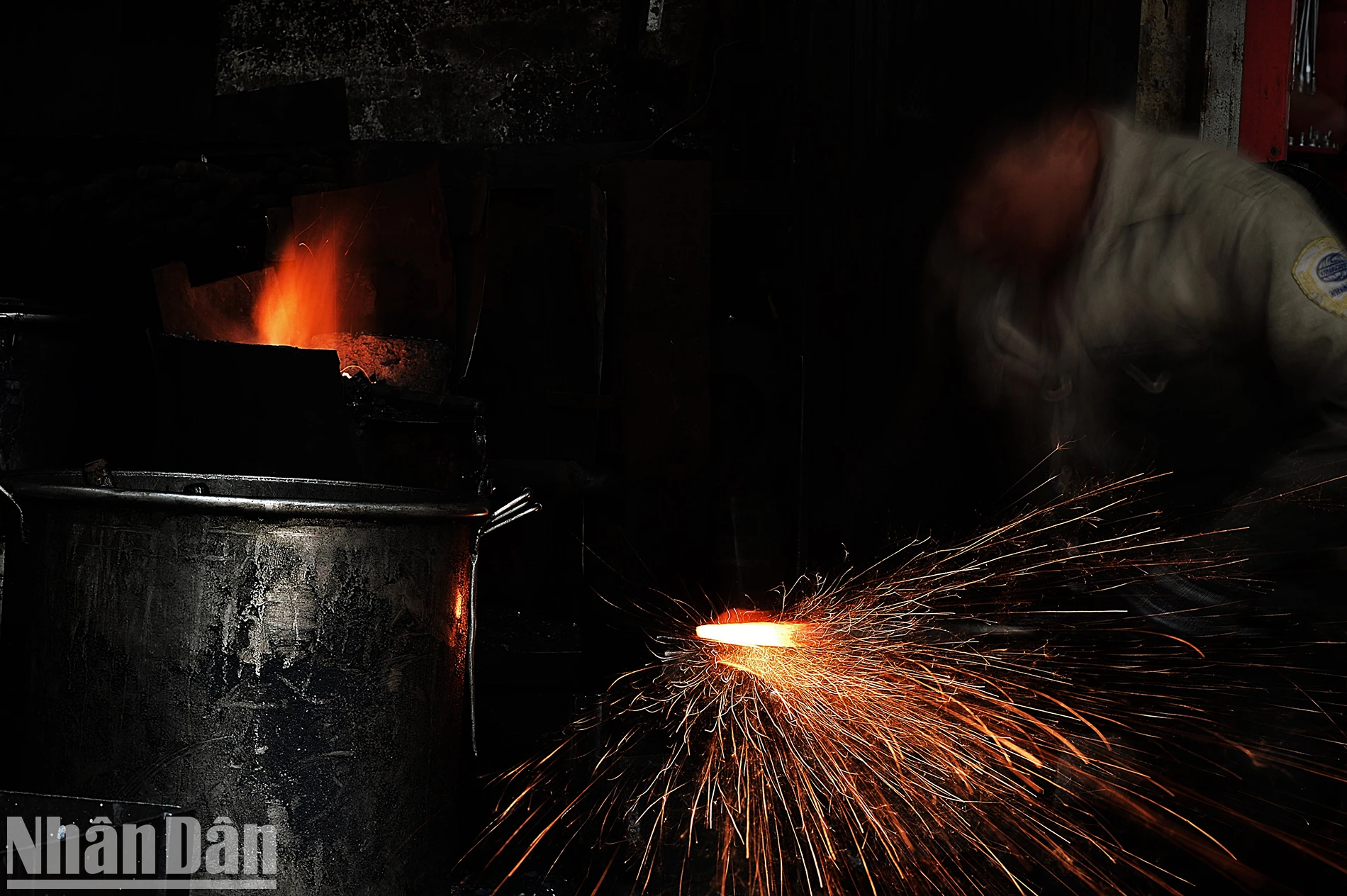 |
The red glow of the metal billet shines through the skillful hands of the craftsman, who is now 64 years old.
Nearly 30 years have passed, and the traditional blacksmithing furnaces of the 36 streets of Hanoi have gradually cooled down. The artisans, many of whom are third or fourth-generation inheritors of this laborious craft, have either put down their hammers or switched to welding, precision mechanics, or selling construction materials.
However, amidst the increasingly bustling and modern pace of life in the Old Quarter, Mr. Nguyen Phuong Hung's furnace still burns brightly in a space of only 2 square meters at the intersection of Lo Ren and Hang Dong streets (Hoan Kiem district, Hanoi).
"Many people think that blacksmithing is all about physical strength. But that's not true. This profession requires skill, meticulousness, and a high degree of precision. Furthermore, a blacksmith needs experience, finesse, nimble hands, and intense concentration. There have been people who have approached me asking to learn the trade, but after a while, they all gave up because they found manual blacksmithing too strenuous," shared the blacksmith born in 1960.
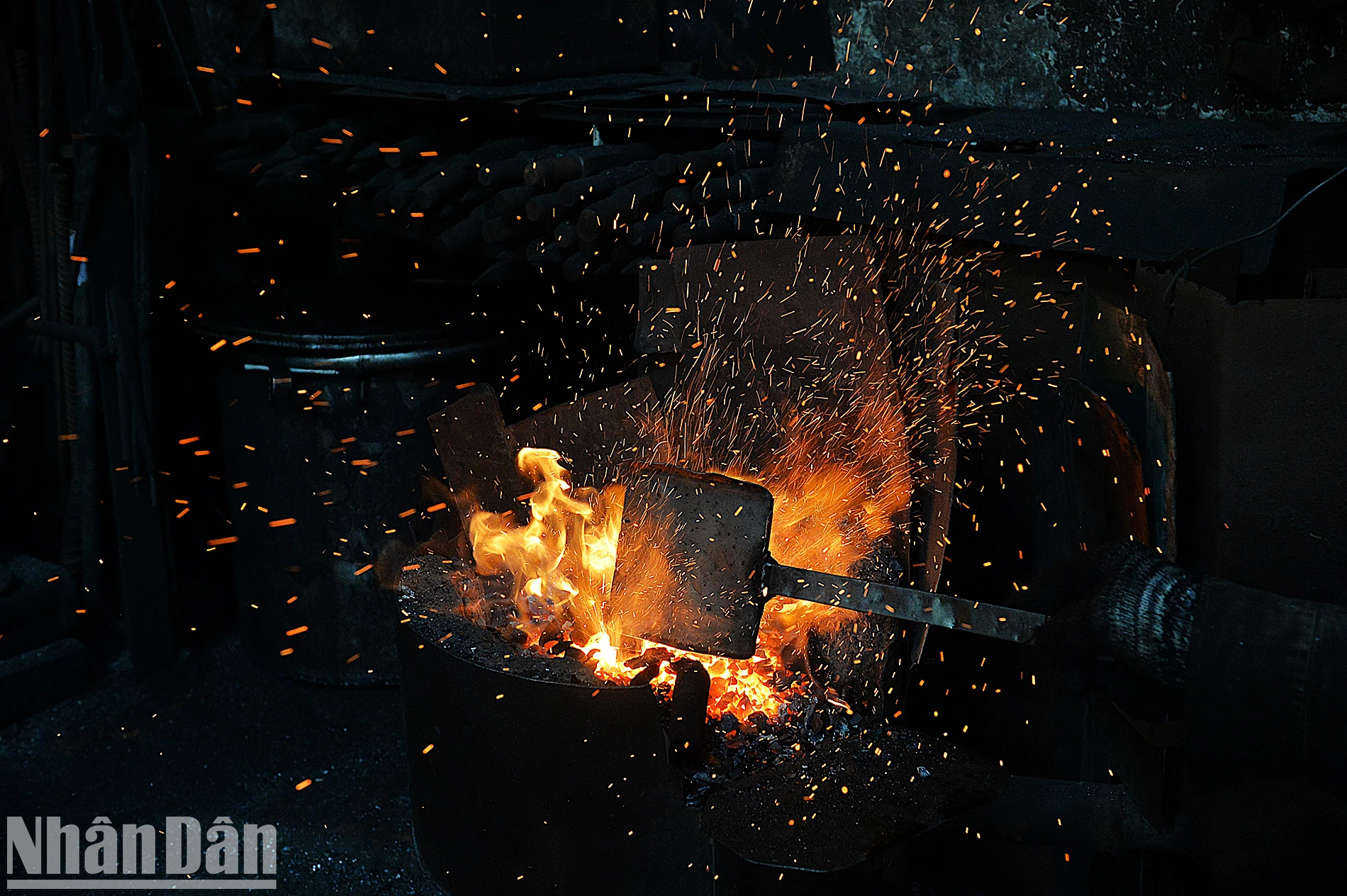 |
After each forging session, Mr. Hung would add more charcoal to the stove to increase the heat.
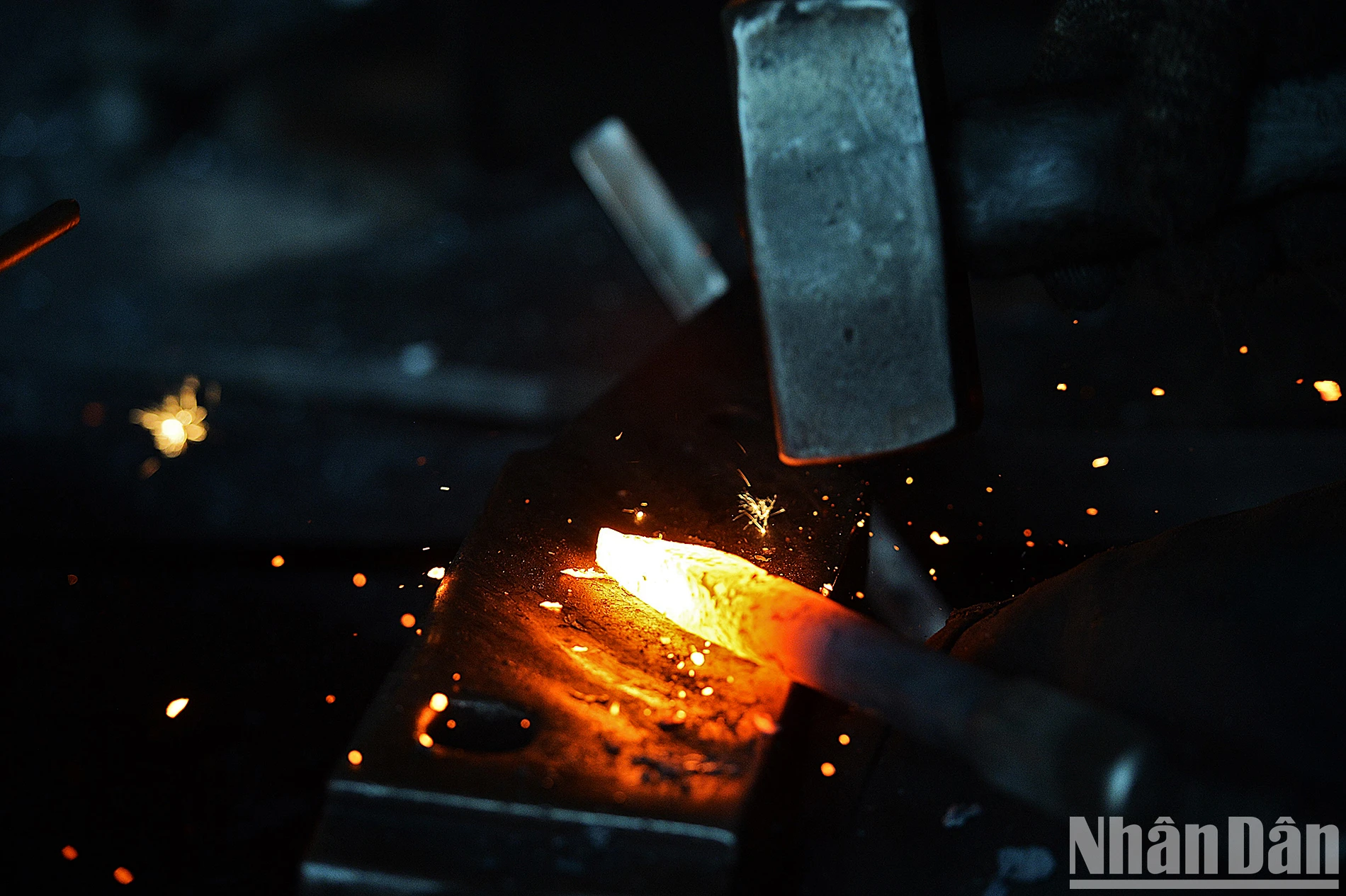 |
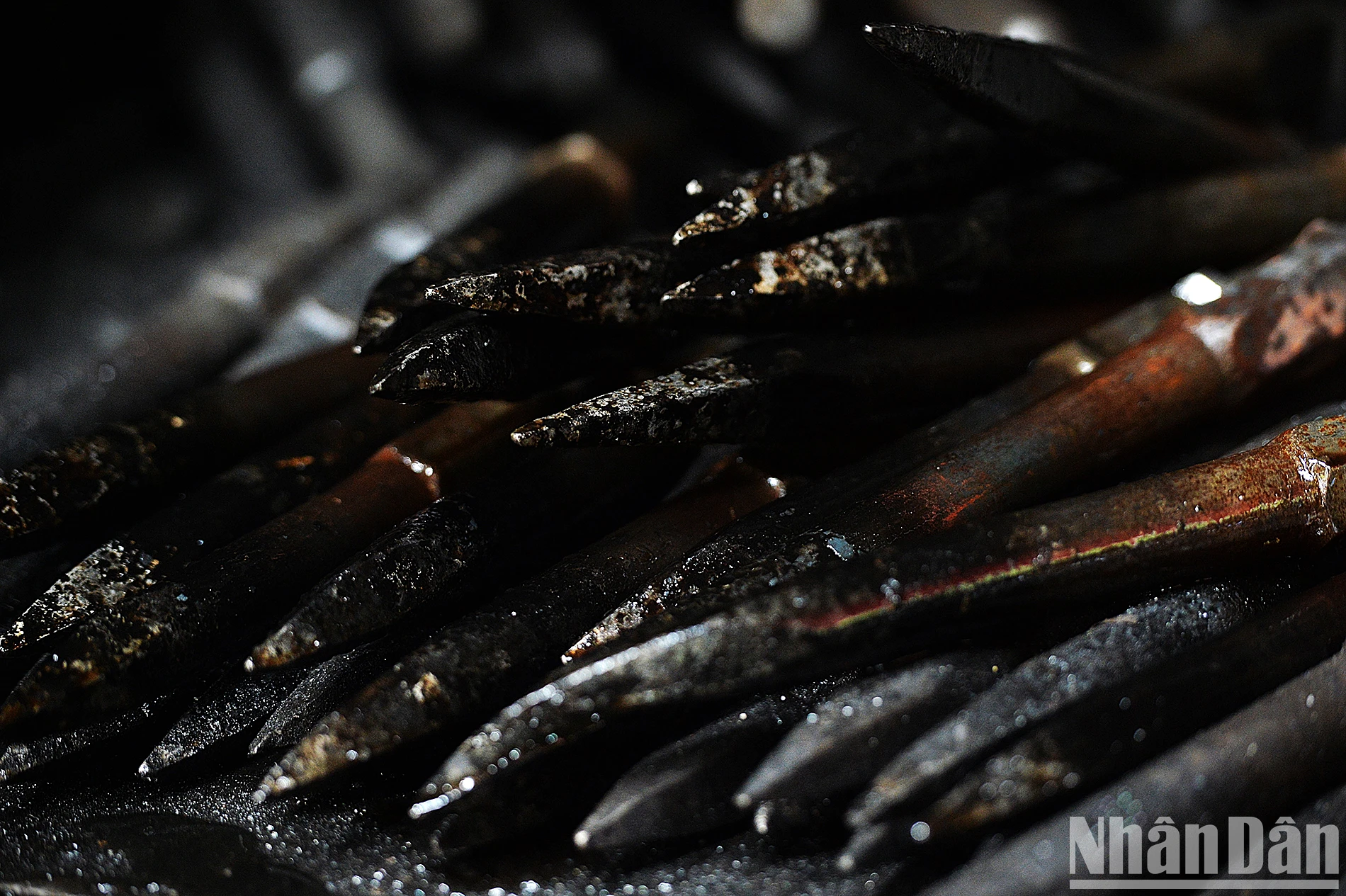
The drill bits and chisels used in construction become as sharp as new after each hammer blow.
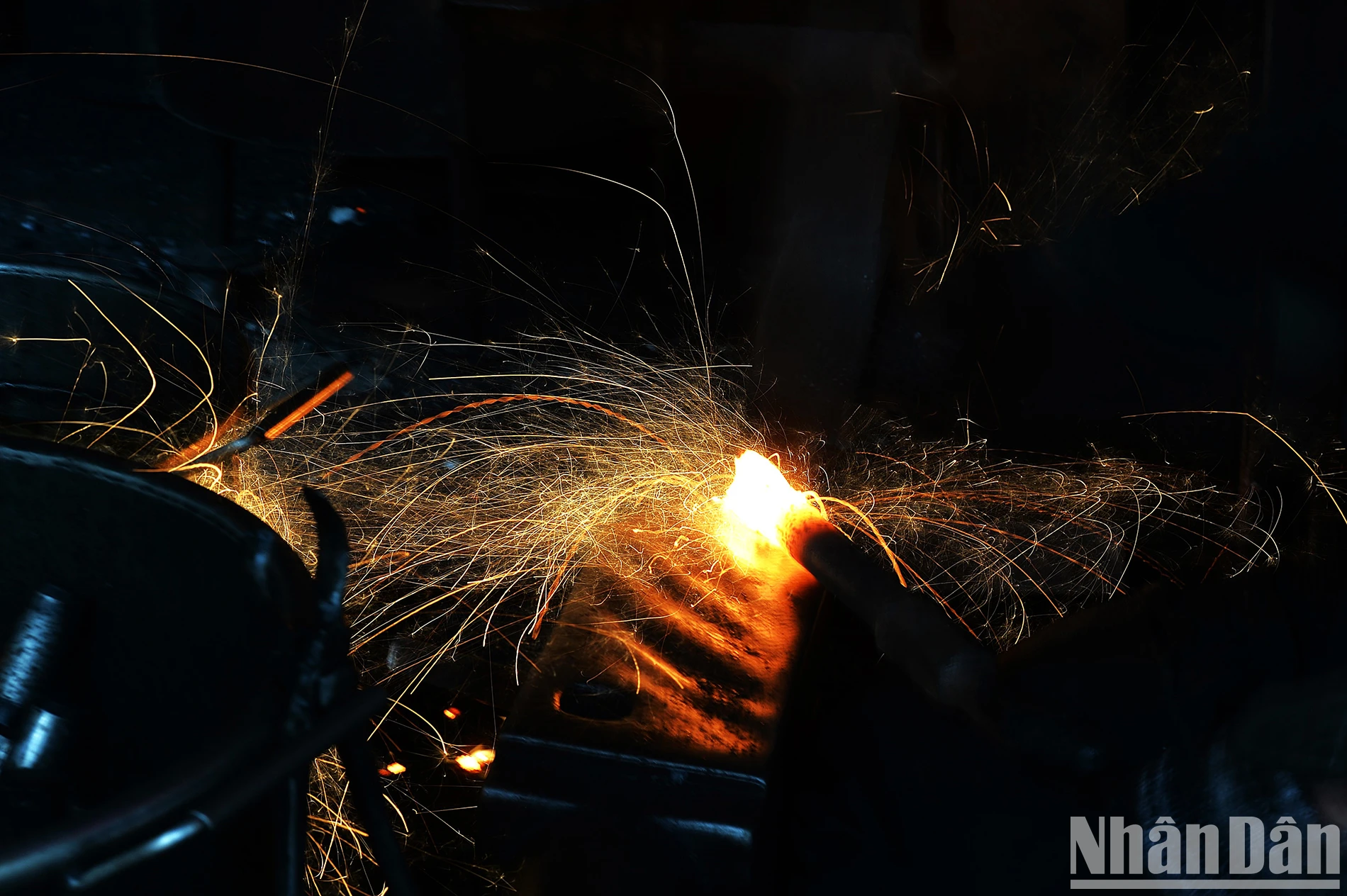 |
"Fireworks" in Mr. Hung's blacksmith workshop, which is over 2 square meters in size.
Indeed, after several unsuccessful attempts to reach his " 2m² territory," we have come to understand the meticulousness involved in each step of the blacksmithing process. On one occasion, he simply explained that the temperature and humidity of the day were unsuitable for lighting the fire, and the resulting products would certainly not meet expectations in terms of quality.
Mr. Hung has two children, a son and a daughter. However, his son lacks the health to continue his father's legacy. Mentioning the risk of his family's traditional craft dying out, he sighed slightly and said softly, "These days, who wouldn't want an easy life? No one would sweat and toil beside a furnace reaching thousands of degrees just to preserve a trade."
Currently, "Hung the blacksmith" still receives orders regularly from all over, most of which involve repairing drill bits, chisels, or refurbishing crowbars, hoes, and shovels. From this, the traditional blacksmithing craft continues to provide the last remaining artisan of Hanoi's 36 old streets with an income of tens of millions of dong per month. But how long will the bellows of that blacksmith's forge at that street corner continue to burn brightly, when this craftsman is now 64 years old?
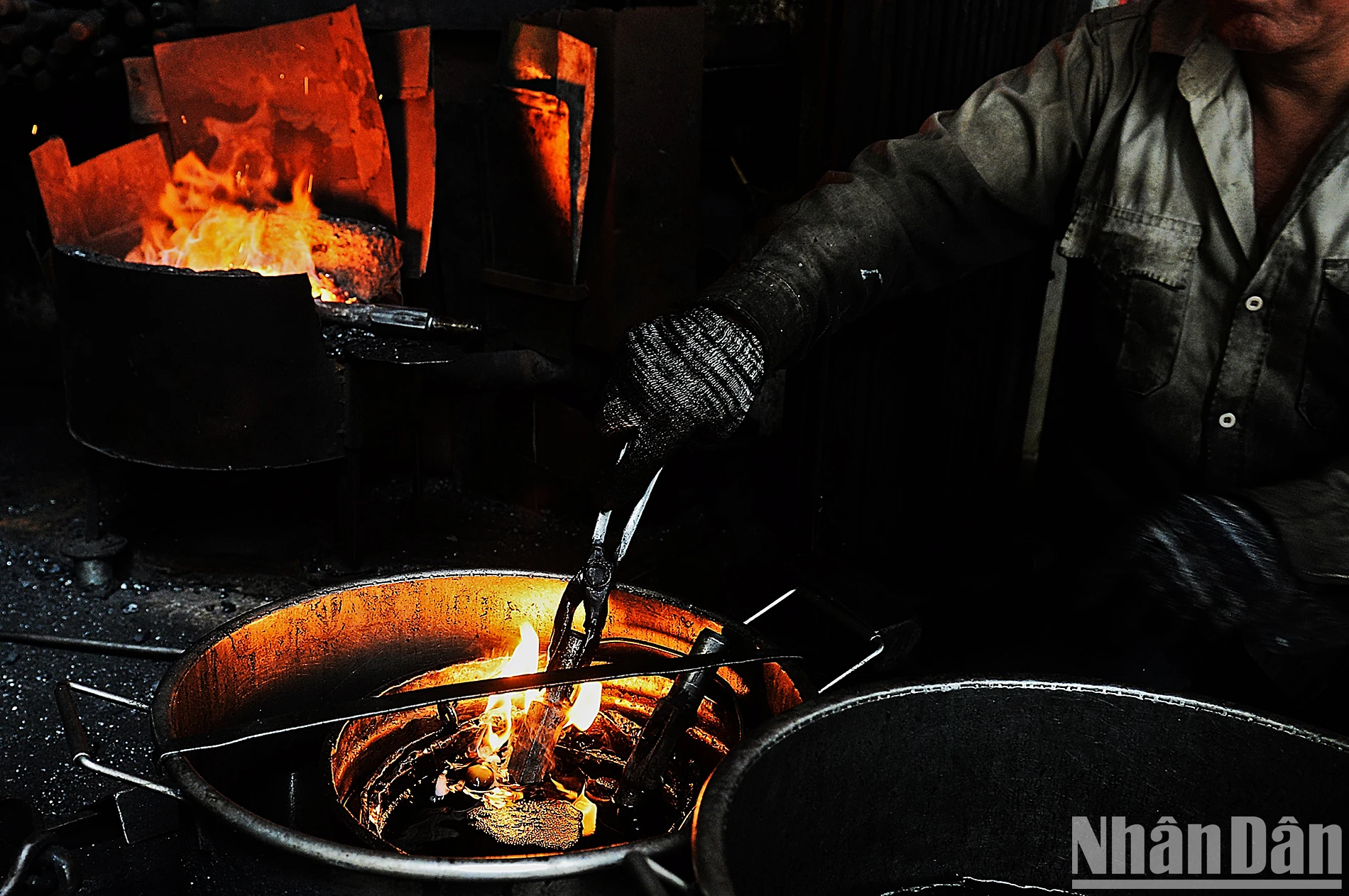 |
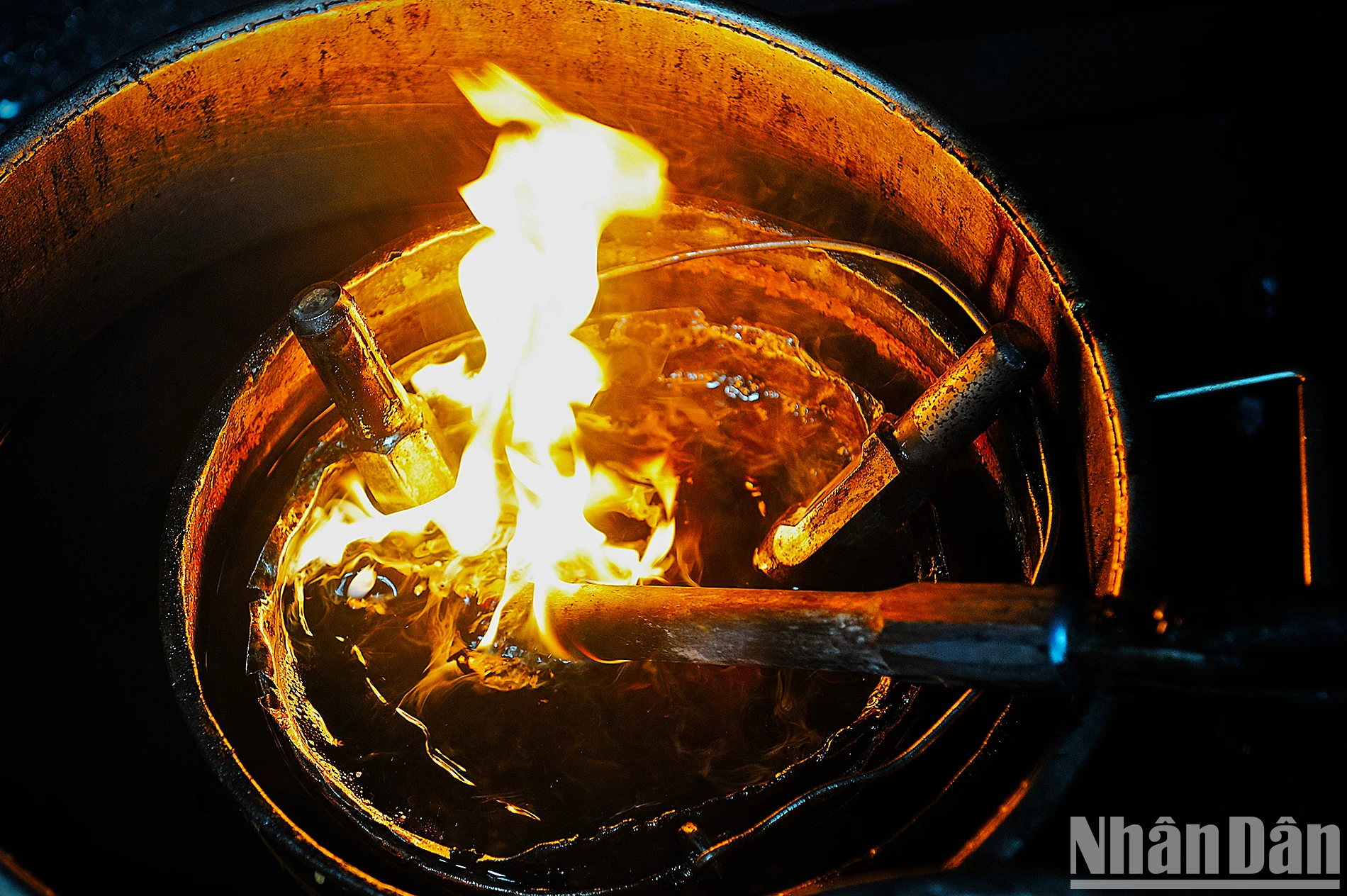
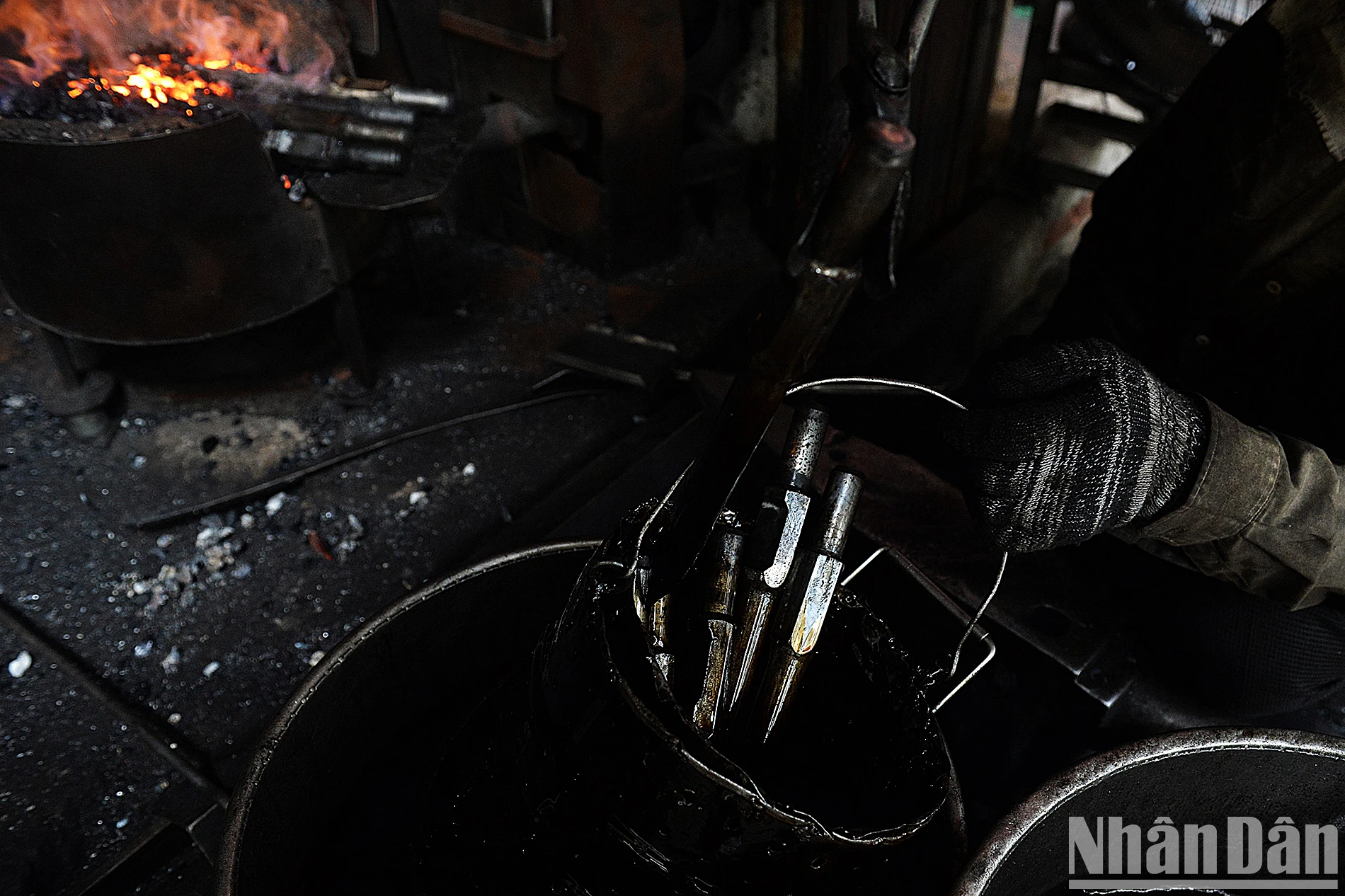
After the forging process, the product will be cooled through three steps.
 |
 |
 |
Nhandan.vn
Source: https://nhandan.vn/ngam-hoa-lua-tu-tay-nguoi-tho-ren-thu-cong-cua-pho-co-ha-noi-post828187.html




![[Photo] General Secretary and President To Lam presides over a meeting on preparations for the review of one year of operation of the three-tiered government system.](https://vphoto.vietnam.vn/thumb/1200x675/vietnam/resource/IMAGE/2026/06/02/1780391821195_a1-bnd-4595-9717-jpg.webp)

















![[Video] Prime Minister Le Minh Hung: Completing breakthrough mechanisms to develop an international financial center](https://vphoto.vietnam.vn/thumb/402x226/vietnam/resource/IMAGE/2026/06/02/1780416130959_tt-jpg.webp)
![[Video] General Secretary and President To Lam: Shifting from completing the restructuring of the apparatus to ensuring its smooth operation.](https://vphoto.vietnam.vn/thumb/402x226/vietnam/resource/IMAGE/2026/06/02/1780415840629_tbt-jpg.webp)
















































Comment (0)