

Businesses are difficult to access.
In the context of a global economy moving towards sustainable development, green credit is becoming an important trend, helping businesses reduce capital costs and access preferential financing sources. However, the implementation of green credit in Vietnam still faces many obstacles, requiring close cooperation between banks and businesses.
According to data from the State Bank of Vietnam, as of September 30, 2024, 50 credit institutions had generated green credit outstanding with a total outstanding balance of over VND 665,000 billion, an increase of 7.11% compared to the end of 2023, accounting for over 4.5% of the total outstanding loans in the entire economy. These green loans are mainly concentrated in the renewable energy and clean energy sectors (accounting for over 43%) and green agriculture (over 30%).
Despite growth, the current proportion of green credit remains low compared to the set target. Specifically, the total outstanding green credit currently accounts for only 4.5% of the total outstanding credit in the economy, still quite far from the target of 10% by 2025.
In reality, many businesses in the renewable energy, waste treatment, and clean technology sectors face difficulties in accessing green financing due to stringent loan conditions. Mr. Le Quang Thang, Chairman of the Board of Directors of Viet Long Investment and Construction Joint Stock Company, stated: “Accessing preferential loans from green credit funds still faces many obstacles. We hope for specific policies that will help businesses easily access long-term loans with low interest rates, while also simplifying the approval process.”
 |
| Unlocking green credit contributes to "greening" investment flows. |
Besides difficulties in accessing capital, this company also believes that the collateral valuation process is not suitable for a green business model. "Waste treatment plants or clean energy projects need a more flexible asset valuation policy, instead of applying traditional criteria like those for real estate or machinery," Mr. Thang suggested.
Creating mechanisms to facilitate green credit.
Given the urgent need for green credit, commercial banks are stepping up policies to support businesses oriented towards sustainable development. Mr. Tran Manh Hung, Director of Vietcombank Hai Phong, emphasized: “Vietcombank is committed to providing preferential capital to green businesses, helping them reduce financial costs and expand their operations. We are also reviewing loan conditions to better suit green business models.”
Similarly, VietinBank also proposed separate regulations on risk coefficients for green credit, aiming to reduce financial pressure on businesses. Mr. Le Duy Hai, Deputy General Director of VietinBank, stated: “We hope the State Bank of Vietnam will implement policies to reduce the risk coefficient for green credit loans, helping businesses access capital more easily and at a reasonable cost.”
From the perspective of the regulator, Mr. Nguyen Xuan Bac, Deputy Director of the Department of Credit for Economic Sectors (State Bank of Vietnam) - said that the State Bank of Vietnam has issued Circular 17 guiding the implementation of environmental risk management in credit granting activities of credit institutions, to guide credit institutions to carefully consider environmental risk factors when granting credit.
Mr. Bac also proposed increasing access to preferential capital from international financial institutions for green investment projects, which have high costs and long payback periods. Credit institutions need to actively participate in these projects to contribute to sustainable economic development.
To promote green credit, Ms. Nguyen Linh Phuong, Deputy Director of the Monetary Policy Department (State Bank of Vietnam), affirmed: “The State Bank of Vietnam always encourages credit institutions to expand lending to green projects. We are also studying mechanisms to reduce interest rates and support businesses in accessing capital from international green credit funds.”
According to Ms. Phuong, since 2024, the State Bank of Vietnam has required banks to reduce operating costs in order to lower lending interest rates, including in the green credit sector.
With commitments from banks and support from the State Bank of Vietnam, green credit is gradually becoming an important driving force for sustainable economic development. However, to optimize its effectiveness, businesses want the banking sector to continue expanding access to green credit, simplifying loan conditions, and simultaneously reducing interest rates and providing financial support to help green businesses maintain long-term operations. They also want improved policies on collateral valuation to better suit the specific characteristics of green businesses.
Conversely, banks also need stronger incentives from the State Bank of Vietnam to ensure that green credit is not just a commitment, but actually becomes a driving force for a sustainable economy.
| The Ministry of Agriculture and Environment announced that it has submitted to the Prime Minister a draft Decision on environmental criteria and certification for investment projects eligible for green credit and green bond issuance. Once issued, this Decision will help promote green finance, support sustainable development projects, and mobilize capital for environmental protection. |
Source: https://congthuong.vn/ngan-hang-than-trong-doanh-nghiep-chat-vat-nghen-tin-dung-xanh-379736.html


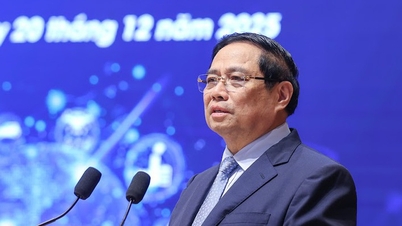
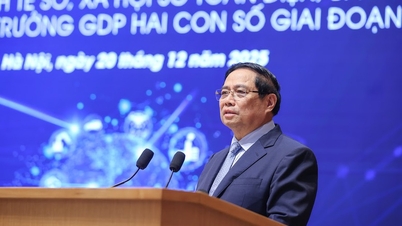
![[Photo] Prime Minister Pham Minh Chinh attends the Conference on the Implementation of Tasks for 2026 of the Industry and Trade Sector](/_next/image?url=https%3A%2F%2Fvphoto.vietnam.vn%2Fthumb%2F1200x675%2Fvietnam%2Fresource%2FIMAGE%2F2025%2F12%2F19%2F1766159500458_ndo_br_shared31-jpg.webp&w=3840&q=75)























































































Comment (0)