

Burning and burning—this has been going on for years, from one crop to the next. Currently, farmers don't know what more productive things to do than burn these by-products to free up land for the next crop. The piles of straw and crop residue in the fields may only burn for a few minutes or a few dozen minutes, but they accumulate and pose a risk of destroying the future of the environment in the fields, and more broadly, in the rural areas.
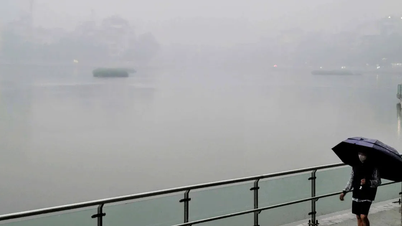
Somewhere in newspapers and television reports, we see many farmers complaining about the very poor air quality, with increasing amounts of dust and smoke enveloping their fields and villages. Strange diseases suddenly appear, attacking crops, livestock, and poultry. There are lamentations about vast fields where, even during the flood season, there are no fish or shrimp.
Aquatic environments are also becoming victims of carefree, uncontrolled fires on land.
Please consider this situation through the statistics released by Huynh Tan Dat, Director of the Department of Crop Production and Plant Protection, Ministry of Agriculture and Environment : Currently, the total amount of agricultural by-products is approximately 150 million tons per year, with the crop production sector alone accounting for about 94 million tons. These by-products mainly come from major food crops, industrial crops, and vegetables. Of this, straw accounts for 47%, however, up to 70% is burned in the fields or released into the environment, seriously affecting air quality.
In addition, the agricultural sector generates approximately 944 tons of used pesticide packaging annually, but the collection rate is only about 62.3%. The remainder is burned or directly discharged into the environment.
That's not wrong. We can easily see in many fields the pits and containers built by the government or cooperatives to collect pesticide packaging for safe and organized disposal. But we can also easily see the problem of superficiality; people only bring pesticide containers to the centralized collection points in the early days or when requested and supervised. Otherwise, they easily throw them away on the edge of their fields or burn them on the spot, without considering the impact.
When agricultural by-products are used as fuel for household use, straw is collected and considered a commodity. Even as fuel is replaced by newer products, agricultural by-products haven't completely lost their value. We see that straw still has value as an auxiliary material for other industries such as mushroom cultivation and the production of eco-friendly materials. Recently, scientists in agriculture and environmental science have proposed utilizing agricultural by-products for value-added purposes such as the production of building materials, renewable energy, and biofertilizers. Simultaneously, they encourage the application of advanced technologies such as on-site bioprocessing and enzyme production to accelerate the decomposition of by-products.
These are good solutions, but what's more important is how they're implemented. If agricultural by-products aren't collected and recycled through a financial mechanism advised by the authorities, and aren't accessed by businesses for useful purposes, then farmers will continue to burn them. They won't be able to do anything else to dispose of these by-products in preparation for the next crop.
Tue Minh
Source: https://baothanhhoa.vn/ngan-lai-viec-dot-tuong-lai-cua-dong-ruong-254140.htm


![[Image] Close-up of the newly discovered "sacred road" at My Son Sanctuary](/_next/image?url=https%3A%2F%2Fvphoto.vietnam.vn%2Fthumb%2F1200x675%2Fvietnam%2Fresource%2FIMAGE%2F2025%2F12%2F13%2F1765587881240_ndo_br_ms5-jpg.webp&w=3840&q=75)





























































Comment (0)