

Review Lesson 1: "The American Test" and the Limits of Vietnamese Wood's Durability
Editor's Note: Dominating the US market was once an advantage that helped Vietnam's wood industry break through, but it is now becoming a strategic risk. As the "market engine" of the US shakes significantly due to tariffs, the growth model based on processing with low profit margins is revealing its clear limitations. Vietnam Weekly continues its discussion with Mr. Ngo Sy Hoai, Secretary General of the Vietnam Wood and Forest Products Association.
Can Vietnamese timber businesses find other markets to "escape the US," such as the EU, the Middle East, or South America?
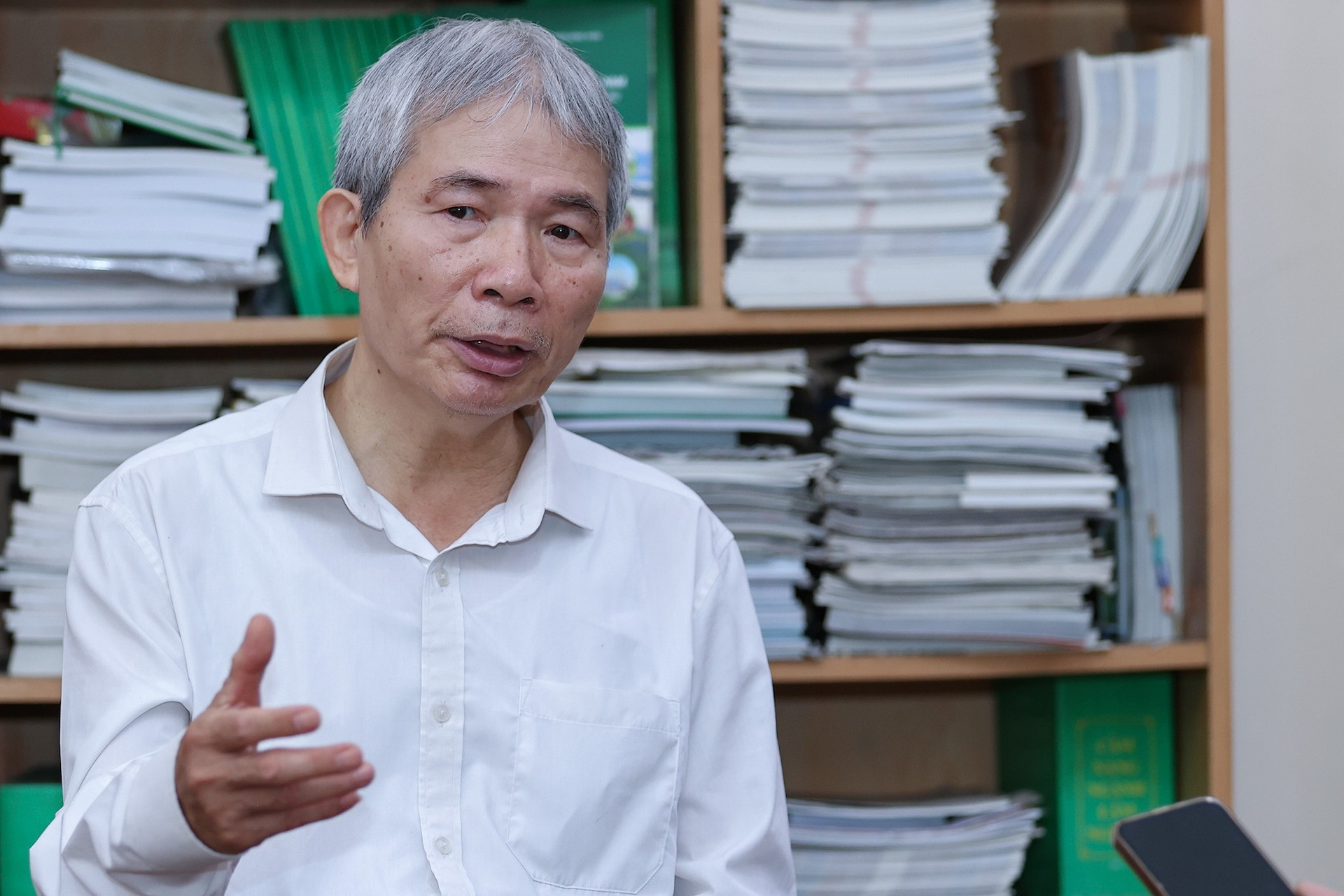
Mr. Ngo Sy Hoai : “The idea of ‘escaping America,’ implying reduced dependence on the US market and avoiding putting too many eggs in the US basket by rapidly diversifying outputs, is a problem without a definitive answer for tomorrow. Vietnamese wood businesses have had to make tremendous efforts to achieve their current prominent position in the US market, and no one wants to ‘escape America’ by leaving the US market to seek alternative markets. In reality, maintaining existing markets is often less costly than opening new ones.”
The US is not just a large market, but the "consumption hub" of the world . Not only Vietnam, but the whole world is dependent on the US market. Even the EU, Japan, and China – major economies – all have a certain degree of dependence. In fact, many countries even "envy" Vietnam for its deep access to this market.
In the timber industry alone, with a population of approximately 340 million people, the US market currently accounts for an overwhelming proportion of Vietnam's timber export revenue. By 2025, timber exports to the US are expected to account for 55.6%, reaching $9.46 billion; if non-timber forest products are included, the figure is nearly $10 billion – almost 13 times larger than the EU27, which, despite having a population of around 450 million, only consumes about $0.75 billion worth of timber products from Vietnam.
Therefore, while maintaining growth in the US, Vietnamese timber businesses are quietly seeking additional markets, however small, in a gradual, incremental manner to minimize risk.
However, the situation is not so simple with plywood. The South Korean market currently imposes anti-dumping duties ranging from 10% to 30% on plywood imported from Vietnam. Products exported to South Korea are mainly in the low-end segment, used for packaging, priced at around 230–250 USD/m³, while plywood exported to the US is typically in the higher-end segment, with prices potentially reaching 400–500 USD/m³.
For wood products – which are deeply processed/refined – markets such as the Middle East, North America (excluding the US), and South America are much smaller in scale. The US itself is pursuing a "China+" strategy, reducing dependence on China and diversifying its supply sources. Vietnam was once considered a "+1," a crucial "friend-shoring" source of supply.
However, as the trade surplus with the US grows, the frequency of trade protection measures increases, and "black swan" events are no longer uncommon. This forces Vietnamese wood businesses to proactively diversify their markets in a more systematic and decisive way, instead of just reacting to the situation.
Currently, the profit margin in the timber industry is quite thin, only about 5-6%. With such a profit margin, can businesses withstand this major tax shock?
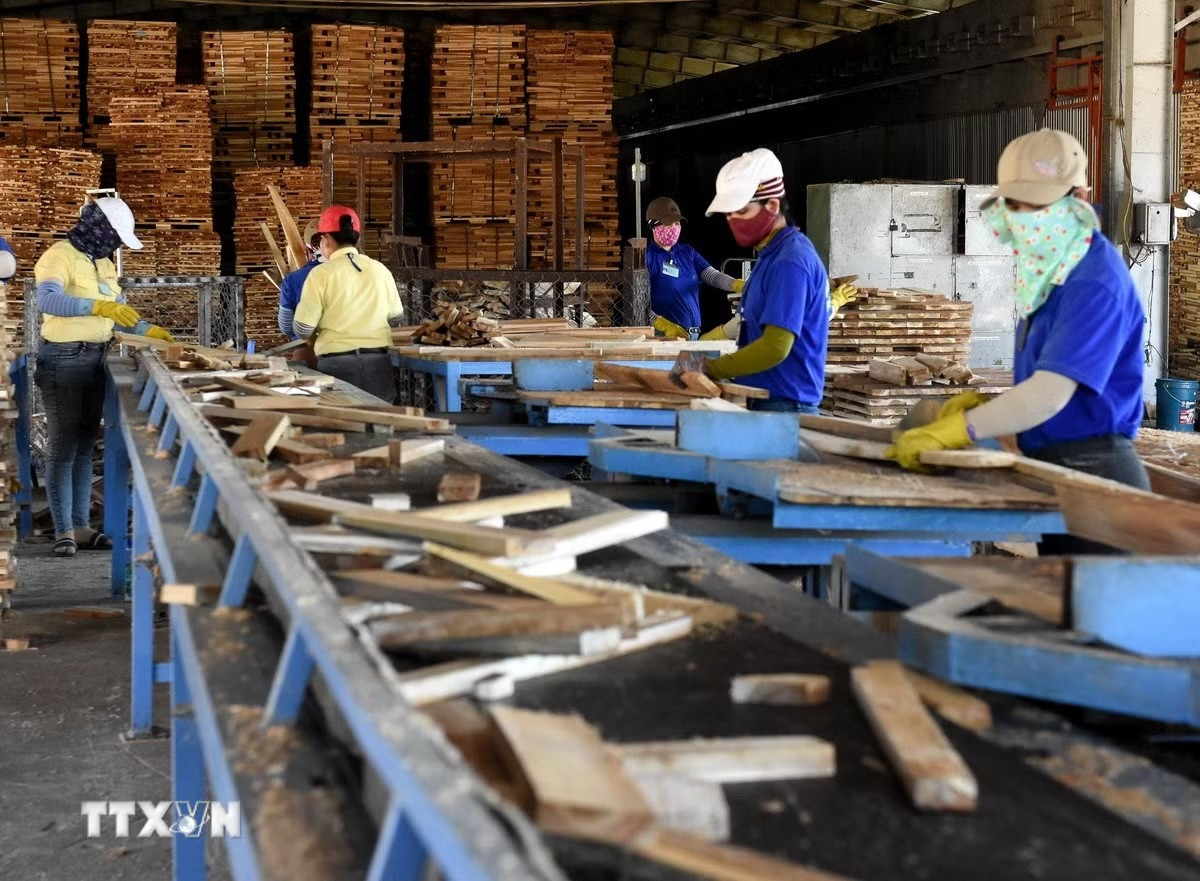
In fact, not only the wood industry, but most of Vietnam's export industries have long grown extensively, based on the OEM model – outsourcing, where profit comes from labor.
Outsourcing isn't inherently bad, but we need to frankly acknowledge that it's only a temporary solution – a case of "eating figs when you're hungry." Now that Vietnam has risen to the top of the world in wood processing and export (ranking second only to China), it cannot continue to accept this position indefinitely.
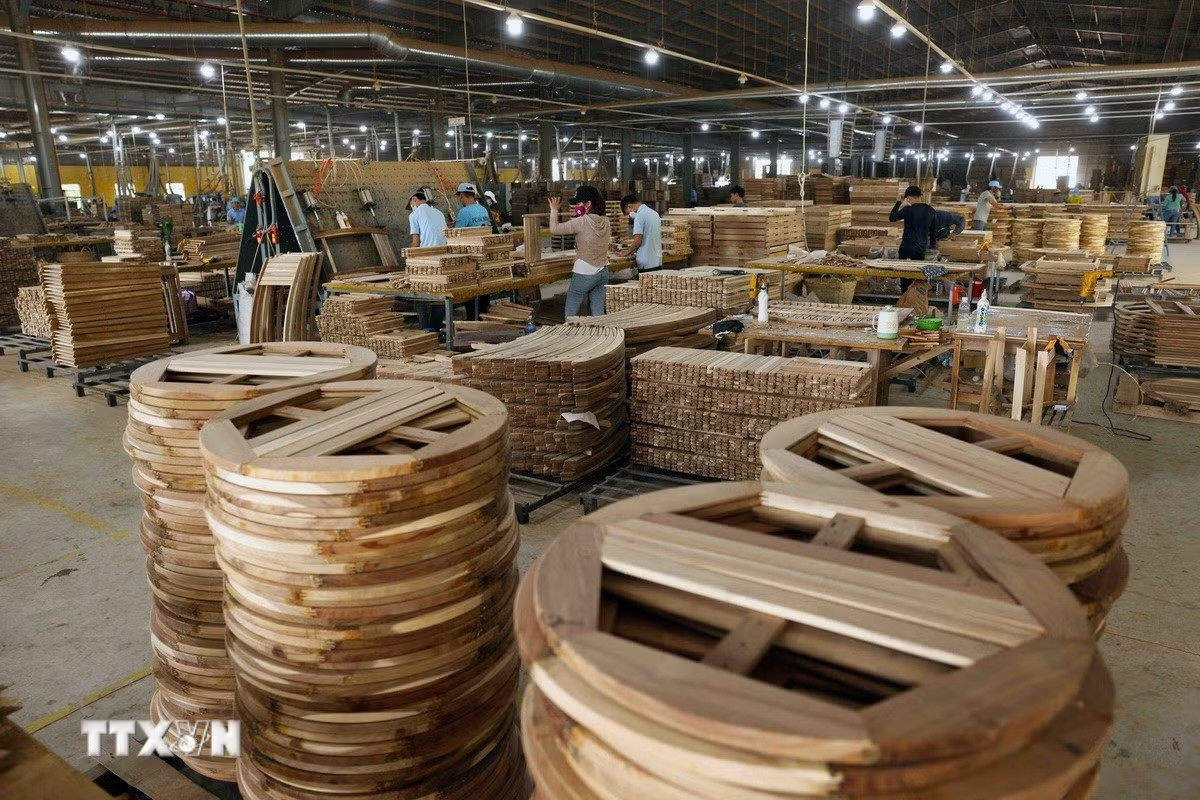
If businesses continue to rely solely on labor for profit and fail to improve their position in the global supply chain, they will fall into a trap: the more they work, the greater the risk, while profit margins are increasingly eroded and their resilience to external shocks weakens.
Vietnamese wood businesses currently mainly produce according to the designs and orders of US importers. When faced with high tariffs, importers often pressure for price reductions, delays, or contract termination – essentially shifting some of the burden onto the manufacturers.
With a labor-intensive industry like timber, characterized by thin profit margins, is it time for Vietnam to "cede ground" to newer nations?
This story has two sides.
Developed countries like the US and Europe, 40-50 years ago, "drove" the timber industry out of their territories to make way for higher value-added industries that offered more comfortable living conditions.
The world's timber industry has therefore migrated across many regions – from the US and Europe to Northeast Asia and Southeast Asia – and is now settling in China and Vietnam as its final major destinations.
Countries in the region such as Malaysia, Indonesia, and Thailand are no longer direct competitors of Vietnam in wood product exports as they once were, but mainly export raw or semi-finished timber. Vietnam's total wood product export value alone is now more than double the total value of wood exports from the rest of ASEAN.
However, that doesn't mean Vietnam has a monopoly or that the wood industry is a "golden goose." No country could compete fully with China in this industry without the geopolitical shifts of recent years.
On the positive side, Vietnamese timber businesses have a good foundation for growth: a dynamic team of entrepreneurs, a hardworking and skilled workforce, abundant plantation forest resources, and the ability to adapt quickly to international standards.
Without moving up to higher levels – design (ODM), branding (OBM), and distribution – the Vietnamese wood industry will remain vulnerable to external fluctuations. The next ten years should be considered a decade of transformation: from OEM to ODM and OBM – that is, mastering design and branding. Only then can the wood industry achieve in-depth growth, with higher and more sustainable added value.
What do timber businesses currently want from the government ?
In a market economy, businesses cannot and should not expect direct government support. Furthermore, support packages are easily scrutinized and accused of subsidies and predatory pricing.
However, there is a thought-provoking reality: Vietnam, despite being a leading global furniture manufacturing hub, remains in a state of "wearing silk in the dark." Products labeled "made in Vietnam" still bear the brands of foreign importers and retailers.
In trade promotion, we haven't yet "told our story." We export individual products, but we haven't exported living spaces that reflect Vietnamese culture and values.
Meanwhile, Vietnam is a pioneer in complying with standards on legal timber and sustainable forest management. The signing and implementation of the VPA/FLEGT with the EU, as well as proactively preparing for the EUDR, shows that Vietnam is not avoiding but actively embracing high standards.
What needs to be done now is to strengthen external communication at the national level, with the involvement of the Government, to send a clear message to major markets such as the US, EU, Japan, South Korea, etc., that Vietnamese wood products are not only competitive in price but also reliable in terms of legality and sustainability.
Furthermore, a national strategy is needed to build the brand of the wood industry – Vietnam should no longer be just a center for wood processing, but a symbol of quality, design, and responsibility.
And what about the VAT refund issue that has haunted timber businesses for years?
The story of VAT refunds for wood businesses over the years has truly been a "difficult journey," or even a "path of suffering," for many businesses.
Due to the fragmented nature of the domestic timber supply chain, with numerous intermediaries and complex, inconsistent input documentation, many legitimate businesses are negatively impacted when regulatory agencies tighten inspections to combat tax refund fraud – their applications are delayed, or even their tax refunds are suspended for extended periods.
In an industry with profit margins of only 5–6%, delays in tax refunds are not just an administrative issue; they directly impact cash flow, disrupt production, increase financial costs, and erode the competitiveness of businesses.
It is noteworthy that while businesses are struggling to meet increasingly stringent international standards, domestic bottlenecks such as tax refunds are becoming obstacles.
Recently, the government and relevant agencies have taken many steps to remove obstacles, classify risks, and expedite tax refunds for businesses that comply well. However, in the long term, a transparent, stable, and predictable mechanism is needed to reassure businesses and encourage investment, instead of constantly having to "live with policy risks."
If tariffs are an external risk, then VAT refunds are an internal risk – and sometimes even more unpredictable. Legally, the legal framework is clear: the amended Value Added Tax Law, along with Government Decrees and Circulars of the Ministry of Finance, as well as related regulations of the Ministry of Agriculture and Environment, all stipulate that conventionally processed plantation timber is not subject to VAT declaration and deduction.
However, the problem lies in implementation. In some localities, especially in the northern mountainous regions such as Tuyen Quang, Phu Tho, and Bac Ninh, different interpretations and applications still exist. Businesses are required to supplement their documentation beyond what is stipulated, prolonging the tax refund process. When businesses have to overcome international barriers, such "domestic barriers" can completely eliminate their competitive advantages.
In short, "breaking free from America"—in a positive sense—doesn't mean abandoning the market, but rather reducing dependence on the US market by diversifying outputs and rapidly upgrading Vietnam's position in the global wood value chain. The "labor-intensive" trap can only be broken when businesses decisively shift from processing to mastering design, branding, and distribution.
At the same time, domestic bottlenecks – from tax refunds, policy instability and transparency, to a lack of coordination among stakeholders – must be decisively addressed. Only with sufficiently swift and strong action can Vietnam's timber industry break through, increase its value, and withstand any global upheavals.
Source: https://vietnamnet.vn/nganh-go-viet-va-cai-bay-lay-cong-lam-lai-2511534.html
![[Image] Close-up view of the interchange connecting the two expressways and Long Thanh Airport.](https://vphoto.vietnam.vn/thumb/1200x675/vietnam/resource/IMAGE/2026/05/25/1779703378210_ndo_br_z7863716673926-224453a31600126cce10622af6290afd-4549-jpg.webp)



![[Image] Hanoi's urban life under the challenge of a "scorching hot" environment](https://vphoto.vietnam.vn/thumb/1200x675/vietnam/resource/IMAGE/2026/05/25/1779706979265_nang-nong-t5-2026-minh-duy-7-4636-jpg.webp)


















































































Comment (0)