


In recent years, extreme weather events have become increasingly erratic, with increased rainfall intensity and consecutive strong storms directly impacting transportation systems, construction projects, and urban infrastructure in the province. This reality necessitates a strong shift in the construction sector from passive response to proactive prevention, enhancing the resilience of infrastructure against natural disasters.
Based on that, and in accordance with the Provincial People's Committee's directive on disaster response according to risk levels, the Department of Construction has issued a plan for implementing disaster prevention and control; clearly assigning responsibilities to each department, division, and subordinate unit. The overarching goal is to proactively and effectively implement disaster prevention and control measures; enhance the capacity to handle and respond to situations and incidents to ensure the safety of people, construction works, transportation systems, and maintain smooth operation in all situations.
Accordingly, following the principle of "3 in advance, 4 on-site," the Department has requested units to proactively develop specific plans at the local level, prioritizing early risk identification, preparing contingency plans, materials, and personnel in advance, and proactively handling any situations that arise. Units managing and maintaining transportation infrastructure are required to maintain a 24/7 on-call schedule during the rainy season; and to prepare sufficient reserve materials such as gabions, rocks, warning signs, excavators, trucks, and specialized vehicles to be ready to handle landslides and flooding incidents.
The Department also directed units to focus on reviewing vulnerable locations on the national and provincial highway systems, especially in mountainous areas where landslides, localized flooding, or the risk of road closures frequently occur during prolonged heavy rains. Detailed plans for traffic diversion, organization, and emergency response were developed to ensure safe traffic flow for people and vehicles.
Along with traffic safety, ensuring the safety of construction sites during the rainy and stormy season is given special attention. Investors and construction units are required to inspect and reinforce scaffolding, tower cranes, hoists, and other high-altitude construction equipment; review lightning protection and drainage systems at construction sites, ensuring absolute safety for workers and neighboring structures during strong winds and heavy rain.

To enhance proactive measures at the grassroots level, the Department is coordinating with local authorities and organizations to review residential areas on hillsides, along rivers and streams, and areas at risk of landslides; strengthening the management of construction order, inspecting urban green spaces, billboards, corrugated iron roofs, and high-rise buildings to promptly reinforce and address safety risks before the rainy season.
In addition, information and warning systems are also given priority. As soon as a storm or tropical depression forms, response plans are activated, and warning information is quickly transmitted to relevant units, localities, and the public through electronic documents, media, and direct communication channels.
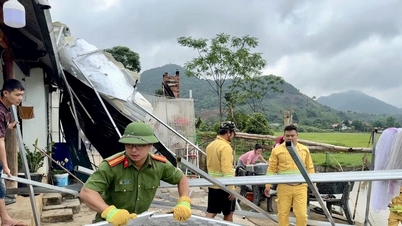
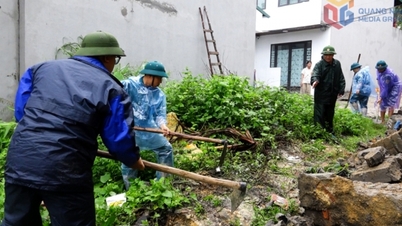
With that proactive approach, the heavy and prolonged rainfall in mid-May caused numerous landslides and flooding on transportation routes. Specifically, on the national highway system, there were landslides on the embankment at 50 locations with a total volume of nearly 20,000 m3 of soil and rocks; and 13 locations with landslides on the slope with a length of approximately 181 m. Many bridges and culverts were severely damaged and eroded; dozens of points where soil and rocks spilled onto the road surface caused localized traffic congestion… Immediately upon detecting the incidents, the Department directed relevant units to mobilize maximum manpower and equipment to clear the soil and rocks, reinforce the embankment, restore the road surface, and install complete warning systems and barriers to ensure safe and smooth traffic flow.
With climate change becoming increasingly complex and extreme weather events occurring with greater frequency, disaster prevention and mitigation is not only a short-term response but also a long-term requirement for sustainable infrastructure development. Proactively developing scenarios and enhancing the resilience of transportation systems, urban areas, and construction projects is becoming a crucial factor in minimizing damage, ensuring the safety of citizens, and maintaining the stability of socio-economic activities in the province.
Source: https://baoquangninh.vn/nganh-xay-dung-chu-dong-ung-pho-mua-bao-3409633.html






























































































Comment (0)