


"Drifting" on the shore
Van Tuong and Binh Son are two communes with a fleet of nearly 1,200 boats, including more than 300 large fishing vessels, over 15 meters long, used for offshore fishing. Van Tuong commune has a Tra Bong River fishing port that has been invested in to serve as a destination for boats when they come ashore. Meanwhile, Binh Son has the Sa Can estuary, which is very suitable for use as a fishing port…
On average, fishing vessels from Quang Ngai province spend 2-3 months at sea, eking out a living. Upon returning to shore, according to regulations, large fishing fleets must dock at designated fishing ports. There, the vessels complete docking procedures, verify the origin of seafood, maintain fishing logs, and carry out other related paperwork. However, in Binh Son and Van Tuong districts, fishing vessels are unable to dock locally.
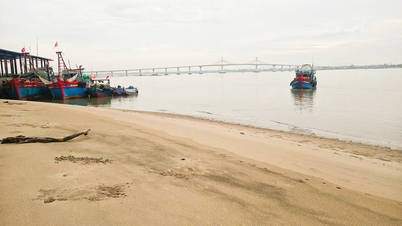
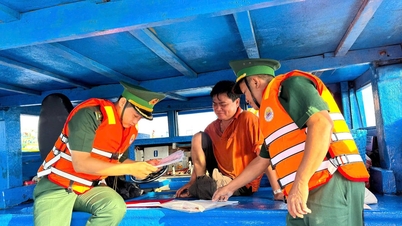
After more than two months of squid fishing at sea, Mr. Pham Tien, owner of fishing boat 95579, docked at Ky Ha fishing port ( Da Nang ) to go ashore. Mr. Pham Tien said that as a fishing boat owner from Quang Ngai, every time he returns from sea, fishing boats from Binh Son and Van Tuong like his cannot go back to their hometowns because they have to go to Ky Ha fishing port in Da Nang to unload and sell their seafood. Going to a different fishing port, far from home, to complete procedures and unload goods is costly in terms of fuel and difficult. Once ashore, being far from home means he has to stay alone to take care of the boat, which is very hard work.

The fact that fishing boats dock far from home and then continue to "wander" ashore is truly difficult. The need to travel through other localities to sell and complete procedures each time they come ashore or before going out to sea is an inefficiency that has existed for decades.
Mr. Ho Viet Dung, owner of fishing boat 90584 in Van Tuong commune, added that before setting sail, he has to travel from Van Tuong to Ky Ha port (Da Nang) to complete the necessary procedures. After returning from fishing, this process continues, wasting time and costing over ten million dong per fishing boat. Besides fuel, there are other expenses such as the cost of transporting the seafood back to Quang Ngai. Van Tuong also has a fishing port, but it is not efficient, forcing boats to dock elsewhere.
Is the problem due to… poor investment?
In Van Tuong commune, the Tra Bong River fishing port was built with an investment of 186 billion VND by the Management Board of Dung Quoc Economic Zone and Industrial Parks of Quang Ngai province. Although the port was put into operation in 2013, it has not yet been effective, causing waste and public dissatisfaction.

In reality, according to fishermen, the infrastructure at the Tra Bong River fishing port does not meet the requirements of large, offshore fishing fleets when docking. Specifically, entering and exiting the port is currently very inconvenient. Mr. Ho Van Long, Captain of vessel 9054, said that squid fishing boats returning from fishing trips have to go to other ports to unload their goods because the entrance to the Tra Bong River fishing port is shallow, making it difficult for large vessels to enter and exit. Entry and exit depend on the tide; they can only exit at high tide and require tugboats. There are also many underwater rocks, posing a significant danger to vessels when entering and exiting.
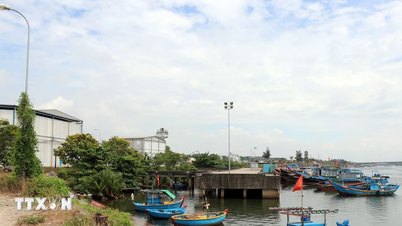
The Tra Bong River fishing port has a shallow, unsafe entrance with many large and small rocks exposed above the water's surface. There are also many underwater rocks. The mooring area is unsafe and narrow, so it is only used by a few small local boats.
Mr. Lu The Lam, Vice Chairman of the People's Committee of Van Tuong commune, acknowledged that the Tra Bong River fishing port area was invested in and put into use in 2013. The fishing port, with its fishing infrastructure service area, was expected to serve fishermen in the Van Tuong and Binh Son communes. It was also intended to be a shelter from storms during natural disasters. However, currently, due to siltation in the port's entrance and exit channels, ships over 15 meters can no longer enter. After a period of operation, the Tra Bong River fishing port only serves as a shelter from storms during natural disasters; its operational performance has not met the initial investment objectives of the project.

The shortcomings of the Tra Bong River fishing port existed before the port was invested in. The port entrance was rocky, and siltation had been ongoing for a long time. Furthermore, during construction, the project owner did not invest in a coordinated manner, lacking a roof to support port activities. Mr. Nguyen Dinh Trung, Director of the Quang Ngai Provincial Fishing Port Management Board, stated that previously, the investor (the Management Board of Dung Quoc Economic Zone and Industrial Parks of Quang Ngai Province) did not consider dredging the channel during the investment phase. This problem arose after the project was handed over to the Provincial Department of Agriculture and Environment for management.
To address these shortcomings, dredging must be carried out first, followed by a larger investment phase to accommodate larger vessels in Binh Son and Van Tuong, which currently house over 1,000 boats. Initially, the management board has invested in some missing items such as shelters and electricity. However, to maximize efficiency, the fishing port needs to expand the head channel and invest in dredging to facilitate vessel access.
Source: https://baotintuc.vn/kinh-te/nghich-ly-cang-ca-tram-ty-ngu-dan-van-phai-neo-nho-20260603154641315.htm

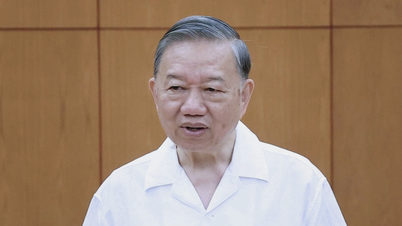
![[Photo] General Secretary and President To Lam presides over a meeting with the Central Organizing Committee.](https://vphoto.vietnam.vn/thumb/1200x675/vietnam/resource/IMAGE/2026/06/03/1780482764658_a1-bnd-4741-3342-jpg.webp)
![[Photo] First session of the 14th Congress of the Vietnam Trade Union](https://vphoto.vietnam.vn/thumb/1200x675/vietnam/resource/IMAGE/2026/06/03/1780465947883_ndo_br_img-3852-jpg.webp)

![[Photo] Secretary of the National Assembly Party Committee, Chairman of the National Assembly presides over the meeting of the Standing Committee and Executive Committee of the National Assembly Party Committee.](https://vphoto.vietnam.vn/thumb/1200x675/vietnam/resource/IMAGE/2026/06/03/1780480353201_ndo_br_bnd-2585-jpg.webp)











































![[Video] Sunset at Lap An Lagoon – Where the sun sets over the fishing nets](https://vphoto.vietnam.vn/thumb/1200x675/vietnam/resource/IMAGE/2026/05/31/1780192137701_beach-landscape-sea-water-nature-grass-745871-pxhere-com.jpeg)




































Comment (0)