

While the issue of affordable housing is constantly raised as a concern for middle and low-income workers, the real estate market is exhibiting a notable paradox: many affordable apartments and secondary properties in suburban areas are struggling to find buyers, while mid- to high-end properties in the city center maintain considerable appeal.
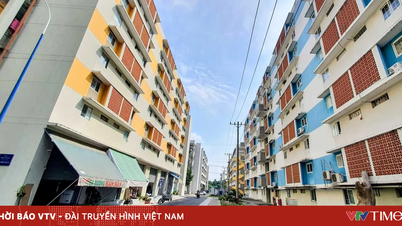
Low-priced homes are still difficult to find buyers for.
For over two years, Ms. Hoang Nhi (Ho Chi Minh City) has been continuously trying to sell her 62.2 m² apartment in the Teco Homes An Phu project (An Phu ward, Ho Chi Minh City) for 1.89 billion VND, but has yet to find a buyer. She said the apartment was purchased four years ago through an installment plan. The initial purchase price was over 1.7 billion VND, not including bank loan interest. At the current asking price, the unit price is approximately 30 million VND/m², significantly lower than many commercial projects on the market today, yet she still hasn't found a buyer.
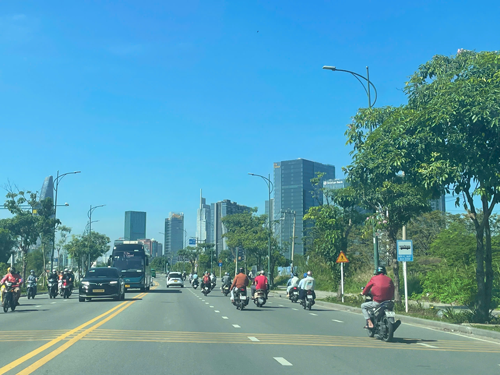
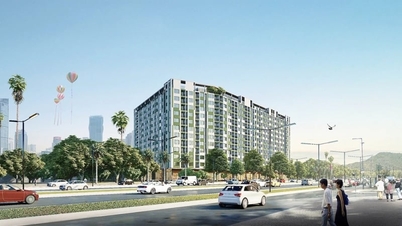
Luxury apartment projects in the Thu Thiem new urban area, as well as in the central area of Ho Chi Minh City, remain attractive despite their high prices, while affordable apartment projects in suburban areas are experiencing relatively slow sales.
Similarly, Mr. Hoang once bought a 46 m² one-bedroom apartment in the Legacy project in Thuan An (Thuan Giao ward, Ho Chi Minh City). After living there for a while, he found commuting to the city center inconvenient, so he decided to sell it. Even though he accepted a price of over 1.3 billion VND, including furniture, it still took him many months to find a buyer.
According to real estate brokers in the South, many commercial apartments priced at 28-30 million VND/m² are being continuously offered for sale, but transaction volumes remain quite modest. Mr. Vo Hong Thang, Deputy General Director of DKRA Group, said that many completed apartment projects in the central area of Ho Chi Minh City are still generating transactions, even though prices haven't increased significantly. Meanwhile, projects in bordering or suburban areas are facing greater liquidity pressure. Many homeowners are accepting price reductions, even selling below cost, but are still struggling to find buyers.
According to experts, the biggest paradox lies in the fact that the product is designed for middle-income earners, yet this very group faces numerous barriers to access. Mr. Dat Minh, a long-time real estate agent in Ho Chi Minh City, stated that most customers in this segment only have accumulated around 1 billion VND, with the remainder dependent on bank loans. However, requirements such as income statements, employment contracts, and financial history make it difficult for many freelancers, factory workers, or small business owners to meet credit requirements.
Mr. Nguyen Le Hai Dang, Deputy Director of Strategy and External Relations at Smartland Company, noted that many unskilled workers have little habit of conducting financial transactions with banks beyond receiving their salaries or withdrawing money. Therefore, completing loan applications with many complex procedures is a significant challenge. When unable to access capital, they are forced to continue renting instead of owning a home.
Besides financial considerations, location also significantly impacts the sales potential of affordable housing. Land in the inner city is becoming increasingly scarce and expensive, forcing most low-priced projects to develop in satellite cities or suburban areas, 20-30 km from the center of Ho Chi Minh City. While the price is more reasonable, the travel time, traffic congestion, and limited infrastructure and services make many people hesitate.
While the affordable housing segment is facing significant liquidity challenges, the luxury real estate market operates according to a completely different set of rules. Here, the story revolves not only around selling prices but also around the need for asset accumulation, preservation, and status affirmation among financially affluent customers.
What does the reality tell us?
Many people question why developers aren't focusing on low-cost housing, a segment with higher demand, but instead continue to develop apartment projects priced at hundreds of millions of dong per square meter? The reality is that demand from middle and upper-class customers remains stable, providing a foundation for the development of high-end products.
For this group of customers, a home is not simply a place to live. What they seek is a complete living environment with green spaces, low population density, high-quality amenities, professional management services, and a community of residents with similar lifestyles. These factors make them willing to pay a higher price for privacy, security, and long-term value appreciation.
According to Savills Vietnam, many recently launched Grade A projects have recorded positive absorption rates. The majority of these projects are located in prime locations, contributing to pushing primary market selling prices above VND 100 million/m². In fact, the average selling price in some surveyed segments of the primary market is expected to reach approximately VND 224 million/m² by the end of 2025. Despite the high price levels, demand for properties in this segment remains strong.
The allure of luxury real estate is further demonstrated by the interest in new projects in the central area of Ho Chi Minh City and the Thu Thiem new urban area. For example, Son Kim Land's project, oriented towards the 5.0 model at Thu Thiem station, has already attracted attention from investors despite not yet announcing its selling price. Previously, projects like The Metropole and The Berkley, with prices ranging from 280-430 million VND/m², also recorded favorable absorption rates. Similarly, many other projects such as The Prive, Eaton Park, and Masterise Cosmo Central have attracted significant customer interest from the very beginning.
Mr. Nguyen Le Hai Dang believes that high-end real estate is not only valued by its size or construction costs, but also by factors such as scarcity, location, and the ability to retain value in the long term. For those with strong financial resources, the decision to buy a house is often based on the unique value of the product, the reputation of the developer, and the potential for future asset value appreciation, rather than the absolute price.
In reality, the supply of high-end housing in the central area of Ho Chi Minh City is limited due to increasingly scarce land. This makes properties with prime locations even more rare over time.
According to Mr. Vo Hong Thang, projects located near Ho Chi Minh City's central business and financial district, especially around the Thu Thiem area, always have a unique advantage in terms of location. This scarcity helps these projects attract wealthy customers aiming to accumulate assets and expect long-term price appreciation. "Overall, the price increase in the high-end segment largely reflects the law of supply and demand, increasingly high land costs, and stricter product development standards. Meanwhile, the difficulties in the low-cost housing segment lie in the accessibility for buyers, from legal procedures and loan conditions to project location," Mr. Thang said.
We need to untangle the knots.
According to experts, the fundamental solution is not to drive down the price of luxury housing below market value, but rather to remove legal bottlenecks, expand access to credit, and invest in infrastructure connecting suburban areas. Once these barriers are addressed, affordable housing can reach those in need, helping to narrow the supply-demand gap that has existed for many years in the real estate market.
Source: https://nld.com.vn/nghich-ly-suc-mua-tu-phan-khuc-can-ho-196260527195751621.htm

![[Photo] Standing Committee member of the Party Central Committee Tran Cam Tu working with the Central Inspection Committee](https://vphoto.vietnam.vn/thumb/1200x675/vietnam/resource/IMAGE/2026/05/28/1779969579668_ndo_br_bnd-2495-jpg.webp)





























































































Comment (0)