

 |
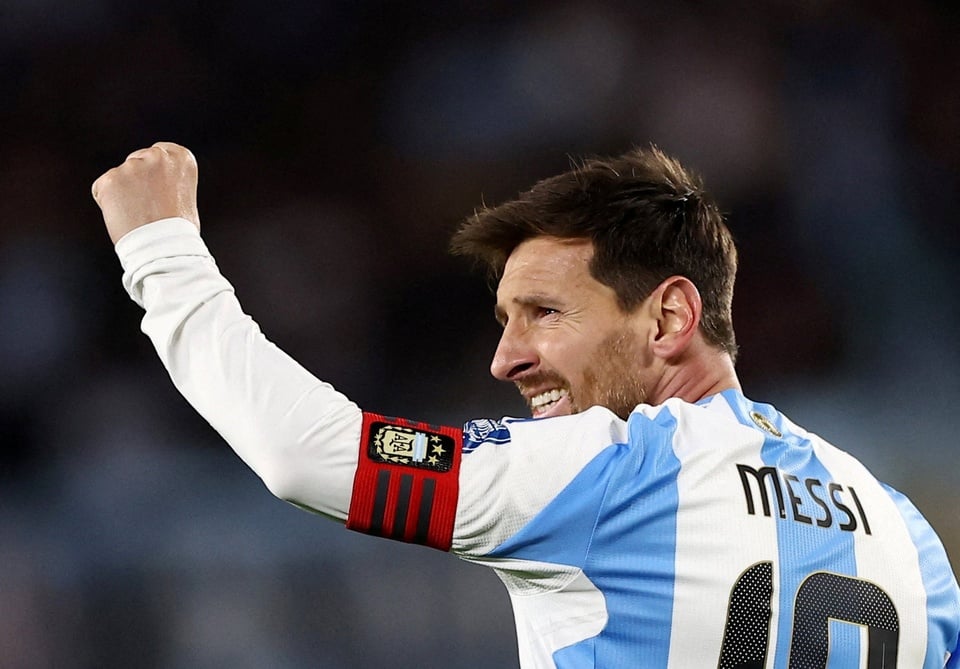
Lionel Messi (38 years old) is ready to lead the Argentina national football team at their 6th FIFA World Cup. Photo: Agustin Marcarian/Reuters . |
The World Cup, which kicks off in North America next month, is expected to be the most spectacular in history, with 48 teams, 16 host cities, and 104 matches. This means more than 6 million tickets will be released to fans worldwide .
However, from the outset, fans didn't know exactly how much tickets would cost or how many would be sold. Only one thing quickly became clear: this would be the most expensive World Cup ever, according to The Wall Street Journal.
Except for a few matches, most World Cup tickets start at a few hundred USD and can go up to thousands of USD. The main reason is that the International Football Federation (FIFA) uses a dynamic pricing mechanism, meaning ticket prices change according to market demand. This makes buying tickets more stressful and unpredictable.
The wave of backlash from fans prompted the Attorneys General of New York and New Jersey to subpoena FIFA, demanding an explanation for its ticket sales practices.
"No one should be pressured into paying exorbitant prices for their seats, and fans have the right to believe that the tickets they buy will match what they receive," declared New York Attorney General Letitia James.
FIFA declined to comment on these subpoenas.
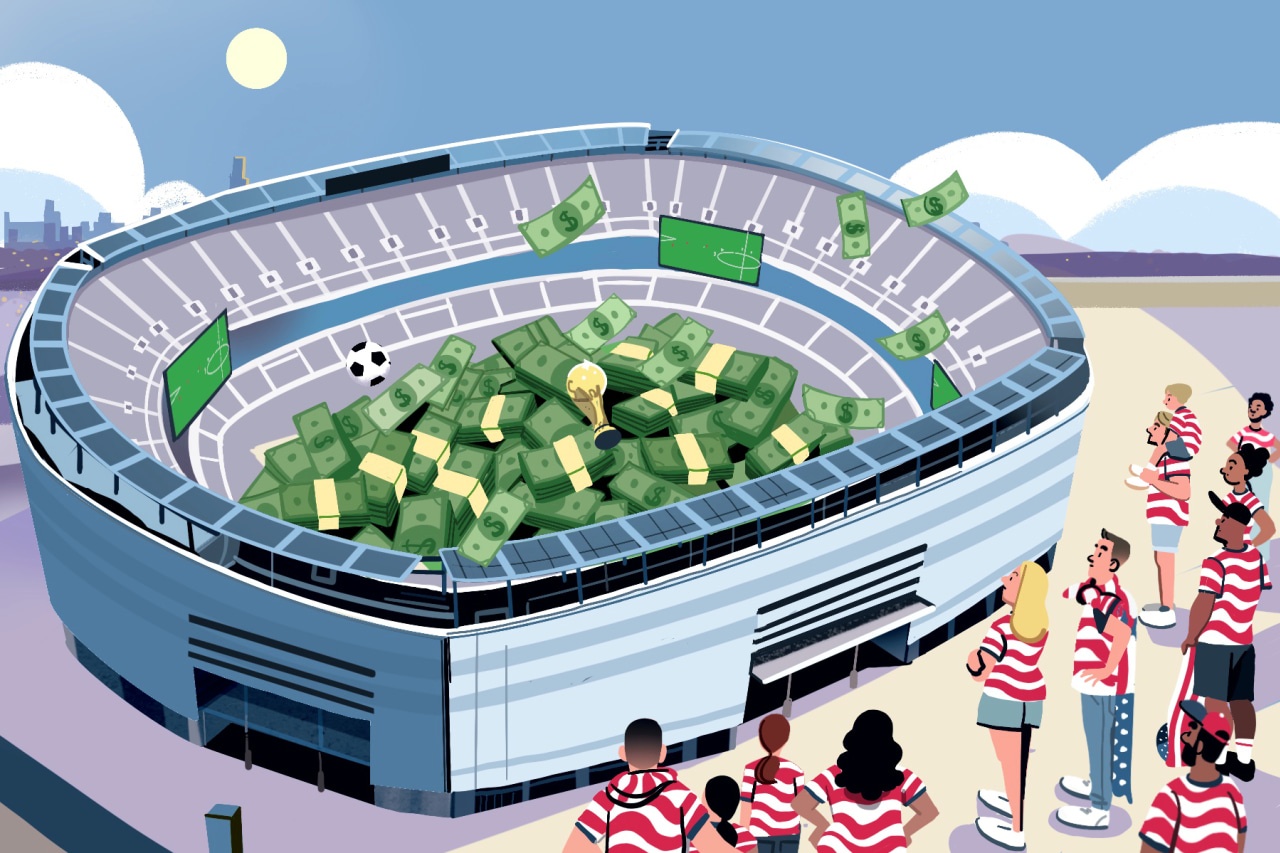 |
FIFA's target is a projected record of $11 billion in revenue. Photo: Nathan Hackett/WSJ. |
For those familiar with how FIFA operates, the high price tag of this tournament is no surprise. Ever since the United States, Canada, and Mexico won the bid to host the 2026 World Cup in 2018, FIFA has viewed the US market as a potential cash cow. Approximately 75% of the tournament's matches will take place in the United States.
The purchasing power of the world's largest economy has increased significantly since the 1994 World Cup, while demand for spending on high-profile sporting events in the US boomed after the pandemic. FIFA quickly capitalized on this opportunity by drastically changing how it monetizes the World Cup.
Previously, FIFA typically kept ticket prices relatively accessible to cater to loyal fans. But now, the organization is leveraging the appeal of a World Cup held in the United States to increase revenue and build up its coffers.
FIFA's goal is to achieve record revenue of $11 billion .
"FIFA has taken the World Cup away from ordinary fans and sold it to the highest bidder," said Davie Hood, a Scottish supporter. He spent $1,800 (approximately 47 million VND) to buy three tickets to watch Scotland's group stage matches.
That was just the beginning of his expenses. Hood and thousands of other Scottish fans were shocked by the hotel prices in Boston, so they booked rooms in Providence, Rhode Island. They even hired an entire fleet of school buses to get to the stadium in Foxborough to avoid paying $95 per person for the special bus service from Boston.
FIFA President Gianni Infantino stated that FIFA is simply selling tickets at a price acceptable to the market. He argued that it's better for that revenue to belong to FIFA rather than to ticket speculators. FIFA reported that approximately 90% of the tournament's 6 million tickets have been sold.
Thanks to a surge in revenue, FIFA plans to allocate a record $2.7 billion to football development programs worldwide over the next four years. This figure has increased eightfold during Infantino's 10 years at FIFA. Many believe this generous spending policy also strengthens his political position, as the FIFA president is elected by 211 member federations, each with one vote.
Following criticism regarding ticket prices, FIFA announced the release of a small number of tickets priced at $60 per match. However, the quantity is very limited: only 1,000 tickets per match, equivalent to 104,000 tickets out of a total of approximately 6 million tickets for the entire tournament.
Meanwhile, as opening day approaches, there are signs that local businesses may not benefit as much as expected. Many matches still have unsold tickets, and ticket prices for less popular games have already started to drop.
A survey by the Hotel and Lodging Association of America found that approximately 80% of hotels in the host cities had lower bookings than initially predicted. The tournament's vast scale, spanning from Vancouver to Boston and Mexico City, meant fans had to travel much further and at significantly higher costs than in previous World Cups.
In addition, visa barriers and geopolitical concerns are also reducing demand from international tourists.
At the local level, the majority of the costs of hosting the tournament are borne by the host cities rather than FIFA. This leads to significant increases in various fees to offset the costs. A particularly frustrating example is the proposed increase in train fares from New York to MetLife Stadium in New Jersey from $12.90 to $150 on match day, before being adjusted down to $98 .
It's noteworthy that at the 1994 World Cup in the US, FIFA opposed the plan to sell tickets for the final match for $1,000 (approximately 26 million VND) for fear of alienating fans. But at the 2026 World Cup, many American fans believe FIFA is taking advantage of this "once-in-a-lifetime" opportunity to maximize profits.
"This is a rare opportunity for them to make as much money as possible," said Seattle fan Ray Loyola after spending $3,000 on four tickets for the USA vs. Australia game. "But that doesn't make things any easier to accept."
Source: https://znews.vn/nghich-ly-world-cup-post1655524.html
























![[Photo] Reception to welcome General Secretary and President To Lam and his wife on their State visit to the Philippines](https://vphoto.vietnam.vn/thumb/1200x675/vietnam/resource/IMAGE/2026/06/01/1780295488620_vna-potal-chieu-dai-chao-mung-tong-bi-thu-chu-tich-nuoc-to-lam-va-phu-nhan-tham-cap-nha-nuoc-toi-philippines-8798060-7855-jpg.webp)




























































Comment (0)