

Mr. B., 61 years old, had been experiencing headaches and facial pain for 3 months. He went for a check-up for sinusitis and was unexpectedly diagnosed with nasopharyngeal cancer.
For over three months, Mr. B. (from Binh Dinh province) has been experiencing tinnitus, facial pain, and headaches. He has a history of sinusitis. He went to a local clinic and was prescribed medication for sinusitis, but after more than a month, his condition did not improve. Worried, he traveled from Binh Dinh to Ho Chi Minh City to see a doctor at a hospital.
 |
| The early signs of nasopharyngeal cancer are very subtle, and the symptoms are not clear, so patients can easily mistake them for nasal and sinus diseases. |
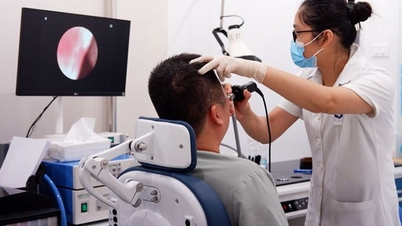
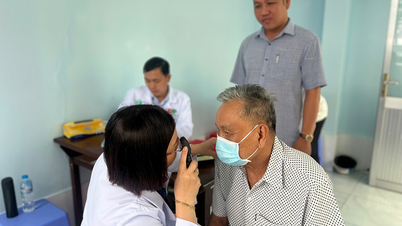
During an ear, nose, and throat endoscopy, doctors discovered a tumor in the nasopharynx, suspected to be cancerous. They advised and performed a biopsy of the tumor for pathological examination. The histopathological test results confirmed that the patient had nasopharyngeal cancer.
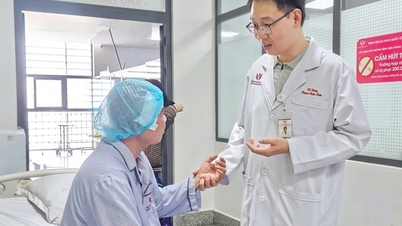
After receiving the diagnosis, Mr. B. was advised to refer to the Oncology Department at Tam Anh General Hospital in Ho Chi Minh City for further diagnostic tests to determine the stage of the disease and treatment methods. The diagnosis concluded that Mr. B. had stage 1 nasopharyngeal carcinoma, with localized carcinoma, no invasion of surrounding organs, no lymph node metastasis, and no metastasis to distant organs.
The primary treatment for nasopharyngeal cancer is usually radiation therapy. Radiation therapy uses high-energy X-rays or other types of radiation to kill cancer cells or prevent them from growing by damaging their DNA.
According to doctors, nasopharyngeal cancer responds very well to radiotherapy if detected in the early stages. Early detection and treatment lead to a very good prognosis for survival time.
The five-year survival rate for carcinoma in situ is 82%. For carcinoma with lymph node metastasis, this rate drops to 72%, and for carcinoma with distant metastasis, it further decreases to 49%, according to the U.S. National Library of Medicine.
Because the initial signs and symptoms of nasopharyngeal cancer are very subtle and unclear, patients can easily mistake them for other nasal and sinus diseases.
At the same time, it is difficult to detect tumors without the assistance of an ENT endoscopy system. Mr. B. stated that he had never undergone an ENT endoscopy during a local examination.
Endoscopic examination of the ear, nose, and throat is an advanced medical technique that allows doctors to visually observe and access damaged areas deep within the ear, nose, and throat, and assess the extent of the damage.
As a result, doctors can make timely diagnoses, detecting nasopharyngeal cancer and many other ear, nose, and throat diseases early; patients receive early treatment advice, leading to more positive outcomes.
According to Dr. Tran Thi Thuy Hang, Head of the Ear, Nose and Throat Department at the Ear, Nose and Throat Center, Tam Anh General Hospital in Ho Chi Minh City, the percentage of patients diagnosed with nasopharyngeal cancer at the Ear, Nose and Throat Center is approximately 0.1%.
Nasopharyngeal cancer is a malignant disease belonging to the head and neck cancer group. This cancer begins in the nasopharynx - the upper part of the throat, located behind the nose and nasal cavity, which is the airway from the nose to the throat.
According to Dr. Hang, nasopharyngeal cancer can occur at any age; however, it is most common in people over 50. Men tend to have a higher incidence of nasopharyngeal cancer than women, at a rate 2-3 times higher.
Nasopharyngeal cancer ranks 9th among the 10 most common types of cancer in Vietnam, accounting for 3.1%, according to Globocan 2022.
According to Cancer Research UK, there are many risk factors for nasopharyngeal cancer, such as genetics, heavy smoking, heavy alcohol consumption, a family history of head and neck cancer, infection with certain types of HPV, or frequent exposure to wood dust and industrial chemicals.
Dr. Hang noted that because the symptoms of early-stage nasopharyngeal cancer are very vague and easily confused with nasal and sinus diseases, it is often detected and treated late, and progresses rapidly.
"During examinations, we encountered several patients who came for check-ups when they were already in an advanced stage with symptoms such as sore throat, recurrent ear infections, swollen lymph nodes in the neck, facial pain, hearing loss, and nosebleeds," Dr. Hang said.
According to Dr. Hang, if the disease is detected early, the prognosis for treatment is good. Therefore, if you have symptoms such as sore throat, nasal congestion, or ear infection that do not improve after two weeks of treatment, you should see a doctor early and have an ear, nose, and throat endoscopy.
If you experience recurring head and neck symptoms that don't improve after 1-2 months of medication, you should have an ear, nose, and throat endoscopy and cancer screening. Additionally, everyone should have a regular health check-up and a cancer screening once a year.
In addition to a healthy diet and lifestyle, limiting exposure to polluted areas, avoiding alcohol and smoking, getting the HPV vaccine, and practicing safe sex are recommended.
To prevent the disease, people should limit their consumption of foods preserved with salt and nitrosamines, such as salted fish and cured meats. These foods increase the risk of EBV infection – a virus closely linked to nasopharyngeal cancer.
Source: https://baodautu.vn/ngo-mac-viem-xoang-hoa-ra-la-ung-thu-vom-hong-d224871.html
![[Image] Nearly 125,000 Hanoi students completed the Literature exam for the 10th grade entrance exam.](https://vphoto.vietnam.vn/thumb/1200x675/vietnam/resource/IMAGE/2026/05/30/1780117233041_ndo_br_thiet-ke-chua-co-ten-2-png.webp)




























![[Photo] Admire the coral "masterpiece" amidst the million-year-old heritage of Dak Lak province.](https://vphoto.vietnam.vn/thumb/1200x675/vietnam/resource/IMAGE/2026/05/30/1780107638639_y25-jpg.webp)









































































Comment (0)