

On the afternoon of December 18th, a seemingly ordinary incident in Nhon Phu 1 hamlet, Nhon Ai commune, Can Tho city, became a heartwarming story about wildlife conservation. Mr. Vo Hoang Khai, a local resident, discovered a strange bird flying into his house. Recognizing it might be a rare species, he proactively reported it to the authorities and voluntarily handed it over to support conservation efforts.
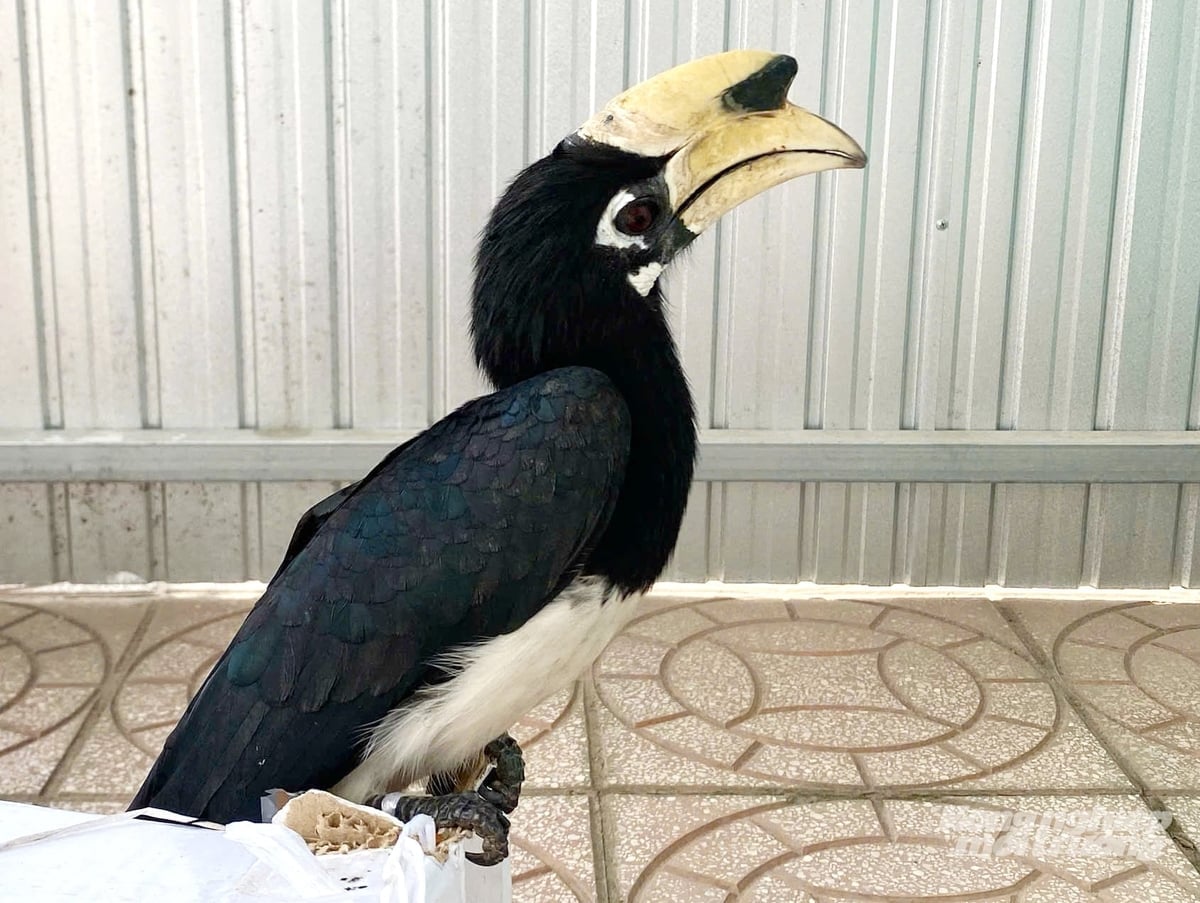
Mr. Vo Hoang Khai discovered a sandpiper flying into his house. Recognizing it as a rare species, he proactively reported it to the authorities and voluntarily handed it over to support conservation efforts. Photo: Le Hoang Vu.
According to Mr. Khai, at around 4 PM on December 18th, while he was with his family, he saw a bird with a very distinctive appearance perched on his neighbor's roof, and then flying over to his house.
Khải recounted, "The bird looked very strange, with a large, curved beak and beautiful colors; I'd never seen anything like it before. At first, it perched next to the house, then flew back and forth, and eventually flew straight into the house."
Worried that the bird might be injured or hunted, Mr. Khai and his wife tried to keep it safe. He used cardboard boxes to shield it, preventing it from flying around, and fed it fruit as a temporary food source. During the night, he called several acquaintances but no one could identify the species. Sensing it was a rare bird, he decided to contact the forest rangers to report it.
“At that time, I simply thought, ‘This bird is too strange, it’s probably not an ordinary bird.’ If I let it out, I was afraid people would shoot it or catch it to keep as a pet. But keeping it wouldn’t be right. So, I reported it to the authorities and handed it over to the State for care and conservation,” Khai shared.
On the same day, Mr. Khai sent images of the bird to the Can Tho City Forest Protection Department. The following morning, the relevant authorities quickly verified the information and contacted the family to complete the handover procedures. By noon on December 19th, the bird was handed over to the Center for Cultivation, Research and Processing of Medicinal Plants - Logistics and Technical Department of Military Region 9, also known as the "Dong Tam Snake Farm," for care, nurturing, and conservation according to regulations.
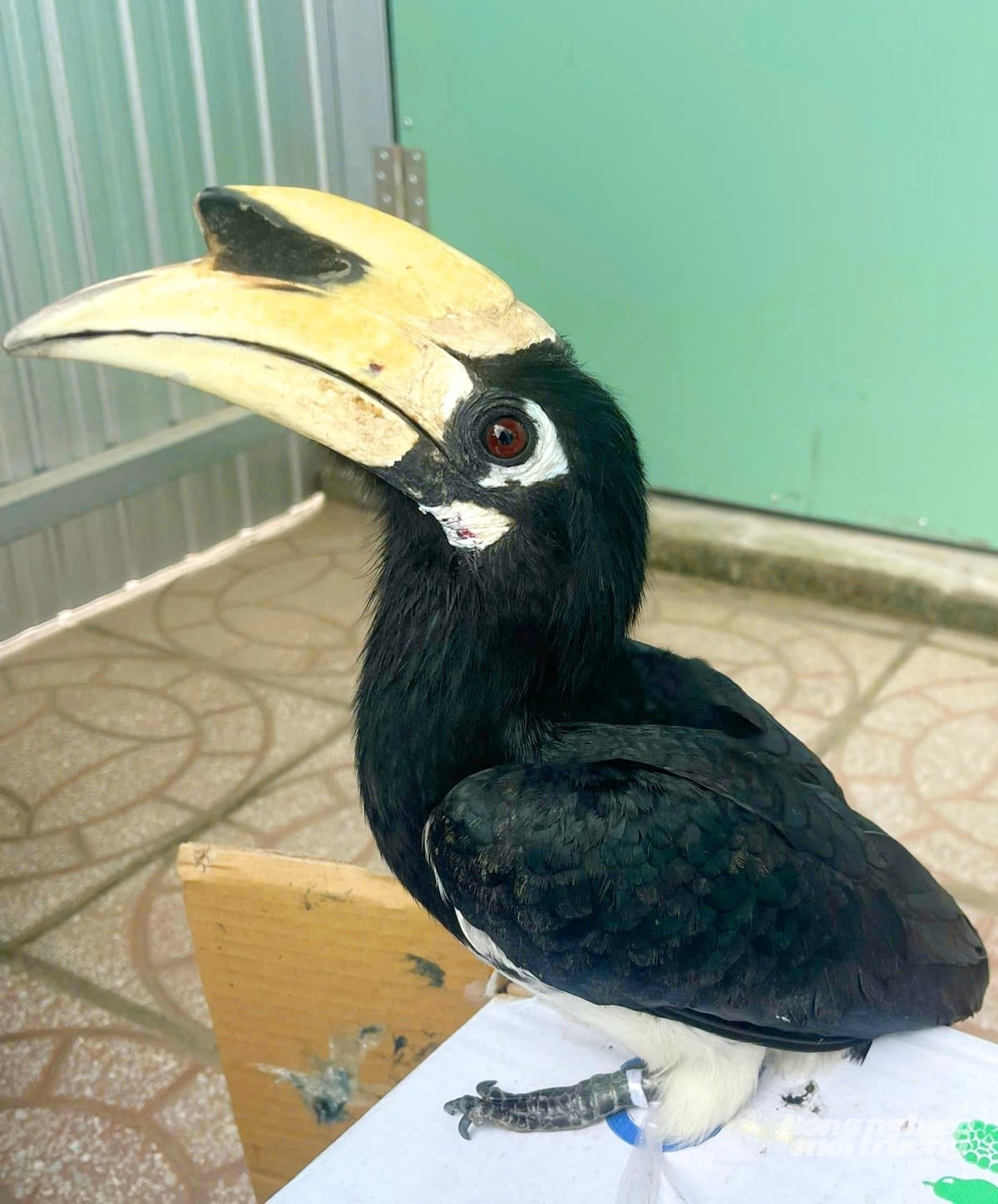
The sandpiper, listed as an endangered, rare, and precious species prioritized for protection under Government Decree 84/2021/ND-CP, is also listed in the IUCN Red List as threatened. Photo: Le Hoang Vu.
Mr. Nguyen Thanh Quang, Deputy Team Leader of the Forest Protection and Firefighting Mobile Team (Department of Rural Development and Forestry of Can Tho City), said that after checking and comparing the characteristics, the bird that Mr. Khai handed over is a white-bellied sandpiper, scientifically known as Anthracoceros albirostris, belonging to the hornbill family (Bucerotidae).
This is a rare wild bird, listed in the category of endangered, rare, and precious species prioritized for protection under Government Decree 84/2021/ND-CP, and also listed in the IUCN Red List as threatened. The voluntary reporting and handover by the people is a highly commendable act.
According to Mr. Quang, the white-bellied sandpiper is usually found in the forests of the Southeast and Central Highlands regions of Vietnam, as well as in some Southeast Asian countries such as Myanmar, Thailand, Laos, Cambodia, and Southern China. The appearance of this bird in residential areas in Can Tho may be due to it getting lost while migrating or searching for food.
The sandpiper is distinctive in appearance, with its large, curved beak and strikingly contrasting colors. They primarily feed on fruits and berries and play a vital role in seed dispersal, contributing to the ecological balance of tropical forests. However, due to hunting, trafficking, and habitat loss, their numbers in the wild are declining.
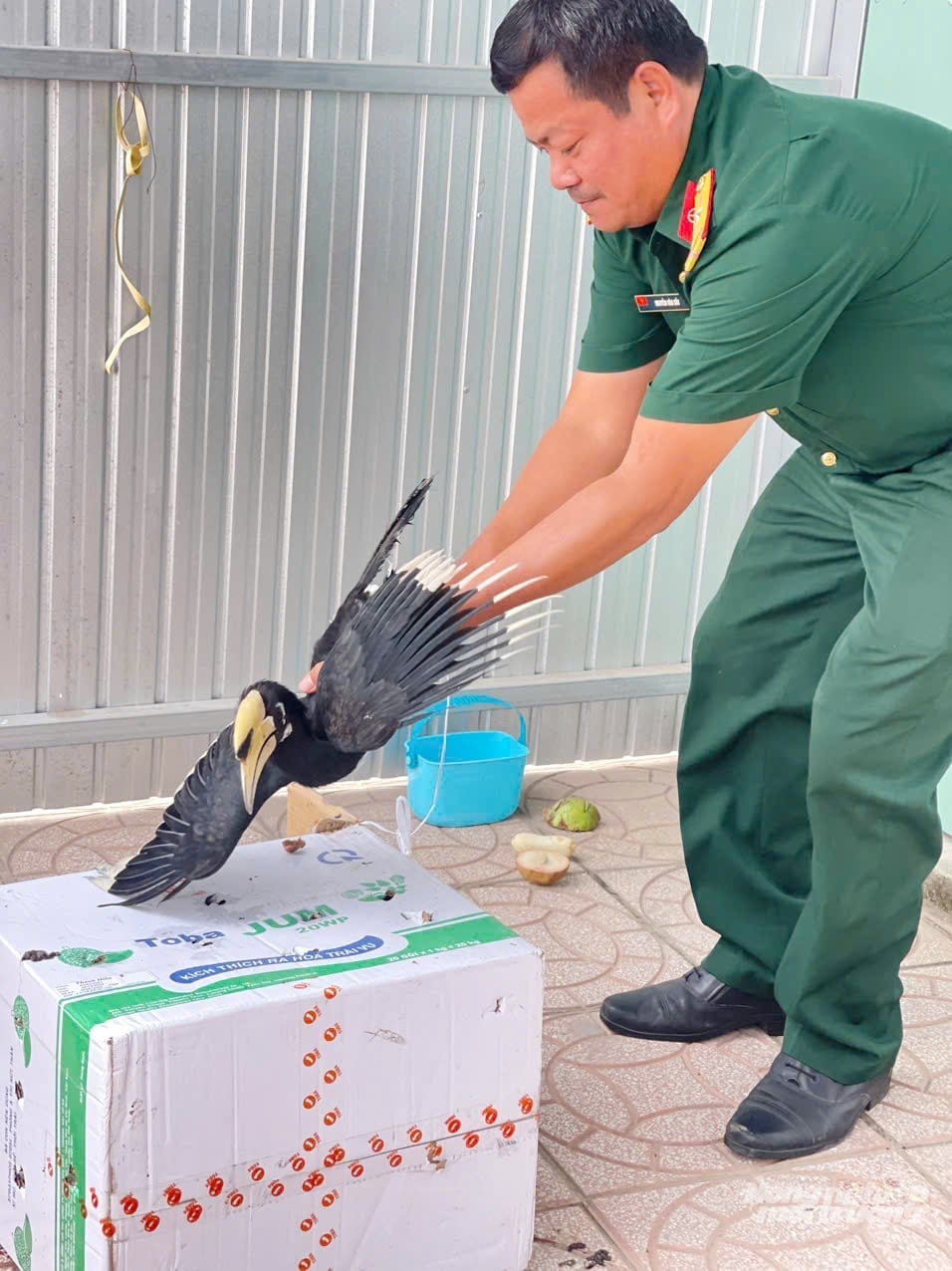
At noon on December 19th, the sandpiper was handed over to the Dong Tam Snake Farm for care, nurturing, and conservation according to regulations. Photo: Le Hoang Vu.
"This species is very easy to hunt because of its beautiful appearance and is often kept as a pet. Therefore, when people spot one, they should immediately report it to the authorities and should not keep it in captivity," Mr. Quang advised.
After receiving the bird, the Dong Tam Snake Farm Center will monitor its health, care for it, and nurture it. If it meets the necessary conditions, the bird will be released back into its natural environment to ensure its survival.
Source: https://nongnghiepmoitruong.vn/nguoi-dan-tu-nguyen-giao-nop-chim-cao-cat-quy-hiem-d790292.html























![[Photo] Prime Minister Pham Minh Chinh attends the Conference on the Implementation of Tasks for 2026 of the Industry and Trade Sector](/_next/image?url=https%3A%2F%2Fvphoto.vietnam.vn%2Fthumb%2F1200x675%2Fvietnam%2Fresource%2FIMAGE%2F2025%2F12%2F19%2F1766159500458_ndo_br_shared31-jpg.webp&w=3840&q=75)































































Comment (0)