

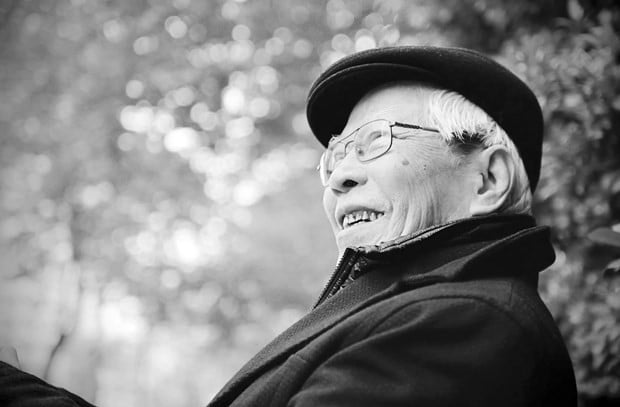
 |
| The late Associate Professor, Doctor of Science, painter, director, People's Artist Ngo Manh Lan. (Source: VNA) |
From "The Kitten," "The Toad," "The Story of Giong," to "The Talking Magpie ," his works are not boisterous or dogmatic, but they always instill in children a sense of kindness, courage, love for their homeland, and faith in goodness. It's a gentle way of educating, with innocence, playfulness, laughter, and lighthearted lessons told through images, music , and emotions.
A generation that grew up with Vietnamese animation surely still remembers the feeling of sitting in front of a black and white screen, intently watching the little cat, the magpie, or the boy from Giong village. Back then, animation was not simply entertainment, but also a part of family memories, collective memories of the difficult but dream-filled subsidy era.
Looking back today, the value of those works lies even more clearly in their distinctly Vietnamese cultural identity. Ngo Manh Lan's films feature hibiscus hedges, thatched roofs, the sound of country flutes, folk legends, and the beauty of Northern Vietnamese villages. He incorporates national elements into animation not through slogans, but through the naturalness of someone deeply in love with Vietnamese culture.
In particular, the character of Cricket's Adventures, illustrated by him since 1959, remains deeply ingrained in the memories of many readers, becoming a familiar face of Vietnamese childhood for many decades. A literary character, through his drawings, has taken on a life of its own in the minds of readers.
What is particularly valuable about Ngo Manh Lan is his artistic journey intertwined with the history of the nation. He belongs to a generation of artists who matured during the resistance war, having studied in the Viet Bac war zone under the guidance of painter To Ngoc Van, participated in the Dien Bien Phu campaign, and later went to the Soviet Union to study animation directing. That generation entered the arts not to seek personal glory, but to carry with them the ideal of serving the country through culture.
Therefore, when reviewing his works, one always sees kindness present in every frame. A kindness that is not ostentatious but subtle, just like his personality in real life—sincere, gentle, and dedicated to his profession.
For many years, Vietnamese animation was overshadowed by the influx of foreign films. Many believed that domestic animation was merely a relic of the past. But the resurgence of values like the Cricket Award today shows that society is beginning to seriously reconsider the role of children's art.
People's Artist Ngo Manh Lan belongs to a generation of artists who dedicated their lives to animation, illustrating children's books, training the younger generation, and researching art. He persistently cultivated a seemingly small field of art, which silently laid the foundation for the soul of society.
Poet Tran Dang Khoa assessed that the honor is not only a well-deserved award for the late artist personally, but also a tribute to a generation of artists who used art to preserve the innocence of Vietnamese childhood through the upheavals of the times.
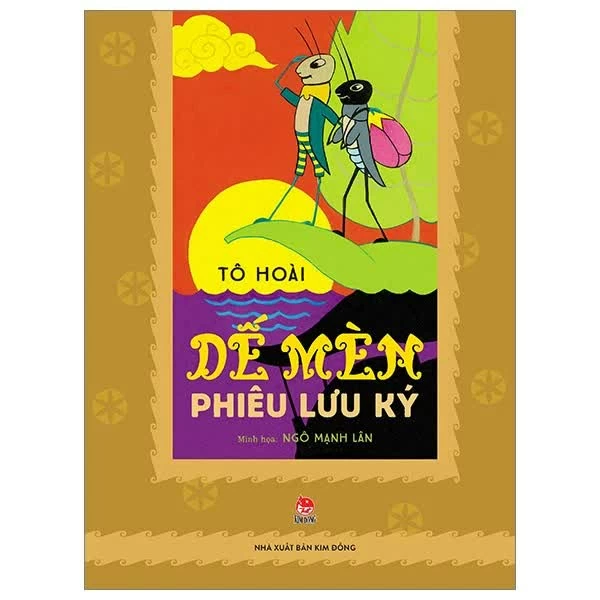 |
| The work "The Adventures of Cricket" by writer Tô Hoài is vividly illustrated by artist Ngô Mạnh Lân. (Source: Publishing House) |
In over half a century of dedication to art, he left behind a vast legacy of 22 animated films (17 directors, 5 animators) along with numerous illustrations, sketches, and research works on animated cinema.
These works not only became childhood memories for many generations but also earned him numerous major awards both nationally and internationally, including the Silver Pelican Award at the International Animation Film Festival in Romania and the Golden Dove Award at the Leipzig Film Festival.
He was awarded the Golden Lotus, Silver Lotus, and State Prize for Literature and Arts, but the greatest reward he left behind was not the titles, but his contribution to creating an animation industry with a distinct Vietnamese identity, nurturing the souls of children with kindness, compassion, and the beauty of national culture for many decades.
Source: https://baoquocte.vn/nguoi-gin-giu-mot-phan-tuoi-tho-viet-nam-397981.html

![[Photo] Standing Committee member of the Party Central Committee Tran Cam Tu working with the Central Inspection Committee](https://vphoto.vietnam.vn/thumb/1200x675/vietnam/resource/IMAGE/2026/05/28/1779969579668_ndo_br_bnd-2495-jpg.webp)










































































Comment (0)