


In many communes and wards today, cultural officials are no longer solely responsible for arts and culture or information and propaganda as before. In the new management model, they have to take on many responsibilities and "must be able to do everything."
"Multipurpose" officials
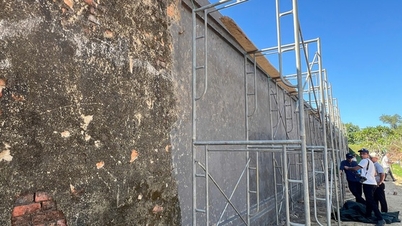
In areas with many historical sites, festivals, or traditional craft villages, the workload is even greater. Some officials have to be in charge of dozens of sites, regularly inspecting their condition, coordinating festival organization, processing restoration documents, addressing public concerns, and updating digitized data according to new requirements.
It's worth noting that while the workload is increasing, the staffing levels haven't risen proportionally. After restructuring and streamlining the apparatus, many places now only have one or two officials in charge of all cultural and social affairs at the grassroots level. A cultural official in a province in the Northern Delta shared that there are times when they have to work non-stop from morning to night because they are simultaneously involved in festivals, mass sports activities, inspections of karaoke establishments, and updating administrative data.
"Cultural work inherently lacks fixed hours. During festivals or major events, staff almost work through the weekend," this person said. Unlike many fields where results can be seen immediately through data or specific projects, cultural work is often fundamental, long-term, and difficult to quantify. However, the problem is that management demands are increasingly high, while the conditions for implementation are not commensurate, causing many to feel immense pressure.
Many officials confided that, at the commune and ward level, cultural workers often face various pressures: pressure from the people, from management demands, from work deadlines, and even from the expectation of "having to accomplish everything." If a festival becomes disorderly, a historical site deteriorates, or a cultural activity receives negative feedback, the first person held responsible is often the grassroots cultural official.
One of the stories that has attracted attention recently is the simultaneous request for transfers from several officials of the cultural heritage management department in Bac Ninh . This is a locality with a high density of historical sites and is famous for many unique forms of cultural heritage, such as the UNESCO recognition of Bac Ninh Quan Ho folk songs.
However, behind the vibrant facade of cultural life lies immense pressure on those directly involved in management. One official in the sector shared that heritage management is not just about sitting at a desk. They must regularly visit sites, inspect the condition of relics, handle emerging issues related to restoration, construction, religious practices, festivals, and coordinate with various specialized units.
At times, an officer has to monitor dozens of files simultaneously. Meanwhile, income and career development opportunities are not enough to retain young people. Many, after a few years of work, move to other fields that are more stable, offer better income, and are less stressful.
The fact that many officials are resigning or transferring to other positions is not simply a matter of personnel, but also poses a risk of a shortage of skilled resources in the field of cultural preservation. Especially in localities rich in heritage, a lack of knowledgeable professionals will make managing and preserving cultural values extremely difficult.
A reality unfolding in many localities is that the cultural sector is increasingly struggling to attract young talent. Graduates in cultural management, conservation, museology, or library science tend to seek jobs in businesses, media, or private organizations rather than at the grassroots level. The reason is not just about income. For many young people, the working environment at the commune and ward level lacks the conditions to develop their expertise. The excessive administrative work leaves them with few opportunities for creativity or the implementation of new ideas.
Meanwhile, the cultural sector currently requires a multi-skilled workforce that possesses both cultural expertise and capabilities in technology, communication, and community organization. Without appropriate training and retention policies, the risk of an aging workforce at the grassroots level will become increasingly apparent.
A thorough understanding of human resources is needed.
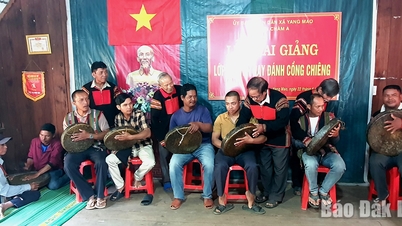
In many localities, grassroots cultural workers are quietly dedicating themselves to their profession out of love for their work and a strong connection to the community. They know the names of every artisan in the village, remember the schedules of every festival, understand the value of each communal house, each folk song, and each fading custom. But ultimately, this love for their profession also needs to be "supported" by practical conditions.
Streamlining the organizational structure is essential for improving management efficiency, but alongside this, the issue of human resources also needs a more thorough understanding. Simply reducing administrative layers is unacceptable without considering the specific characteristics of the cultural sector, where work efficiency cannot be measured by short-term figures. Many opinions suggest that more appropriate policies are needed for grassroots cultural workers: strengthening digital skills training, reducing administrative burdens, creating mechanisms to attract young talent, and providing opportunities for professionals to develop their expertise.
Experience from Hanoi shows that, in order to perfect the organizational structure towards a streamlined yet effective operation, in line with the practical requirements of the two-tiered local government model, the Standing Committee of the Hanoi City Party Committee has determined that: The city will review and arrange the staff in a rational manner, while resolutely dealing with cases that do not meet job requirements or have low work efficiency; simultaneously, it will build mechanisms to encourage, motivate, and retain capable and dedicated officials.
To improve the quality of the workforce at the grassroots level, Hanoi is also promoting training and professional development in a practical and realistic manner, focusing on hands-on training methods to help officials quickly adapt to new job requirements; while encouraging self-study and self-improvement of professional knowledge and skills.
Furthermore, the city continues to improve the decentralization and delegation of authority mechanisms, promptly addressing difficulties and obstacles so that communes and wards have sufficient authority and conditions to handle work more quickly and efficiently. In particular, digital transformation continues to be considered one of the key tasks, with the promotion of information technology applications, the synchronous deployment of digital platforms from the city level to the grassroots, and the enhancement of full-process online public services, aiming for a more modern and convenient administration for citizens and reducing the workload for grassroots officials.
Difficulties and obstacles for local units must be promptly addressed.
The Khanh Hoa Provincial Party Committee recently held a conference to review one year of operation of the two-tiered political and local government system. Based on practical experience, Khanh Hoa proposed that the Government issue a salary policy based on job positions, ensuring the legitimate rights of cadres, civil servants, and public employees at the commune level within the two-tiered government model; allow the implementation of professional and technical contracts within the initial staffing quota for the two-tiered local government; and consider allocating staffing quotas when establishing new multi-sectoral public service units under the commune-level People's Committee.
Mr. Tran Phong, Secretary of the Khanh Hoa Provincial Party Committee, requested that provincial-level agencies and units be more proactive in guiding and coordinating with localities, promptly addressing and resolving difficulties and obstacles at the grassroots level. Localities should continue to build and improve the organizational structure of the political system in the coming time. Regarding personnel work, it is necessary to arrange personnel according to their capabilities and strengths; create a good working environment to promote collective intelligence… Implementing the Central Committee's policies, resolutions, and conclusions on reorganizing the organizational structure and operating the two-tiered local government model, the province has focused on consolidating the organizational structure, ensuring the smooth operation of the political system from the provincial to the grassroots level…
T. SUONG
Source: https://baovanhoa.vn/van-hoa/nguy-co-thieu-can-bo-chuyen-mon-sau-232064.html
![[Photo] The heat at the fireworks display site on the opening night of the Da Nang International Fireworks Festival 2026](https://vphoto.vietnam.vn/thumb/1200x675/vietnam/resource/IMAGE/2026/05/27/1779889741485_ndo_br_z7872039145157-fecaba5112f39e8352544099d7ef4738-5140-jpg.webp)

![[Photo] The courage of new recruits of Brigade 144 on the training ground.](https://vphoto.vietnam.vn/thumb/1200x675/vietnam/resource/IMAGE/2026/05/27/1779881651341_anh-man-hinh-2026-05-27-luc-18-32-52.png)








































![[Photo] The courage of new recruits of Brigade 144 on the training ground.](https://vphoto.vietnam.vn/thumb/402x226/vietnam/resource/IMAGE/2026/05/27/1779881651341_anh-man-hinh-2026-05-27-luc-18-32-52.png)





















Comment (0)