

Part 1: Rental Housing: A Major Shift in Housing Thinking
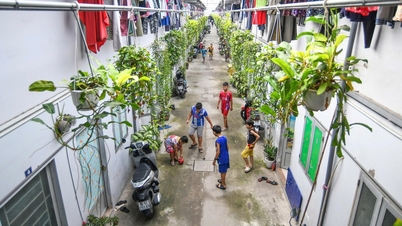
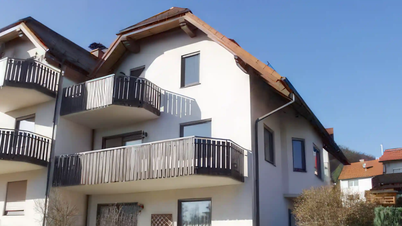
Meanwhile, the majority of rental housing supply comes from small family homes, worker dormitories, student housing, or mini-apartments in residential areas.
A large portion of the housing needs of middle- and low-income earners are being met by social resources rather than large-scale real estate projects.
Viewed in that light, what the government is aiming for this time is not to create a new market, but to integrate an existing market operating in the shadows into the official urban development strategy.
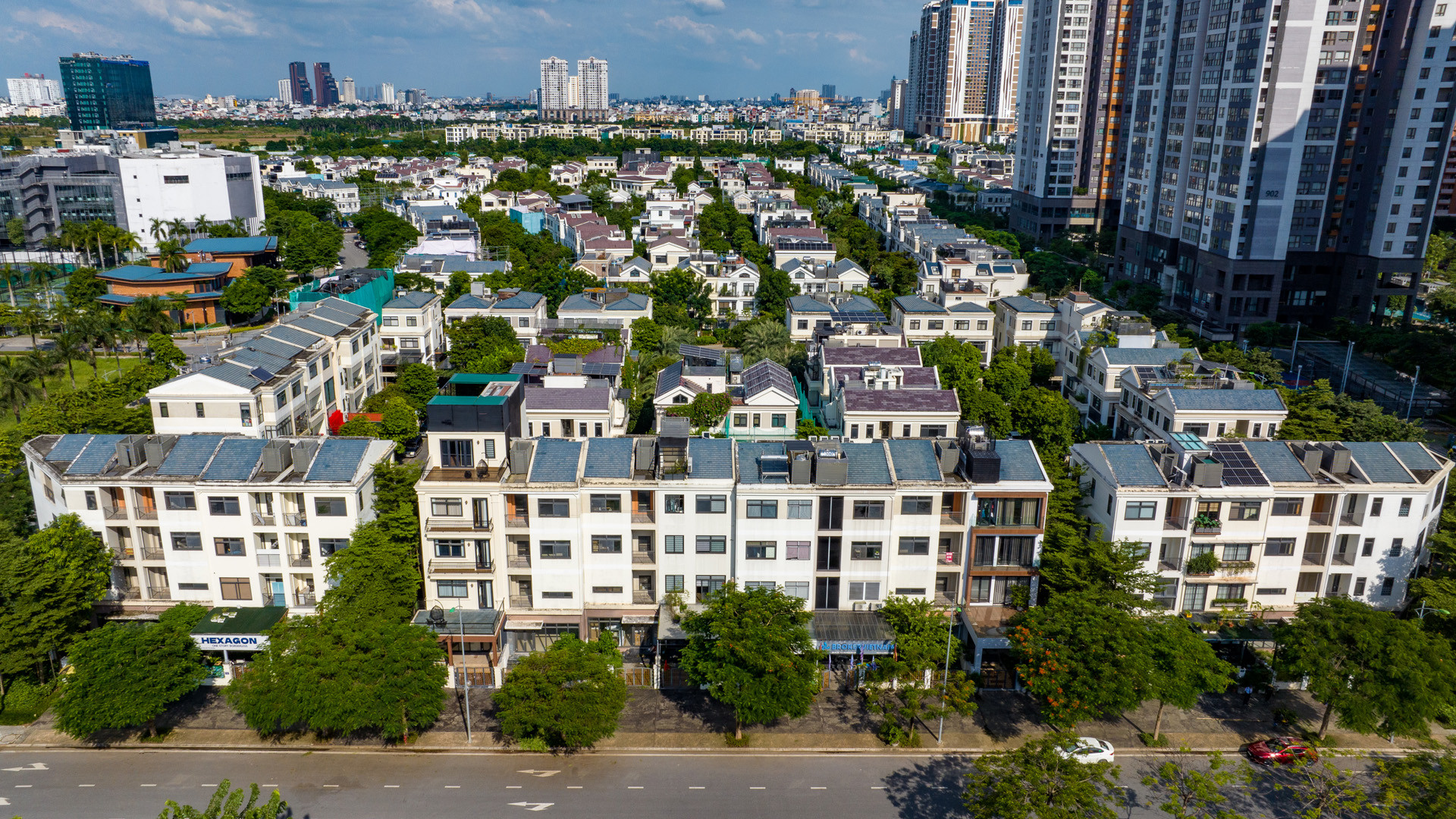
To understand why businesses aren't really enthusiastic about this field, just do a simple calculation.
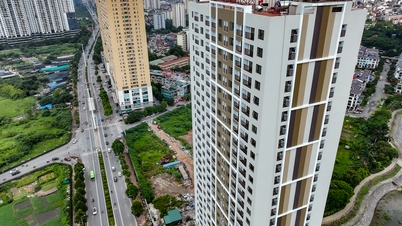
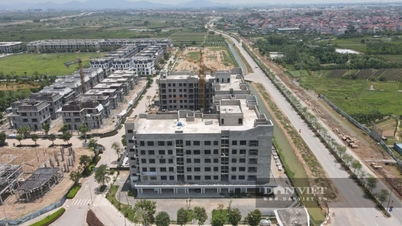
Suppose a developer builds a 300-apartment building in Hanoi . If they sell it for approximately 100 million VND per square meter, the company could generate around 2,100 billion VND in revenue and complete the project's lifecycle in just a few years.
But if the entire building were retained for rental purposes, the story would be completely different. With current rental rates, the investor might have to wait 20-30 years to recoup their investment, not to mention operating and maintenance costs and market risks during that time.
In other words, one side offers tangible profits within a CEO's tenure. The other side is a game that spans multiple generations of management.
Faced with these two options, most businesses would choose to sell houses. This is understandable, because businesses are created to seek profit, not to solve social problems on behalf of the government.
In fact, Vietnam has spent many years trying to solve the housing problem by selling social housing units. However, the implementation progress has been slower than expected, partly due to low profit margins while procedures and implementation times are lengthy.
This shows that even with social housing, if the issue of benefits is not resolved, the market will be very difficult to operate.
Meanwhile, millions of renters continue to wait. They don't care much about the financial models or profit calculations of the businesses. What they need is much simpler: stable housing at a price they can afford.
The state cannot replace the market.
If the market could solve the rental housing problem on its own, perhaps millions of workers wouldn't have to live in cramped dormitories like they do today.
But if the State were to step in and replace the market, the budget would still struggle to meet the needs of a city with tens of millions of people.
Therefore, the role of the State is not to replace the market, but to create the conditions for the market to operate in a way that serves long-term development goals.
That is also the spirit in Prime Minister Le Minh Hung's new directive when he requested the development of rental housing in a way that the State does not subsidize but also does not completely leave it to the market.
Hanoi's selection as the pilot location for the first rental housing models is no coincidence. It is also the locality facing the greatest pressure from urbanization, increasing population due to migration, and the widening gap between housing prices and people's incomes.
From an economic perspective, the greatest resource the government can contribute to the rental housing market is not money, but land.
Notably, this time the government is not only discussing capital but also requesting a review of public land and assets to incorporate into the development of rental housing. If businesses have to buy land at market prices and then build rental housing, most projects will be highly unfeasible.
But when the State gets involved with land, infrastructure, and institutions, the economic equation will change completely.
Who will provide the funding for the 30 years?
Land is only half the story. The other half is capital.
Rental housing is a long-term investment, spanning decades, while the current banking system's capital is primarily short-term. Ultimately, it's difficult to use funds raised over a few months or years to finance an asset that takes decades to recoup its investment.
This means that in order to develop a large-scale rental housing market, Vietnam will need to find corresponding long-term sources of capital.
In other words, to have millions of rental homes, Vietnam must not only solve the land problem but also the long-term capital problem.
The biggest challenge doesn't lie in the buildings.
Compared to Vietnam, the biggest difference between developed countries with rental housing lies in income and social security systems.
In many developed countries, people are willing to rent for life because they still have other layers of protection for the future, such as pension funds, social security, or public welfare programs.
Meanwhile, in Vietnam, a house is often still a family's biggest asset, a form of savings for old age, and also the most important insurance against life's uncertainties.
Therefore, the story of rental housing ultimately depends not only on the construction industry or the real estate market. It also depends on the rate of income growth, the quality of employment, and the maturity of the social security system.
A policy is only sustainable when it benefits everyone.
If the article "Rental Housing: A Major Shift in Housing Thinking" posed the question of where millions of people will live in a Hanoi of 15 million, this article raises a different question: Who will build those housing units?
The success of the rental housing market ultimately does not depend on any single entity, but rather on whether Vietnam can design a mechanism that ensures all parties see benefits.
But ultimately, the goal of all policies is people.
A rental housing market is only truly successful when ordinary workers can find stable housing to live, work, and raise their children in the city, because no business builds houses out of kindness.
But no city can develop sustainably if the very people who create its value are no longer able to stay.
Source: https://vietnamnet.vn/nha-o-cho-thue-cong-thuc-nao-de-tat-ca-cung-co-loi-2521538.html





![[Photo] General Secretary and President To Lam presides over a meeting on preparations for the review of one year of operation of the three-tiered government system.](https://vphoto.vietnam.vn/thumb/1200x675/vietnam/resource/IMAGE/2026/06/02/1780391821195_a1-bnd-4595-9717-jpg.webp)



















































































Comment (0)