

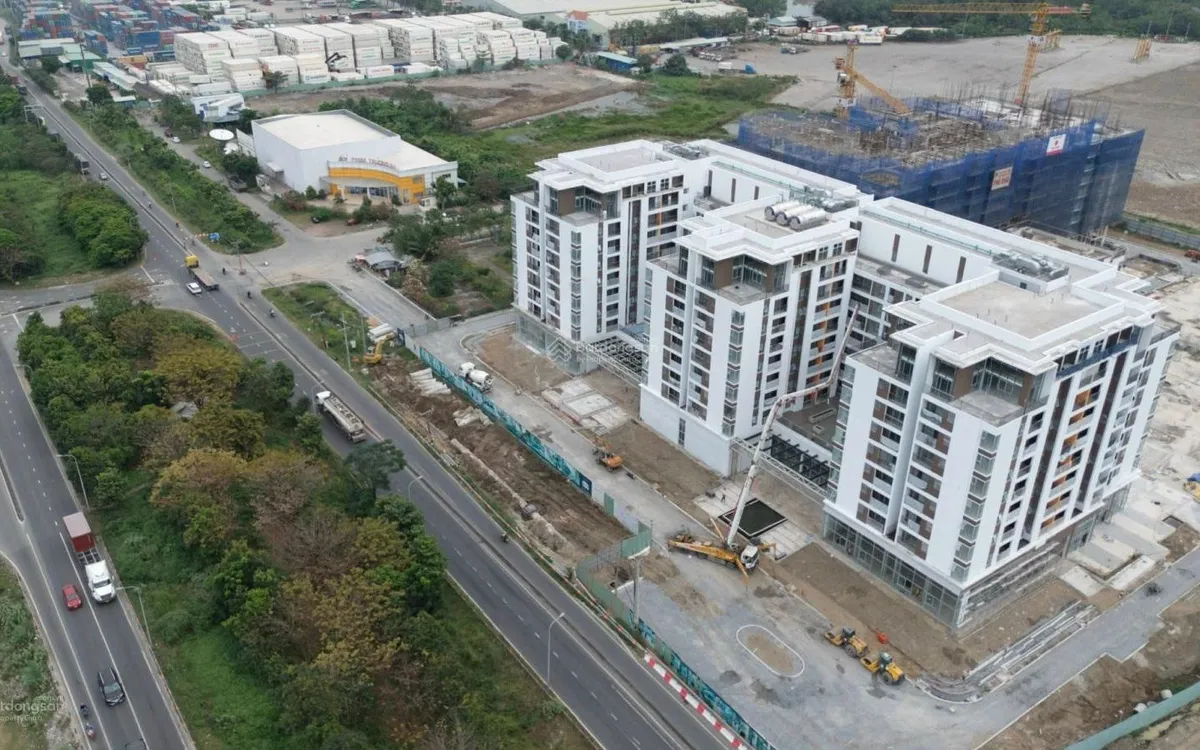
By 2025, Ho Chi Minh City had completed 14 social housing projects with 13,040 apartments, achieving 100% of the planned target.
Procedural bottlenecks
In 2025, Ho Chi Minh City completed 14 social housing projects with 13,040 apartments, achieving 100% of the planned target. In the first two months of 2026, the city commenced construction on 2 projects with 2,656 apartments, and one more project qualified for capital mobilization and sale of future housing units at 324 Ly Thuong Kiet Street, Ward 14, former District 10; cumulatively, there are now 11 projects under construction with 9,700 apartments. The city has also prepared approximately 1,730 hectares of land for social housing development and plans to select investors for 8 projects.
However, information from the recently published report on the real estate market situation and key tasks of the Ho Chi Minh City Real Estate Association (Horea) in 2026 shows that businesses are still facing difficulties, as the deeper they go into the implementation process, the more apparent the obstacles and shortcomings of the policies become.
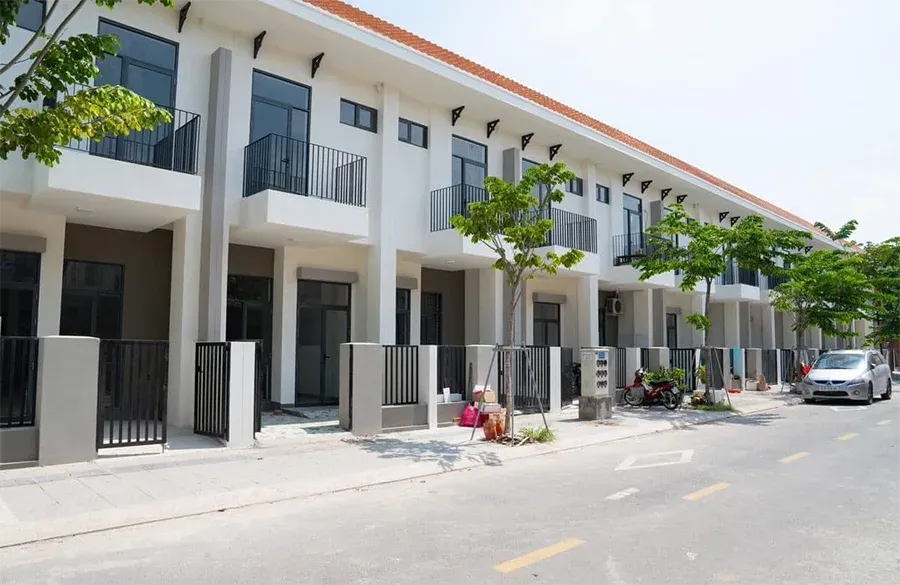
Horea proposed integrating the assessment processes and reducing separate approval procedures to streamline administrative procedures for social housing development.
Regarding procedures, businesses have valid reasons to complain. Mr. Le Hoang Chau, Chairman of Horea, argues that social housing procedures under the old mechanism can take more than 1,000 days. A project intended to serve low-income earners that takes several years just to go through various bureaucratic hurdles clearly deviates from the original spirit of "social welfare." Social housing should be a priority area in terms of processing time, but instead, it often falls into a vicious cycle of seeking opinions, assessments, reviews, and waiting for approvals. The consequence is increased capital costs, delayed progress, lost opportunities for businesses, and continued waiting for the people.
The problem isn't just the slowness, but the multi-layered, multi-tiered process. A business has to go through numerous departments and agencies for the same social housing project. HoREA (Vietnam Real Estate Association) proposes integrating the appraisal stages, reducing separate approval procedures, and even argues that soliciting community opinions on detailed planning schemes for social housing projects is, in some cases, "formalistic," lacking substance, yet prolonging the process and increasing costs.
The key point here is that the procedures not only slow down the project but also distort policy incentives. Once the process is prolonged and costs increase, while profits from social housing are constrained, businesses will tend to be hesitant, even avoid it. In other words, if the procedures remain a long, arduous race against obstacles, it will be difficult to expect a strong influx of private capital into this segment.
Removing bottlenecks through policy
But procedures aren't the only bottleneck. Behind the story of administrative procedures lies the issue of capital and other difficulties. Mr. Nguyen Tuan Anh, Deputy General Director of the Housing and Urban Development Investment Corporation (HUD), said that to achieve the target of 1 million social housing units by 2030, the investment capital needed could reach approximately 1 trillion VND. If bank loans account for 20-25%, the credit system needs to supply about 250,000 billion VND, while the actual capital accessed is only about 25,000 billion VND, or only about 10% of the need.
For businesses, a lack of preferential capital means increased input costs. For buyers, the current interest rate of 5.4% per year at the Social Policy Bank, according to HoREA, is still quite high compared to the 4.8% per year rate from March 2021 to June 2024. Considering the target beneficiaries, who are low-income earners, this difference is significant. Social housing cannot be defined solely by a lower selling price than commercial housing; it must be guaranteed by its practical accessibility. When interest rates rise, the dream of owning a home becomes even more distant for those who need the policy the most.
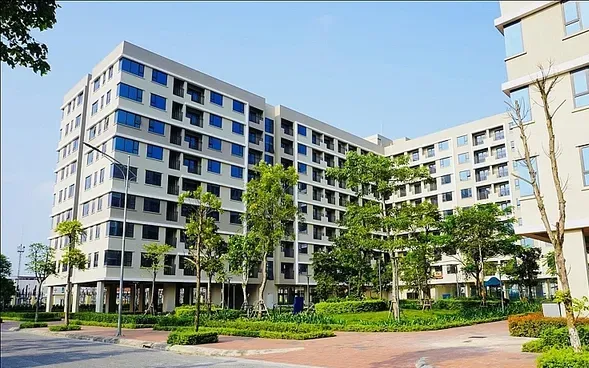
Ho Chi Minh City aims to develop 181,257 social housing units during the 2026-2030 period, with 28,500 units to be completed in 2026 alone.
Another issue is that developers of social housing projects have not yet been able to access preferential credit from the Social Policy Bank during the period from August 1, 2024 to December 31, 2030. According to experts, on one side, buyers need support, and on the other side, businesses producing the products also need assistance. If social housing is viewed solely as a responsibility of businesses without designing sufficiently strong financial levers, it will be very difficult to achieve a large, consistent, and sustainable supply.
Furthermore, some new regulations are creating unforeseen consequences. Mr. Le Hoang Chau argues that the method of determining population size according to Decision 32/2025/QD-UBND could increase the proportion of large apartments and drastically reduce the number of medium and small apartments, even for social housing. If this assessment proves true in practice, it will create difficulties for social housing development businesses. Developing housing for low-income earners inadvertently narrows the options for small apartments, which are the most suitable for their affordability.
Another shortcoming pointed out by HoREA is that Clause 1, Article 78 of the 2023 Housing Law only stipulates housing criteria and income criteria, but omits the residency criterion. In principle, expanding access is reasonable. However, in a situation where supply is severely lacking, this regulation puts businesses in a difficult position when compiling lists of eligible buyers or renters. The case of the social housing project at 234 Ly Thuong Kiet Street, Dien Hong Ward, District 10 (formerly), with only 750 apartments but over 12,000 people nationwide registering, is clear evidence of this pressure. When businesses are given the power to compile lists of eligible buyers or renters, but supply is limited and demand is too high, they are not only overwhelmed but also have to spend extra time and money organizing one or more lottery draws. The administrative burden has been partially shifted to businesses.
Ho Chi Minh City aims to develop 181,257 social housing units during the 2026-2030 period, with 28,500 units to be completed in 2026 alone. Following the Prime Minister 's directive, the city must strive to achieve at least 1 million units by 2028. This is a daunting task, but not impossible. Many businesses hope that these obstacles will be quickly removed so that the city can achieve its social housing development goals this year.
Source: https://vtv.vn/nha-o-xa-hoi-vuong-o-dau-10026031914434117.htm




![[Photo] Delegation attending the 14th Congress of the Vietnam Trade Union visits the Mausoleum of President Ho Chi Minh.](https://vphoto.vietnam.vn/thumb/1200x675/vietnam/resource/IMAGE/2026/06/03/1780451842301_ndo_br_img-3824-jpg.webp)



![[Image] Affirming the aspirations and new standards of the Vietnamese real estate market in the new era.](https://vphoto.vietnam.vn/thumb/402x226/vietnam/resource/IMAGE/2026/06/03/1780441948766_giai-thuong-bat-dong-san-2026-minh-duy-6-7364-jpg.webp)







































































Comment (0)