

Following the direction of the district and the Department of Agriculture , the Tam Nong Agricultural Extension Station actively carries out propaganda work, provides technical guidance, and replicates effective models. Agricultural extension work truly acts as a "bridge" bringing science and technology to farmers, contributing to restructuring agriculture, increasing people's income, and achieving sustainable poverty reduction in the area.
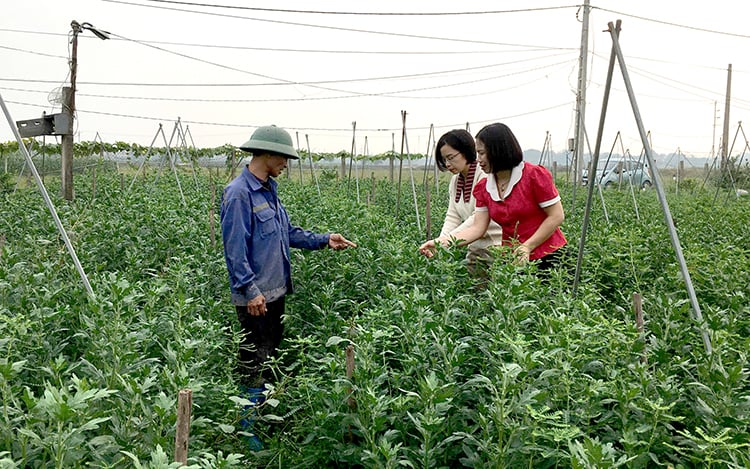
The Tam Nong District Agricultural Extension Station provided technical guidance on planting and caring for chrysanthemums to households implementing the model in Huong Non commune.
Comrade Dao Bien Thuy, Deputy Head of the Station, stated: “The selection and determination of the content and form of propaganda, training, and workshops play a crucial role in spreading successful models and practices at the grassroots level. The Station focuses on coordinating with the commune authorities in surveying and assessing farmers' training needs and selecting the right trainees. The content of propaganda and technology transfer is tailored to the needs, farming conditions, seasons, and agricultural production levels and capabilities of the locality. In the context of climate change and the increasing demands for food safety, the training content focuses on safe production processes, restructuring crop and livestock production, and developing linkages from production to consumption.”
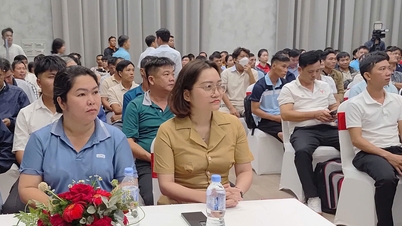
In 2024, the station organized 22 conferences and technical training courses for over 1,000 participants, including grassroots agricultural extension workers and farmers, on new and advanced techniques in livestock farming and crop cultivation such as: planting and caring for citrus fruit trees; raising catfish in ponds; techniques for planting and caring for winter corn crops; beekeeping techniques; cattle farming using artificial insemination to improve the local cattle herd; and using new fertilizers for crops... These training sessions not only provided theoretical knowledge but also combined direct practical application, helping people easily absorb and apply the knowledge to production immediately.
Based on an assessment of the adaptability of crops and livestock to local conditions and farming practices, the District Agricultural Extension Station selects promising agricultural models to propose and implement as pilot projects. The station collaborates with local authorities to select capable households for implementation, provides guidance during the process, and regularly monitors progress and evaluates results to draw lessons learned. In 2024, the station implemented 10 demonstration models on cultivating new rice varieties, raising catfish in ponds, testing new gourd varieties, growing medicinal plants, winter pumpkins, sweet bamboo shoots on hilly land, and growing chrysanthemums, among others.
Simultaneously, in coordination with the Provincial Agricultural Extension Center, we implemented the following projects: a goat farming model for meat production for 5 households classified as poor and near-poor in Lam Son commune, with a scale of 40 goats; a commercial chicken farming model for the Lunar New Year for poor and near-poor households in Bac Son commune, with a scale of 2,000 chickens for 8 households; a breeding cow farming model in Dan Quyen commune, with a scale of 11 households; and a model to improve the quality of native bee colonies in Quang Huc and Tho Van communes.
Agricultural extension activities in the area not only help increase productivity and income but also change the mindset and practices of farmers. From being hesitant about innovation, they have become more proactive in learning about and applying new technologies and linking product consumption. This contributes to sustainable agricultural development, meeting the requirements of modernization and adapting to the challenges of climate change.
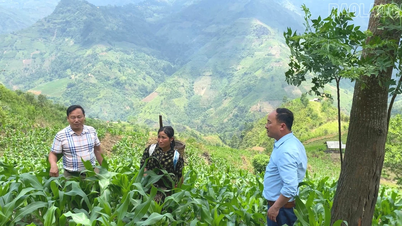
Te Le commune has a relatively developed agricultural economy . Besides the main crops of corn and rice, the area has developed several models for growing medicinal plants and maintained a high livestock and poultry population. According to Mr. Dang Tran Hung, Vice Chairman of the Commune People's Committee: “Agricultural extension plays a crucial role in the development of local agriculture, especially in the restructuring of crop patterns, the establishment of demonstration models for new plant and animal varieties, and the transfer of new scientific and technical knowledge in production. In particular, many poor and near-poor households have access to and received training in new farming techniques to apply to production, bringing about positive results and contributing to increased income and sustainable poverty reduction.”
In the coming period, the Station will continue to coordinate with the National Agricultural Extension Center, provincial agricultural extension centers, research institutes, seed production companies, and other relevant units to implement training, dissemination, and replication of high-economic-efficiency models; build high-tech and biotechnology demonstration models and cutting-edge models suitable to the actual conditions in localities, helping producers increase income and reduce poverty. At the same time, it will promptly and fully convey and introduce policies and guidelines on agricultural and rural development, farming techniques, and new technical advancements for people to refer to, learn from, and replicate.
Nguyen Hue
Source: https://baophutho.vn/nhan-rong-nhung-mo-hinh-khuyen-nong-hieu-qua-223852.htm



![[Photo] General Secretary and President To Lam presides over a meeting on preparations for the review of one year of operation of the three-tiered government system.](https://vphoto.vietnam.vn/thumb/1200x675/vietnam/resource/IMAGE/2026/06/02/1780391821195_a1-bnd-4595-9717-jpg.webp)


















































Comment (0)