

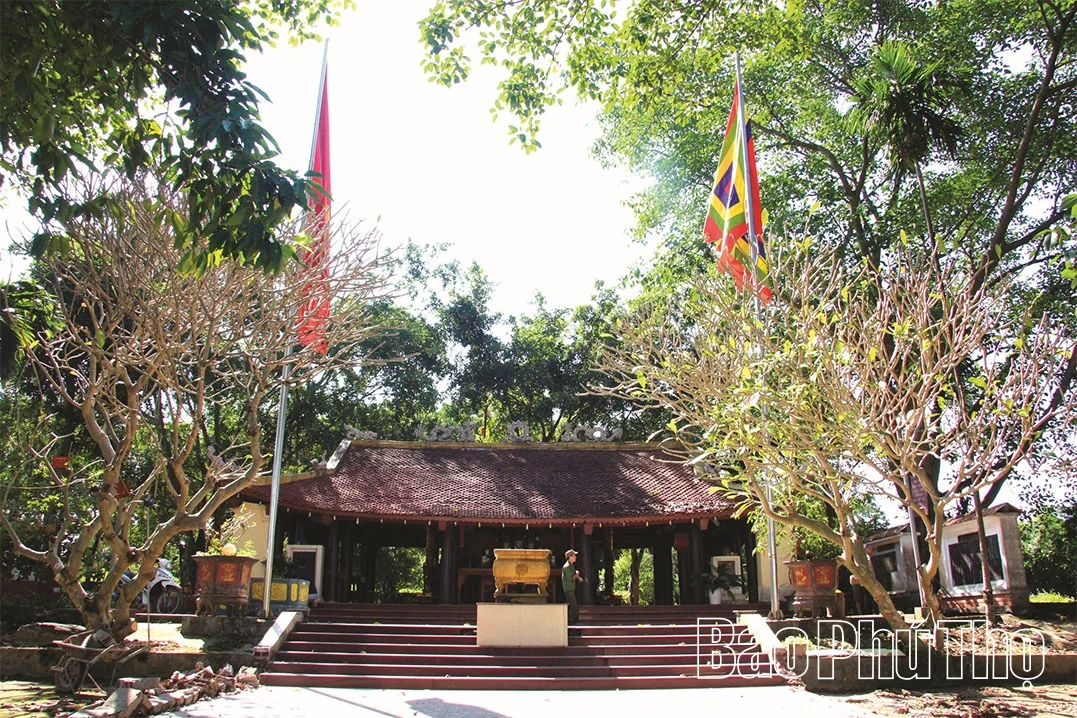
Dinh Ca - the place that preserves the soul of the Chi Dam region, where the Lo Giang river flows into the ancestral land.
A heroic Lo River in the resistance war.
The mist from the Lo River glistened as we stood on the embankment listening to Mr. Dang The Truong, 75 years old, from the Dam area – a son of this land – tell his story. His voice softened as he spoke of the river that had nurtured generations with shrimp, fish, docks, and ferries. But this gentle river also became the graveyard of invading troops during the Autumn-Winter campaign of 1947, leaving in history the inscription "The sacred and heroic Lo River." Historical records also state: On October 24, 1947, at Chi Dam, our artillery first applied the tactic of "positioning close, firing directly." A convoy of five French colonial ships, supported by aircraft, sailed from Tuyen Quang to coordinate with the troops coming from Hanoi . At the Chi Dam intersection, they fell into an ambush set by local soldiers, militia, and guerrillas. In nearly six hours of fierce fighting, our artillery sank two ships and damaged two others; 350 enemy soldiers were killed on the spot, and many weapons were seized. The heroic history of Chi Dam also records the unique initiative of the Chi Dam militia when they used 30-40 pomelos strung together to create a "simulated mine," floating them down the Lo River to frighten enemy ships, causing them to change course and fall right into the range of our artillery. The victory at the Lo River not only shattered a crucial French offensive but also opened the way for the glorious counterattack of the people and army of Viet Bac in the Autumn-Winter campaign of 1947.
Today, looking down at the tranquil Lo River, we imagine we can still hear the sounds of the charge amidst the smoke columns of the battle formation, the gongs, the drums, the guns, and the artillery shaking the riverbanks. The water flows silently, as it has for a thousand years. But this place has changed; on both sides are orchards of ripe Suu pomelos. This fruit, once transformed into a weapon, is now a renowned local specialty.
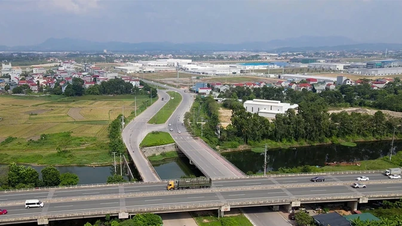
According to the elders, the area where the Lo River flows into the ancestral land, passing through Chi Dam for only about 6 km, has created a land with a glorious history in the resistance war and is an ancient land of temples, shrines, and legends from the Hung King era. In Chi Dam, the most famous is perhaps Dinh Ca - an ancient temple dedicated to the deity Cao Son Dai Vuong, who assisted the 18th Hung King in fighting foreign invaders. The temple was recognized as a provincial-level historical and cultural relic in 1994. Besides Dinh Ca, thick layers of historical sediment still remain. Fragments of celadon, brown-glazed, and blue-glazed pottery found along the banks of the Lo River are evidence of a major trading center. In the past, this was where the famous general Tran Nhat Duat gathered militia to fight against the Mongol invaders. All of this creates a thick layer of cultural sediment, enriching the identity of the land where the Lo River flows into the ancestral land.
From the battlefield to the prosperous countryside
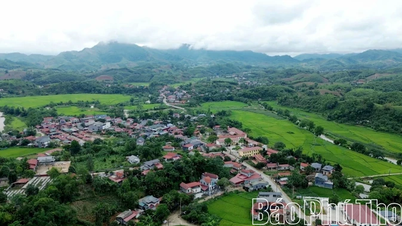
According to Comrade Le Phi Son - Vice Chairman of the People's Committee of Chi Dam commune: Chi Dam commune was established today on the basis of merging the old Chi Dam commune and Hung Xuyen commune. Not only inheriting a long-standing tradition of agricultural production, the locality has also promoted economic restructuring with many outstanding achievements. Located between two large rivers, the Lo River and the Chay River, with fertile land and a mild climate, the entire commune currently has more than 543 hectares of pomelo orchards, with specialty pomelos accounting for the majority. Before and after the merger under the two-tiered local government model, Chi Dam was a major pomelo producing area. In 2022, Chi Dam pomelo products achieved OCOP 4-star certification, maintaining the brand of specialty products of Phu Tho province.
Alongside this, the transportation system has developed strongly with tens of kilometers of rural roads being paved, providing convenient connections to national and provincial highways, facilitating the circulation of agricultural and forestry products. The commune's industrial and handicraft sectors are also developing rapidly with 1,188 production and business establishments, including 82 wood processing facilities in the Van Du carpentry village, creating jobs for more than 1,000 local workers. Chi Dam has now achieved 19 out of 19 criteria for new rural development. The former Chi Dam commune has achieved advanced new rural development standards. The poverty rate has decreased to 3.84%, and the near-poverty rate to 3.57%. 100% of schools meet national standards, and rural security remains stable. These achievements form a solid foundation for new aspirations in the former Chi Dam area. Comrade Le Phi Son, Vice Chairman of the People's Committee of Chi Dam commune, added: The Resolution of the First Party Congress of the commune identifies two breakthroughs for the 2025-2030 term: developing key commodity agriculture , focusing on improving the quality of specialty pomelos, and boosting investment in socio-economic infrastructure, with a focus on rural transportation and infrastructure serving digital transformation. The goal is to maintain the commune's position as a commodity production center of the region in particular and of the province in general.
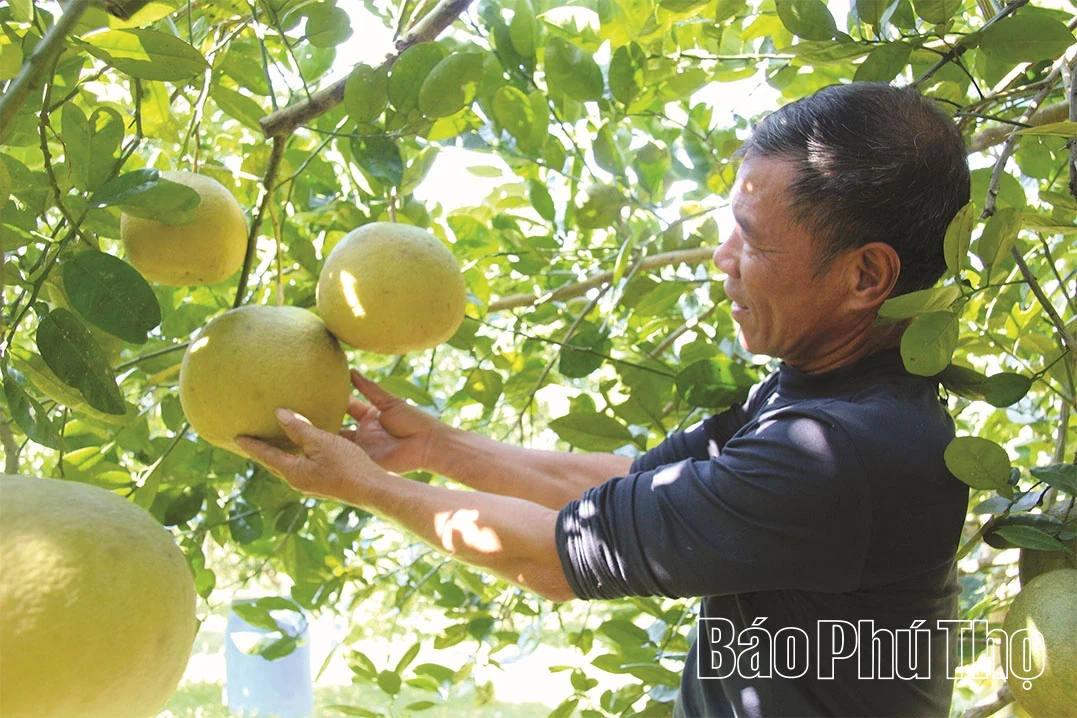
The Sửu pomelo has contributed to making the name of the ancestral land region famous.
Today, walking amidst the lush green pomelo orchards of Sửu, we were met with radiant smiles from the farmers. The pomelos were plump and bright yellow in the sunlight. These are the same pomelos that nearly 80 years ago, the militia of Chí Đám used as weapons against the enemy. From a symbol of the People's War, Chí Đám pomelos have now become a symbol of prosperity along the Lô River. From humble beginnings, Chí Đám has gradually risen to become a dynamic region, a truly livable countryside...
Manh Hung
Source: https://baophutho.vn/noi-con-song-lo-chay-vao-dat-to-245101.htm

![[Photo] General Secretary and President To Lam presides over the meeting to approve the draft report on the results of the second inspection by the Politburo of the Standing Committee of the Hanoi City Party Committee.](https://vphoto.vietnam.vn/thumb/1200x675/vietnam/resource/IMAGE/2026/05/26/1779789811432_a2-bnd-4430-9620-jpg.webp)








































































Comment (0)