

- Instructions on how to transfer money from ZaloPay to Momo in just 2 steps.
- Ca Mau aims to become a model locality for cybersecurity.
- Promoting cybersecurity and preventing and combating school violence.
Based on real-life stories.
In recent times, many cases involving mistakenly transferring money have been handled by authorities, becoming noteworthy legal lessons.
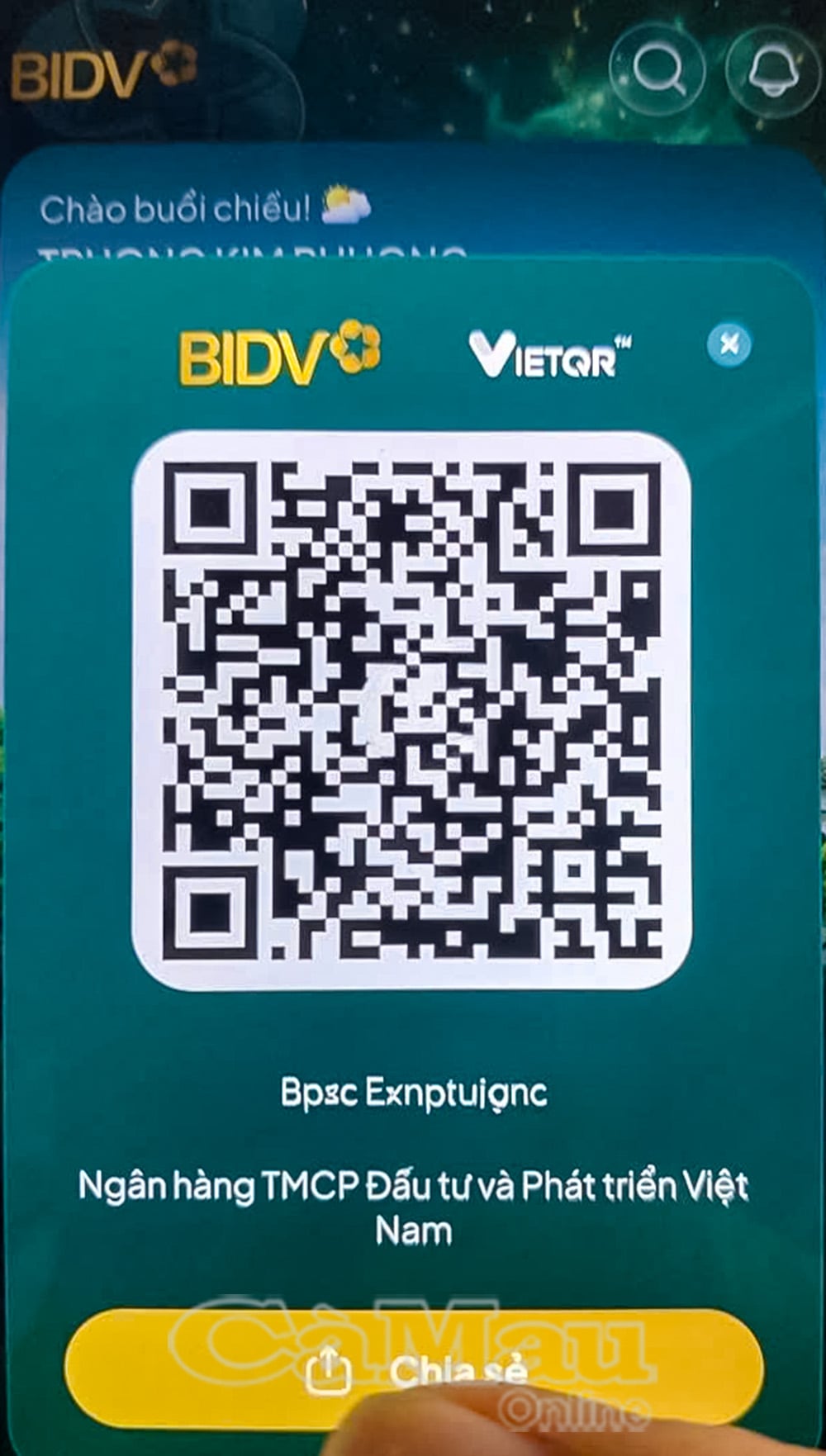 In the age of cashless transactions, all transactions must be conducted cautiously and in strict compliance with legal regulations.
Typically, on January 12, 2026, the Criminal Investigation Agency of the Quang Tri Provincial Police Department initiated a case and indicted Nguyen The Lu for the crime of "Illegal possession of property" under Clause 2, Article 176 of the 2015 Penal Code (amended and supplemented in 2017). According to the case file, Lu unexpectedly received nearly 500 million VND transferred into his bank account. This money was mistakenly transferred by Ms. NTTT (residing in Lao Bao commune, Quang Tri province) during a transaction.
Immediately after discovering the error, Ms. T contacted Lu repeatedly by phone and even went to his house in person to ask for the money back. However, instead of cooperating, Lu avoided her, refused to return the money, and blocked all communication. When the investigating agency intervened and clearly determined that this was a mistaken transfer, Lu still did not cooperate, leading to his criminal prosecution.
Another case in Ca Mau demonstrates how acting in accordance with the law helped those involved avoid risks. On March 12, 2026, the Phong Thanh Commune Police received a request for cooperation from the Lam Thanh Commune Police (Nghe An province) regarding a mistaken money transfer transaction. Through verification, authorities determined that Mr. D.H.K. (born in 1997, residing in Khuc Treo A hamlet, Phong Thanh commune) was the recipient of over 2 billion VND from a Vietcombank account. Due to his lack of technological proficiency, Mr. K.'s banking application was locked, preventing him from checking the transaction information.
After the police explained and clarified that the money had been transferred by mistake, Mr. K proactively contacted the bank to return the entire amount as per regulations. Thanks to this, he avoided unnecessary legal consequences.
Understanding the law correctly is crucial to avoiding legal violations.
Lieutenant Colonel Luong Thanh Nhan, Head of Phong Thanh Commune Police, said: "The fact that money 'naturally' transfers into an account does not mean that the recipient has the right to use that money. This is a misconception, but it is still quite common."
Article 176 of the Penal Code clearly stipulates: Anyone who knows that property does not belong to them but is mistakenly given to them by another person, found, or picked up, and intentionally refuses to return it, even after a legitimate request, may be prosecuted for criminal liability.
In reality, many people still believe that failure to pay only results in a civil lawsuit. However, in cases where it is clearly established that the property does not belong to them but they still intentionally occupy it, this is no longer a simple civil matter but has shifted to criminal liability.
 The Phong Thanh commune police held a meeting to deploy the task of persuading the person who mistakenly received the money to return it to the rightful owner.
Many banks now have detailed instructions on their websites regarding the procedure for handling cases of mistakenly received money transfers; recipients can refer to these instructions or contact the bank directly to verify the information.
To protect themselves from legal risks and sophisticated scams, people need to follow the proper procedures when receiving "unknown funds." Absolutely do not transfer money as requested by individuals over the phone; instead, contact your bank or report it to the police. Banks have procedures for investigation and refunds.
Here are some recommendations issued by the banks: - Keep the money in your account intact; don't spend a single penny. - Report the incident and request the bank to investigate and assist in contacting the person who made the mistaken transfer. - Be wary of calls from strangers claiming to have mistakenly transferred money. Transferring money back without authorization can lead you into scams or inadvertently become involved in money laundering schemes. Always make refunds under the guidance and supervision of a bank or relevant authority. - Once you have verified that the transaction was a mistake, you must return it immediately without delay. If you cannot find the owner, please hand it over to the police. - In the context of digital transactions, account holders should also remember to retain all transaction documents as legal evidence, such as screenshots of successful transactions, saved balance change messages, and bank statements at the time the incident occurs. Complying with the law, remaining vigilant against scams, and proactively cooperating with banks and authorities are the best ways to protect yourself and contribute to building a safe and healthy transaction environment in the digital society. |
Kim Phuong
Source: https://baocamau.vn/nhan-tien-chuyen-nham-dung-de-tro-thanh-toi-pham-a127578.html

![[Photo] General Secretary and President To Lam and the President of the Philippines hold talks.](https://vphoto.vietnam.vn/thumb/1200x675/vietnam/resource/IMAGE/2026/06/01/1780286997787_anh-man-hinh-2026-06-01-luc-11-09-43.png)
![[Photo] Reception to welcome General Secretary and President To Lam and his wife on their State visit to the Philippines](https://vphoto.vietnam.vn/thumb/1200x675/vietnam/resource/IMAGE/2026/06/01/1780295488620_vna-potal-chieu-dai-chao-mung-tong-bi-thu-chu-tich-nuoc-to-lam-va-phu-nhan-tham-cap-nha-nuoc-toi-philippines-8798060-7855-jpg.webp)






































































































Comment (0)