

Since the Russia-Ukraine conflict began in February 2022, Indian refineries have been snapping up discounted Russian oil. Moscow has therefore gradually become India's leading supplier of crude oil, accounting for approximately 40% of the Asian nation's crude oil imports.
June marked the tenth consecutive month that India's crude oil imports from Russia increased month-on-month, according to data from commodity information firm Kpler.
“This is an unprecedented feat in recent history, especially with import volumes reaching 2.2 million barrels per day in June,” according to Viktor Katona, a leading crude oil analyst at Kpler. And this would be the highest volume of oil India could import from Russia – at least this year, according to Katona’s predictions.
“I think 2.2 million barrels per day will be the highest level this year. India’s crude oil imports from Russia will decrease slightly to 2 million barrels per day. That will be a sustainable level of purchases,” Katona predicted.
The cause stems from both sides.
The volume of crude oil consumed and processed by Indian refineries has now reached a “seasonal peak” and will only trend downwards from here, according to Janiv Shah, senior analyst at Norway-based energy research firm Rystad Energy.
Mr. Katona also agreed with this view. He further emphasized that, in addition to refinery closures, demand for oil would also decrease.
“Some refineries in India will undergo their first maintenance of the year. This didn’t happen in the first five months of the year because there was no turnaround activity,” Katona said.
Mr. Katona added that India's monsoon season begins in early June, and the summer period is typically accompanied by lower demand for oil products due to less construction and travel activity.
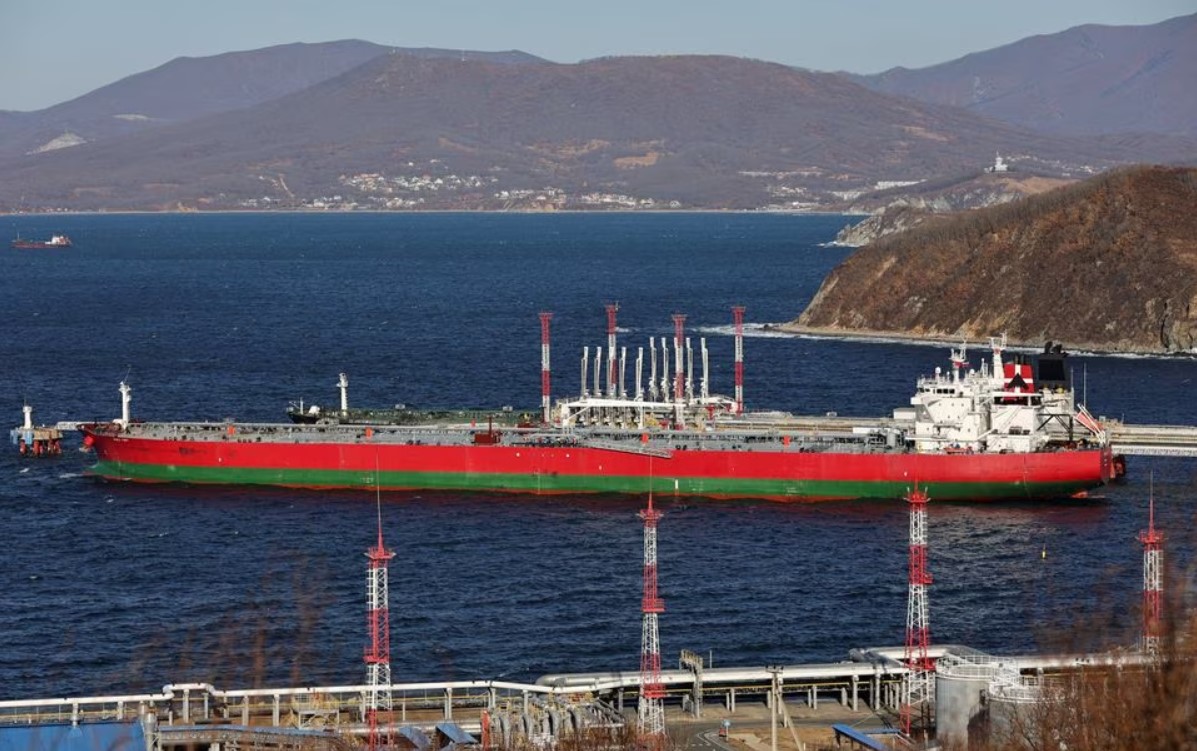
The crude oil tanker Suez Fury is anchored at Kozmino berth in Nakhodka Bay, near the port city of Nakhodka, Russia, on December 4, 2022. Photo: Reuters
Fuel demand in India, the world's third-largest oil consumer, typically slows during the four-month monsoon season. India's total oil demand in June fell 3.7% to 19.31 million tonnes compared to May, according to data from India's Petroleum Planning and Analysis Chamber.
Not only is demand from India declining, but supply from Russia is also limited, according to Daniel Hynes, senior commodity strategist at ANZ bank.
A recent report by the International Energy Agency (IEA) shows that Russia's oil exports fell by 600,000 barrels per day to 7.3 million barrels per day in June – the lowest level since March 2021.
However, the figure of 2.2 million barrels per day is very likely not the maximum limit for Russian oil imports into India in 2024.
"Between March and May, Russian oil demand is likely to be unconstrained by India, and Russia's export potential will once again be boosted by the turnaround of refineries," Katona predicted.
Political relations
Another reason India has to reduce its crude oil imports from Russia is the need for the Asian nation to maintain relationships with other exporters, especially key suppliers in the Middle East.
"Technically, the Indians could buy more, but they don't want to antagonize the Middle East. Politics is also important," Katona said.
According to Rystad data, 55% of India's recent seaborne imports of sour crude oil (with a sulfur content higher than 0.5%) came from Russia, while imports from the Middle East fell to a historic low of 40%.
India's crude oil imports from the Middle East fell by 21.7% to 8.68 thousand tonnes in June compared to the beginning of the year, according to data from Refinitiv.
However, “Indian refineries can always get more Russian crude than other types, such as Middle Eastern crude, if the price differential widens,” said Yaw Yan Chong, head of Refinitiv’s oil research office in Asia.
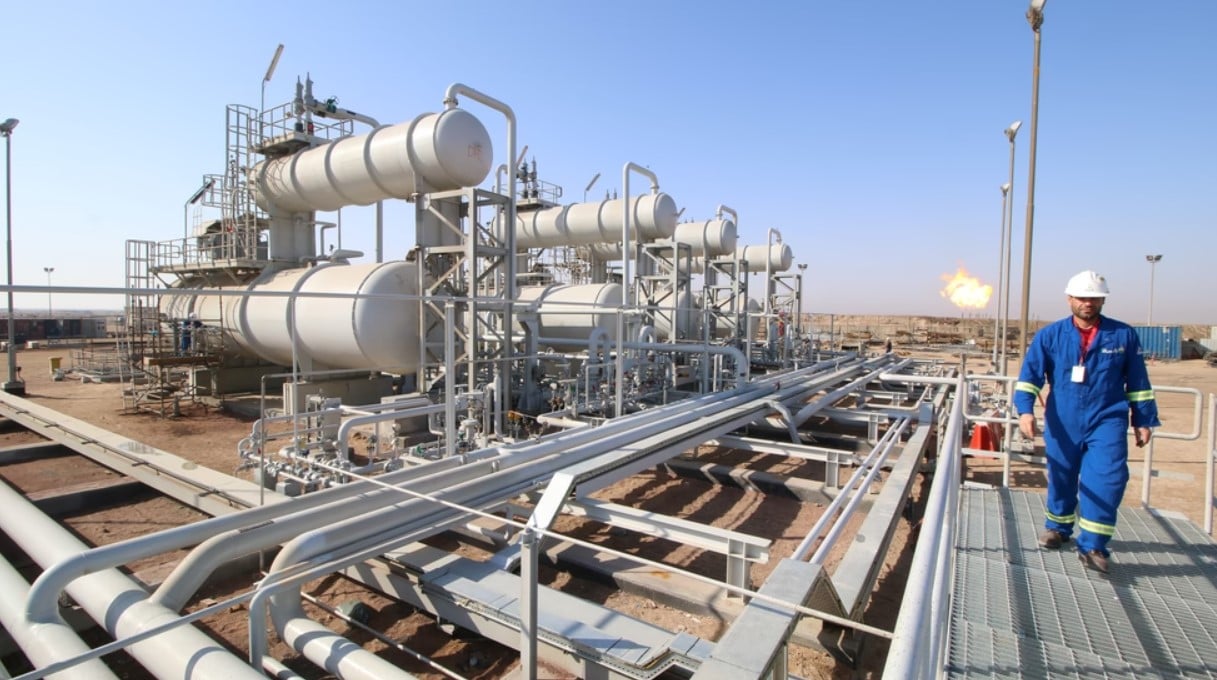
A worker at the Rumaila oil field in Basra, Iraq. The Middle Eastern country was India's largest exporter of crude oil before the Russia-Ukraine conflict. Photo: The Atlantic
According to an Indian government official, the country is negotiating with traditional crude oil exporters in the Middle East to increase purchases as Russian imports lose their price advantage.
India's state-owned refineries are in talks with traditional crude oil suppliers in West Asia, particularly Iraq, to increase purchases amid significantly reduced discounts on Russian crude and the potential for payment issues if Russian Urals crude trades above $60 a barrel, the official said.
“Iraq has been supportive and a good trading partner. They have also given us discounts in the past,” the official added, but did not elaborate on the discounts or additional volumes being considered.
Analysts expect Indian refineries to use the rise in Russian oil prices and the G7 price ceiling as leverage to negotiate better discounts with Moscow .
Nguyen Tuyet (According to CNBC, Indian Express)
Source

![[Photo] Closing Ceremony of the 15th Conference of the Central Committee of the 13th Party Congress](/_next/image?url=https%3A%2F%2Fvphoto.vietnam.vn%2Fthumb%2F1200x675%2Fvietnam%2Fresource%2FIMAGE%2F2025%2F12%2F23%2F1766462841764_a1-bnd-3731-1647-jpg.webp&w=3840&q=75)

































































































Comment (0)