

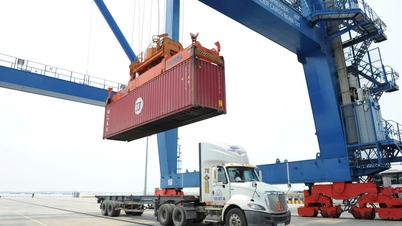
For example, in the first quarter of 2025, Dong Nai 's export turnover reached over 5.9 billion USD, while its import of raw materials exceeded 4.1 billion USD. The main items imported by Dong Nai include: plastics, chemicals, cotton, fabrics, raw materials and accessories for the footwear industry, various types of iron and steel, and wood materials…
According to economic experts, not only the US market but also other markets such as Europe, South Korea, Japan, and the Middle East are increasingly demanding stricter requirements regarding the origin and provenance of products. Some markets even require detailed standards for the production process, ensuring that raw materials meet green and circular production criteria. Therefore, businesses aiming for sustainable production and export need to effectively control both domestic and imported raw material supplies. Specifically, the raw material supply must be legal, and the production process must be environmentally friendly, with low carbon emissions and no risk of deforestation.
In reality, for a long time, many businesses in Dong Nai, as well as throughout the country, have not paid sufficient attention to the production process and traceability of raw materials when importing them. Currently, goods exported to the US and Europe are very strict about this; the aim is to form sustainable supply chains and protect domestic production. In this race, businesses in countries that are ahead in greening production from the raw material stage will seize more opportunities to expand their export markets.
In Dong Nai province, 70% of manufactured goods are exported to approximately 180 countries and territories. The province's five main export markets are the United States, Japan, China, South Korea, and Europe. These five major markets are increasingly imposing higher technical barriers and stricter controls. Therefore, businesses that choose green raw materials with clear origins and meet environmental and labor standards will ensure production and export, and easily expand their markets to more countries and territories. Diversifying export markets reduces risks when some markets change tariff policies or impose additional technical barriers for certain industries.
Khanh Minh
Source: https://baodongnai.com.vn/kinh-te/202504/nhap-khau-nguyen-lieu-can-nhung-nguon-cung-hop-phap-2c94c1f/

![[Image] Central Party Office summarizes work in 2025](/_next/image?url=https%3A%2F%2Fvphoto.vietnam.vn%2Fthumb%2F1200x675%2Fvietnam%2Fresource%2FIMAGE%2F2025%2F12%2F18%2F1766065572073_vptw-hoi-nghi-tong-ket-89-1204-jpg.webp&w=3840&q=75)






































































Comment (0)