

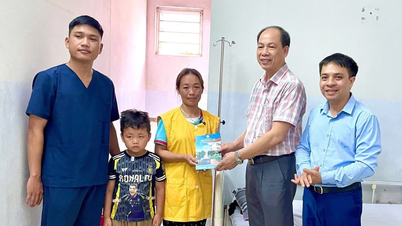
The Central Hospital for Tropical Diseases ( Hanoi ) has successfully treated patient NTP (female, 68 years old, residing in Hanoi) who suffered from a complex liver abscess caused by simultaneous infection with various types of worms and parasites.

A 68-year-old female patient suffered from a liver abscess caused by multiple types of worms and parasites.
PHOTO: THANH DANG
In early March, Mrs. P. began experiencing symptoms of fatigue, dull pain in the epigastric and right lower rib areas, accompanied by intermittent fever.
Despite having been examined at two medical facilities before being admitted to the Central Hospital for Tropical Diseases, where a liver lesion was detected, the patient's condition did not improve after several treatment sessions.
At the Central Hospital for Tropical Diseases, doctors noted that the patient had several abnormal liver indicators: elevated GGT liver enzymes (288 U/L), increased CRP inflammatory markers (76.7 mg/L), elevated total bilirubin (4.1 µmol/L), reduced blood clotting function (66%), and signs of anemia.
Notably, in-depth parasitic tests revealed that patient P. was simultaneously infected with multiple types of parasites, including liver flukes, roundworms (from dogs and cats), schistosomiasis, and amoebas.
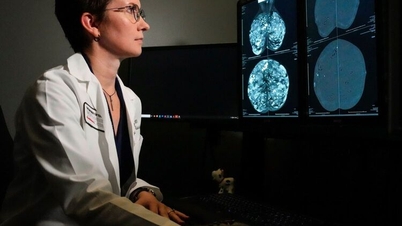
Ultrasound and magnetic resonance imaging (MRI) also revealed a large abscess in the left liver lobe (64 x 39 mm).
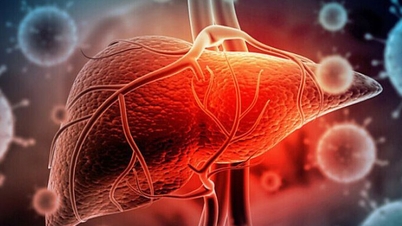
The patient was diagnosed with a liver abscess due to multiple parasitic infections with bacterial superinfection, a rare condition with a high risk of serious complications.
Worm and parasite infections can be caused by contaminated food and water.
According to Dr. Dang Van Duong (Central Hospital for Tropical Diseases), for the patient mentioned above, treatment requires a combination of measures: using antibiotics to control the infection, and simultaneously using specific drugs to kill the parasites.
However, because parasitic lesions persist in the liver for a long time, forming fibrotic cysts, delivering medication to the center of the infection is difficult, requiring a prolonged treatment period.
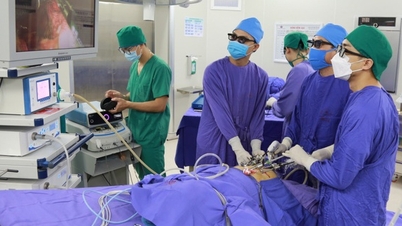
In addition to medical treatment, the doctors performed abscess aspiration, draining approximately 20 ml of cloudy pus.
After 20 days of intensive treatment, the patient's infection was under control, parasite tests returned negative, their health stabilized, and they were eligible for discharge.
According to Dr. Duong, most pathogens such as liver flukes and schistosomes are transmitted through the digestive tract due to unhygienic eating habits, then enter the bloodstream and settle in the liver, silently destroying cells.
The case mentioned above serves as a warning about parasitic diseases that can progress silently but have serious consequences if not detected early.
To prevent illness, Dr. Duong advised people to strictly adhere to the principle of "eating cooked food and drinking boiled water," limit the consumption of raw foods such as raw vegetables, raw fish salad, and undercooked meat; and avoid using untreated water sources.
At the same time, it is necessary to deworm the whole family 1-2 times a year; deworm pets and maintain hygiene when in contact with pets (dogs, cats...). Regular health check-ups, especially abdominal ultrasounds, help detect liver damage early and treat it effectively from the start.
"For people with chronic liver disease or weakened immune systems, special attention should be paid to disease prevention, as there is a higher risk of severe complications if infected with parasites," Dr. Duong added.
Source: https://thanhnien.vn/nhap-vien-do-nhieu-loai-giun-san-lam-to-o-gan-185260331145206248.htm





























![[Photo] Reception to welcome General Secretary and President To Lam and his wife on their State visit to the Philippines](https://vphoto.vietnam.vn/thumb/1200x675/vietnam/resource/IMAGE/2026/06/01/1780295488620_vna-potal-chieu-dai-chao-mung-tong-bi-thu-chu-tich-nuoc-to-lam-va-phu-nhan-tham-cap-nha-nuoc-toi-philippines-8798060-7855-jpg.webp)






























































Comment (0)