In the 1970s, as the war escalated, hundreds of young men and women, barely eighteen or twenty years old, from Kien Xuong district (formerly Thai Binh province) bid farewell to their teachers, friends, and schools to volunteer for the war. And the Truong Son mountain range, passing through Quang Binh province, was their destination. All the Youth Volunteers from Kien Xuong district were assigned to Company C130, Battalion 2, Division 571, Group 559, 12th Army Corps of the Truong Son Mountains, to build roads within the Truong Son road system. Their base was the "fire zone" at Long Dai Ferry Terminal II (Hien Ninh commune, former Quang Binh province).
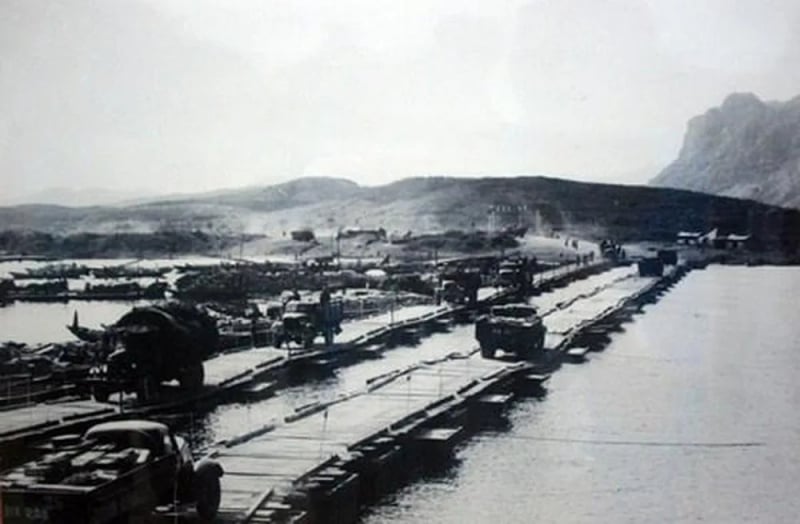
Long Dai ferry terminal during the fierce days of war.
Immortal deaths by the river
Reading the diaries of our comrades who left their homeland to fight the enemy in Truong Son makes us restless and filled with longing. In April 1971, Bui Nang Dac went to the battlefield. One night by the Long Dai River, he remembered his homeland with overflowing affection. Four months after arriving, he wrote, “I still remember that afternoon / The Party Committee issued the summons / Urging us straight to the battlefield / Crossing the forest, breaking rocks to open the Truong Son road / Arriving at Truong Son, a new and unfamiliar battlefield / Different from the shimmering Thai Binh of our homeland / Truong Son is majestic and vast / The forest helps our army defeat the enemy…” (August 26, 1971).
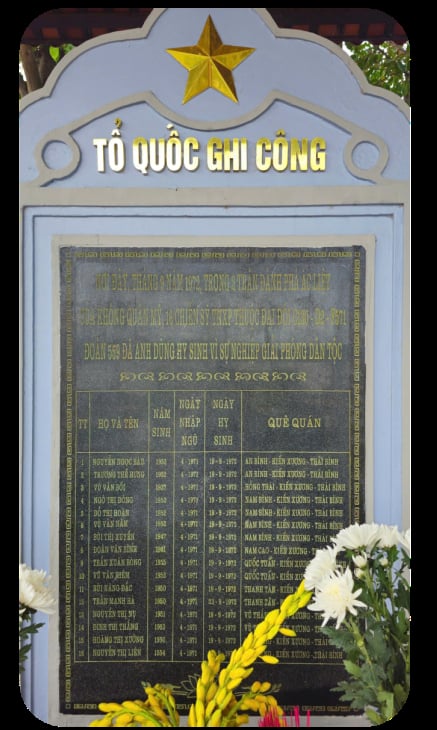
Memorial plaque commemorating 16 martyrs who died at Long Dai Ferry Terminal II.
And in the diary "The Song of Truong Son," first published by the martyr Bui Nang Dac, he wrote: "Going to Truong Son, cutting through mountains to build roads. Meeting a girl from my homeland. Her green hair faintly smelled of the fields. Oh, her cheeks flushed red from the sun. Her eyes seemed to pierce straight into my heart. Oh, her smile beautified our love. Of the girl from the ten-ton rice paddy." (November 10, 1971). The joy of meeting a female Youth Volunteer from his hometown inspired Dac to write such smooth, simple, and loving words. But the pages of his diary were left unfinished a few months later when he sacrificed his life, his body becoming one with the Long Dai River.
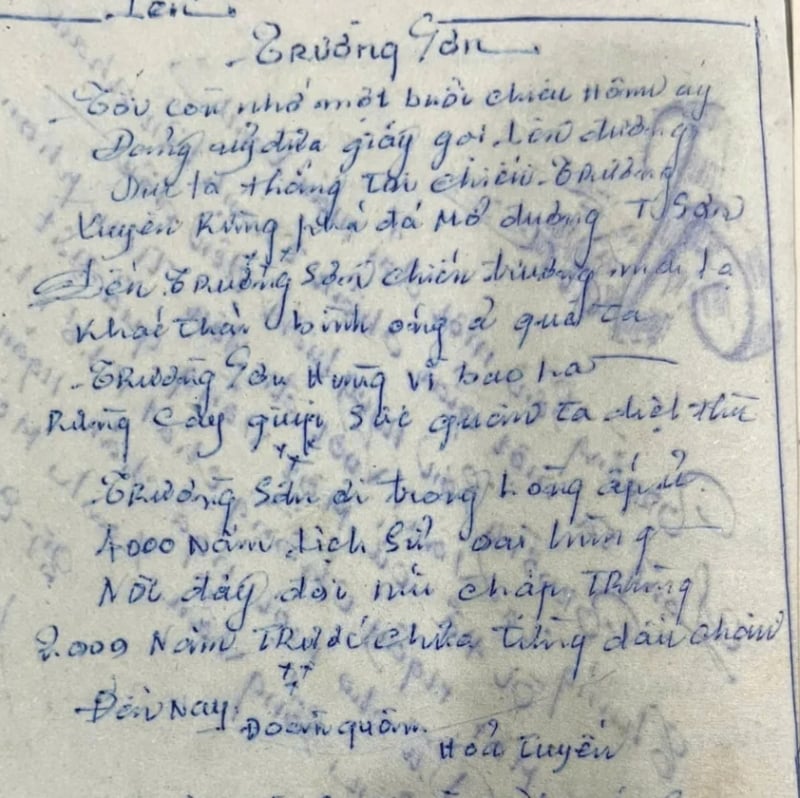
A diary entry left behind by martyr Bui Nang Dac after his death.
In September 1972, the US launched a fierce bombing raid near the Long Dai ferry crossing. To keep the vital transportation route open, the Youth Volunteers of Company 130 lived and fought in what was known as a "bombing pocket" and a "cauldron of fire," but they remained undaunted, always maintaining their will and determination to "fight the enemy while advancing, open the way while progressing." Despite the fierce enemy attacks, the Youth Volunteers held their ground. After the enemy attacked, they rescued people, goods, and equipment; when one fell, another took their place, continuing the task of keeping the route open and ensuring the vital transportation route. Under the brutal destruction of enemy bombs and bullets, the line between life and death became more fragile than ever.
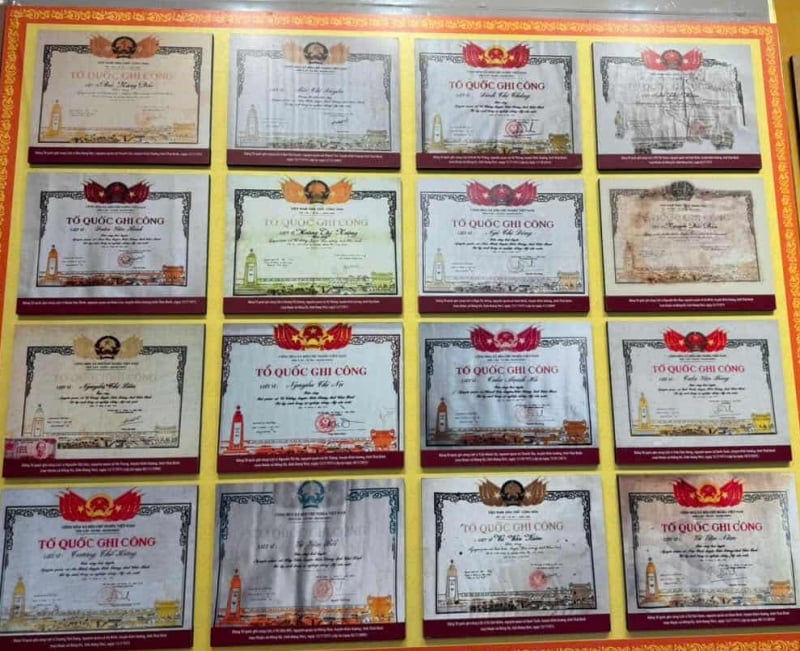
The nation honors the 16 martyrs who sacrificed their lives at Long Dai Ferry Terminal II.
On September 19, 1972, while soldiers of Unit C130 were transporting goods at Long Dai Ferry Terminal II, American planes unexpectedly bombed the ferry terminal area. The bombing raid killed 15 soldiers of Unit C130, including 3 who were transporting goods from the north bank to the south bank of the Long Dai River; 12 soldiers died on the riverbank. Several others were seriously wounded.
After the enemy planes stopped bombing, the area where the unit was stationed was just an empty field littered with bomb craters. The soldiers who were lucky enough to survive regained their composure and went to search for their fallen comrades. Heartbreakingly, as they dug through each crater and searched along the Long Dai River, their hearts ached when they realized that most of their fallen comrades' bodies were not intact.
Before the grief could subside, just four days later, enemy planes bombed the ferry area again, and soldier Tran Manh Ha, who was on duty, was killed. After two carpet bombing raids by the US military, Company C130 lost 16 Youth Volunteers (7 women and 9 men), all from Kien Xuong, Thai Binh province.
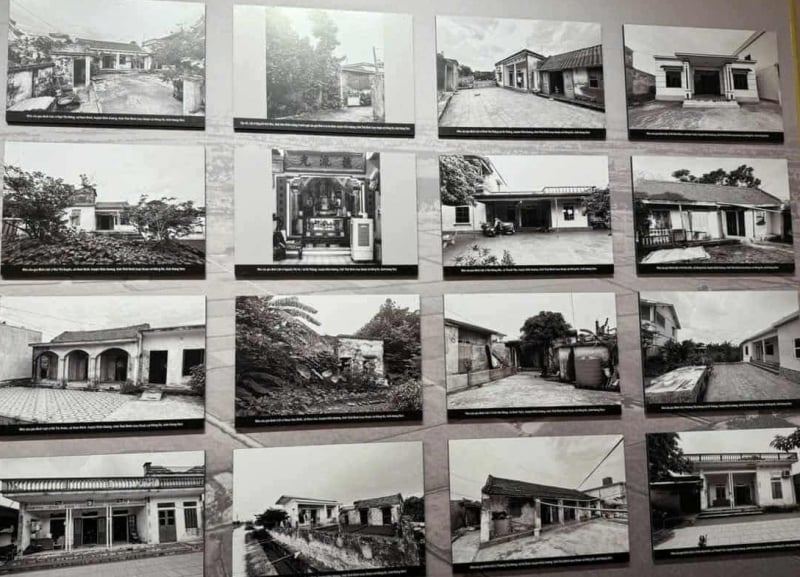
These are the homes of the families and relatives of 16 martyrs in Kien Xuong, Thai Binh.
Sixteen passionate hearts, sixteen lives of very young boys and girls, some just past seventeen. They have forever anchored themselves, becoming one with their spirit at Long Dai Ferry Terminal II.
Our shared home, remember it, brothers and sisters.
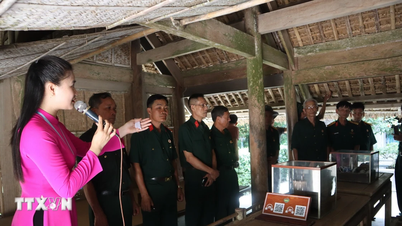
Late in the afternoon, a woman from Hanoi came to visit. She paced back and forth at Long Dai Ferry Terminal II as she listened to a female member of the Quang Binh Youth Volunteer Brigade recount the sacrifice of 16 martyrs there. Her husband had come to Quang Binh for work, and she visited him, hearing about Long Dai Ferry Terminal II for the first time. Four months earlier, while lighting incense at Long Dai Ferry Terminal II, she burst into tears upon learning that most of the martyrs' parents had passed away. Many martyrs now have older siblings, but they are all elderly and have their own families… and she thought: the 16 martyrs at Long Dai Ferry Terminal II sacrificed their lives when they were very young, without families. Now their parents have passed away, and in the future, when their relatives also pass away, how will the offerings and prayers for the 16 martyrs be handled? What is particularly special is that the martyrs were all born in the same hometown, left their hometowns to join the army, and died together in the bombing raid…
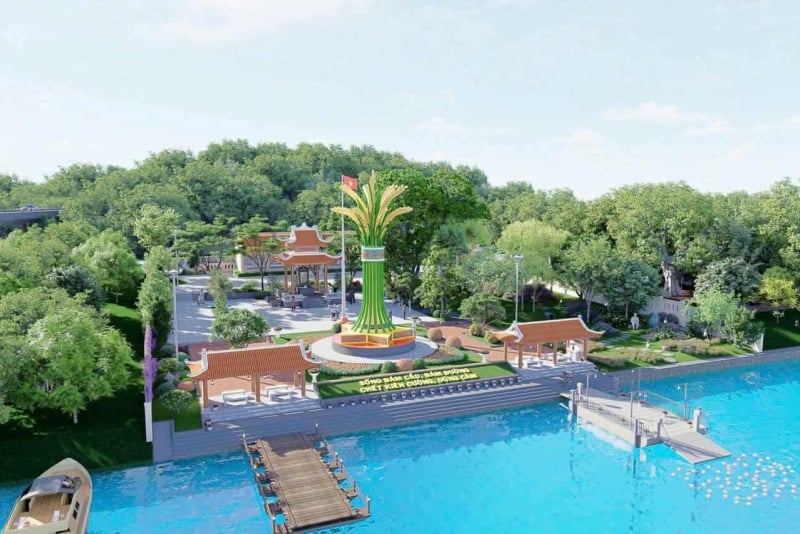
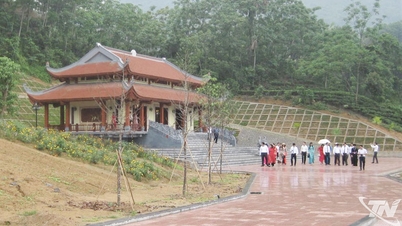
The Long Dai Ferry Terminal II Historical Site after restoration and renovation.
After sleepless nights, she confided in her husband and friends that she wanted to contribute to restoring and building "a common home" for the martyrs at Long Dai Ferry Terminal II, so that the martyrs could forever be warmed by the scent of incense. With her heartfelt support, along with the generosity of benefactors and relevant departments in Quang Tri province, the Long Dai Ferry Terminal II historical site was put into construction. And when the province decided to begin the restoration, for over three months she closely monitored the project, urging and encouraging the construction teams to ensure the work was completed on schedule, with quality and aesthetics according to the design.
After more than 3 months of construction of auxiliary facilities and the upgrading and restoration project of the historical site where 16 young volunteers sacrificed their lives at Long Dai Ferry Terminal II, with a total cost of nearly 30 billion VND, the project was completed just in time for the 53rd anniversary of the martyrs' deaths (September 19, 1972 - September 19, 2025). All investment costs for the construction of Long Dai Ferry Terminal II were entirely from private sources, without using state budget funds.
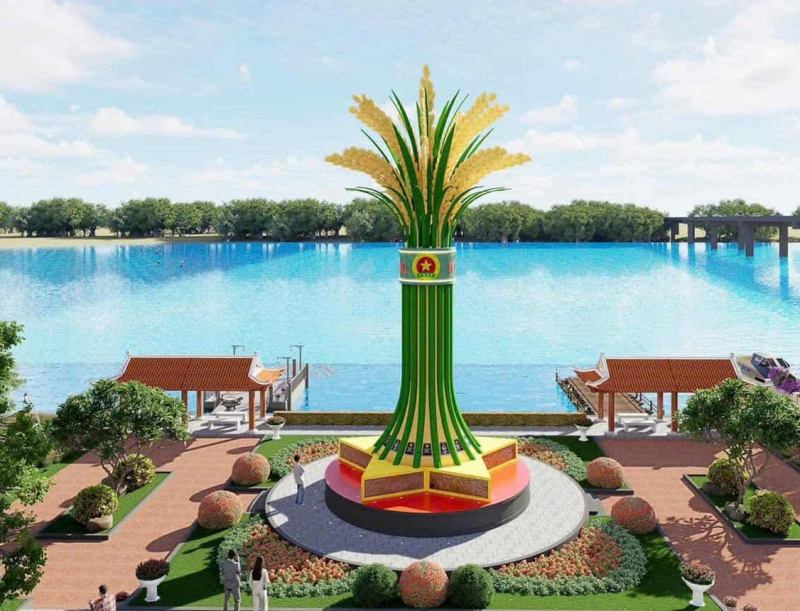
The monument to the 16 Youth Volunteers, shaped like a bundle of rice stalks, is located at Long Dai Ferry Terminal II.
According to many people working in the design and construction consulting field, the Long Dai Ferry Terminal II project, from its initial concept to its scale, was completed in just over 3 months—a feat few would believe. In that short time, they leveled an entire hill; built a memorial area of 2,800m²; a ceremonial hall; two rows of waiting areas for the lantern-releasing ceremony and the lantern-releasing dock; and simultaneously repaired dilapidated structures and constructed a monument and bas-relief depicting the heroic and indomitable spirit of the Youth Volunteer Force… all of which involved a massive amount of work. And with the determination of those involved in the construction and restoration, the Long Dai Ferry Terminal II historical site was completed on the 53rd anniversary of the death of the 16 martyrs.
The highlight of this restoration of the Long Dai Ferry Terminal II historical site is the construction of a monument to 16 young volunteers from Thai Binh province within the grounds. The monument, 16 meters high, symbolizes the immortal sacrifice of these 16 individuals. The base of the monument is red, topped with a 1.6-meter-high golden star. Above the star and at the base of the monument is space for displaying images, names, biographies, and addresses of the young volunteers. The monument also features 16 bundles of ripe, golden rice stalks, representing the youthful spirit of the martyrs at the time of their sacrifice.
It is known that the idea behind making the 16 rice stalks is associated with 16 martyrs from Thai Binh province, with the vast rice fields where the martyrs spent their childhood and grew up before going to Truong Son and staying there. The bundles of rice stalks intertwined represent the spirit of unity, indomitability, and resilience of the brothers and sisters in battle. The bundles of rice also convey the aspiration for peace and prosperity for Vietnam. "Sixteen rice stalks from Thai Binh, five tons / Transformed into waves of Long Dai, forever etched in history."
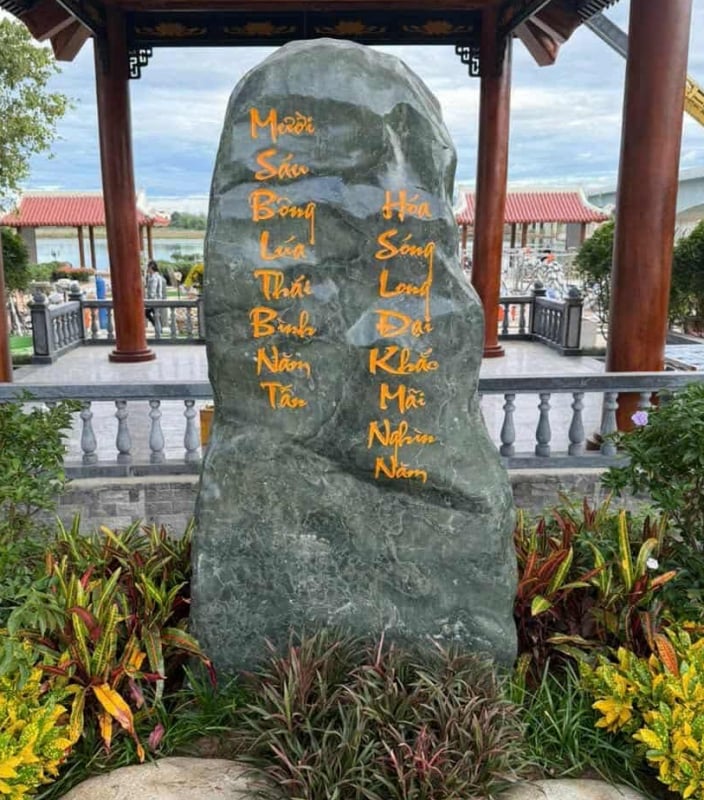
The stone monument and poem of gratitude in the grounds of the Long Dai Ferry Terminal II historical site.
In the exhibition hall at the ceremonial hall within the historical site, the most modern 3D mapping model currently available is used, recreating the moments of the Long Dai ferry in the past. Along with that, there are related artifacts such as trays, bowls, and household items of the soldiers, collected from local people and their comrades.
These are fragments of incendiary bombs dropped by the enemy in 1966 on Long Dai village, killing six villagers. Mrs. Phan Thi Ha (born 1939), from Long Dai village, kept them for 59 years as evidence of war crimes, and now she is returning them to the Long Dai Ferry Terminal II Memorial House. These are medical instruments used by Mr. Phan Cong Nong, a health worker in Long Dai village, to treat civilians, soldiers, and Youth Volunteers in the Long Dai Ferry Terminal area…
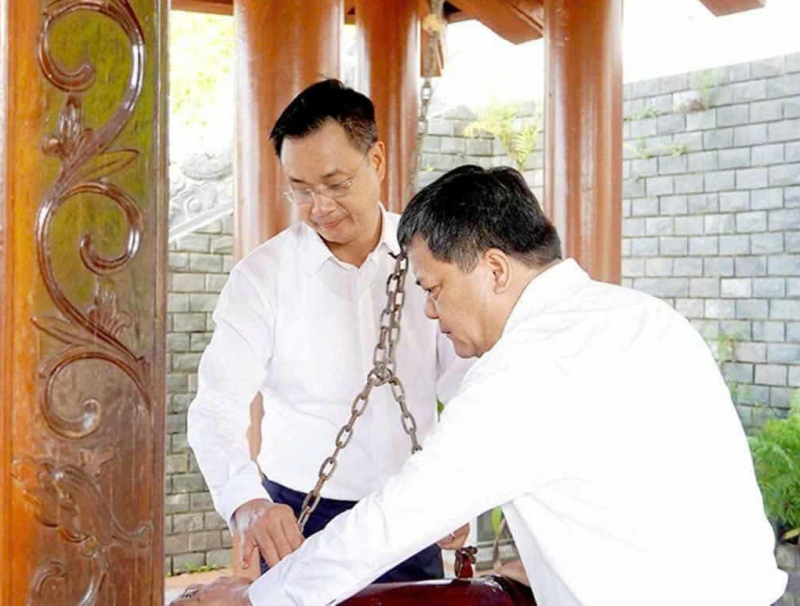
Mr. Le Ngoc Quang - Secretary of the Provincial Party Committee and Mr. Tran Phong - Chairman of the Provincial People's Committee rang the bell to pay tribute to the heroic martyrs.
Speaking about Long Dai Ferry Terminal II and other revolutionary historical sites in Quang Binh and Quang Tri (now Quang Tri), Mr. Le Ngoc Quang, Member of the Central Committee of the Communist Party of Vietnam and Secretary of the Quang Tri Provincial Party Committee, emotionally stated: "The restoration of these historical sites is to express our profound gratitude for the immense contributions of the heroic martyrs who bravely fought and sacrificed for the cause of national liberation, reunification, and the happiness of the people. Everyone needs to spread and deeply appreciate the humanistic significance and profound historical value of these sites and historical events, which serve as a foundation for nurturing national spirit. Through this, we can awaken pride, cultivate love for our homeland, and educate the younger generation about revolutionary traditions."
Source: https://cand.com.vn/Xa-hoi/nhung-hon-thieng-bat-tu-ben-dong-song-long-dai-i781743/



![[Photo] General Secretary and President To Lam presides over the meeting to approve the draft report on the results of the second inspection by the Politburo of the Standing Committee of the Hanoi City Party Committee.](https://vphoto.vietnam.vn/thumb/1200x675/vietnam/resource/IMAGE/2026/05/26/1779789811432_a2-bnd-4430-9620-jpg.webp)















































Comment (0)