

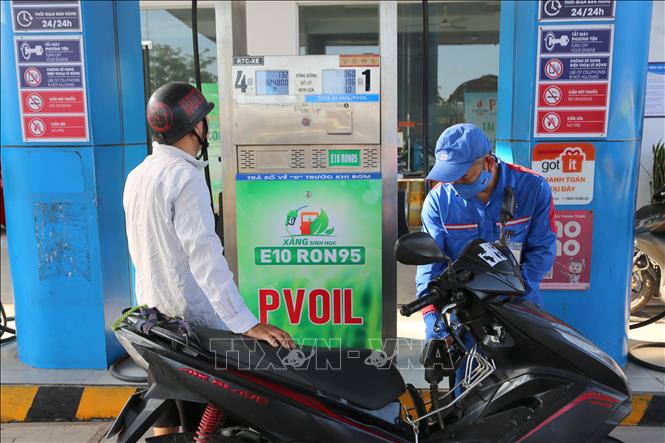
Social disruption is the deliberate act of causing trouble, obstructing, or disrupting public activities, rules, or management policies under the guise of "contributing opinions" or "social criticism." Many in this disruptive group do not necessarily have an anti-regime ideology, but rather are simply rebellious, dissatisfied, unhappy with everything, and want to attract attention. However, it should also be noted that this disruptive mentality easily creates a favorable environment for subversive elements to exploit. The blurred line between "opinion" and "opposition" hinders the country's development.
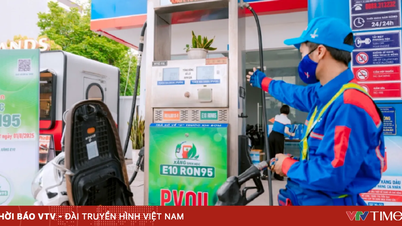
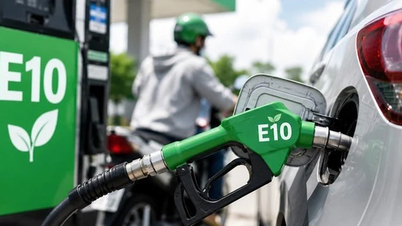
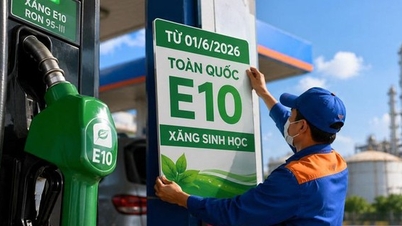
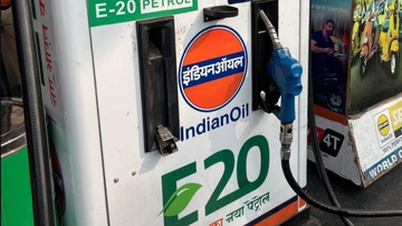
As we know, the Ministry of Industry and Trade issued Circular No. 50/2025/TT-BCT dated November 7, 2025, on the roadmap for applying the blending ratio of biofuels with traditional fuels in Vietnam, which stipulates that from June 1, 2026, E10 biofuel gasoline (10% blend) will be "nationwidely available," replacing RON95 gasoline.
This roadmap is implemented in accordance with the policies of the Party and the State, including Resolution No. 55-NQ/TW of the Politburo on the orientation of the national energy development strategy of Vietnam until 2030, with a vision to 2045; and Resolution No. 70-NQ/TW, dated August 20, 2025, of the Politburo on ensuring national energy security until 2030, with a vision to 2045. These documents all require the realization of solutions to reduce dependence on fossil fuels, reduce emissions, and protect the environment.
Immediately, those who "hate E10" emerged on social media.
Widespread on Facebook, TikTok, YouTube, and other platforms are opinions claiming that E10 gasoline damages engines, weakens them, increases fuel consumption, endangers vehicles, is unsuitable for Vietnam's climate, and could lead to an increase in traffic accidents nationwide. Some individuals even fabricate and edit videos with inflammatory language to spread public panic.
These baseless arguments are repeated despite experts having repeatedly affirmed that the ethanol in biofuel has a lower calorific value than conventional gasoline, so in some tests we see that the fuel consumption of E10 is higher than traditional gasoline, but only by about 2-3%.
However, in some other tests, this difference did not appear, because ethanol helps the fuel mixture burn more completely, partially compensating for the energy loss due to the lower calorific value. Some tests even showed that the driving range of E10 gasoline was equivalent to or higher than that of conventional gasoline.
Vehicle users hardly notice any difference when using E10 gasoline compared to conventional gasoline. Some people report that their vehicles "don't accelerate as well" after switching to E10 gasoline, but this could be due to dirt or rust in the fuel system.
Although E5 and E10 gasoline have been tested in Vietnam for a long time, there is no scientific evidence to suggest that biofuels harm vehicles, particularly spark plugs, engine sensors, electronic fuel injection systems, starting ability, electrical systems, or air conditioning.
Globally, 60 countries are using biofuels, and their regulatory bodies have not received similar complaints.
Mr. Do Van Tuan, Chairman of the Vietnam Biofuel Association, who has spent many years researching biofuels, has refuted some fabricated information about E10 gasoline.
According to him, there's no way that E10 gasoline, when left in the fuel tank and not running, would absorb moisture from the outside air, causing separation and condensation at the bottom of the tank. He explained: Gasoline always tends to evaporate. When gasoline is in a sealed tank, the pressure inside the tank is higher than the outside pressure; therefore, gasoline in the tank never absorbs moisture from the outside.
Information that E10 gasoline can clog fuel lines and injectors was also refuted by Mr. Do Van Tuan. He affirmed that if such a phenomenon occurs, it is not due to bioethanol. He explained that if a vehicle has not been used for a long time and is currently using conventional gasoline, there will be a lot of dirt and debris in the fuel lines and injectors. When poured into the tank, E10 gasoline acts as a solvent to clean the injectors and fuel lines, which may cause clogging the first time it is used. Simply cleaning the fuel lines and injectors will resolve the issue immediately, and the problem will never occur again after the second use.
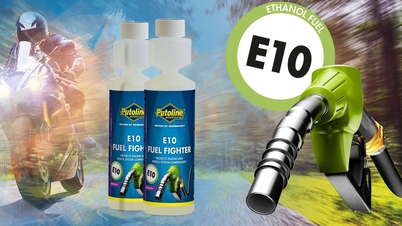
Mr. Do Van Tuan advises consumers to absolutely not add additives to E10 gasoline as recommended by "online experts." This is completely unnecessary, and furthermore, the additives can damage the engine.
Those who "hate E10 gasoline" argue that in Vietnam, the authorities are "imposing" its use," "lacking a sufficiently transparent and long-term roadmap," and "not taking into account the habits and interests of consumers."
The Ministry of Industry and Trade stated: Decision No. 53/2012/QD-TTg dated November 22, 2012, of the Prime Minister on the issuance of the roadmap for applying the blending ratio of biofuels with traditional fuels stipulated: After a trial period, from December 1, 2015, gasoline produced, blended, and sold for use in road motor vehicles nationwide will be E5 gasoline. From December 1, 2017, gasoline produced, blended, and sold for use in road motor vehicles nationwide will be E10 gasoline.
In accordance with Decision No. 53/2012/QD-TTg, after numerous trials, E5 gasoline was officially distributed nationwide from January 1, 2018. However, the roadmap for E10 gasoline has not yet been implemented. Therefore, the Ministry of Industry and Trade has reported to the Prime Minister to continue implementing the roadmap in accordance with the spirit of Decision No. 53.
The official nationwide transition to biofuels from June 1, 2026, is the next step in implementing the biofuel roadmap in accordance with Decision No. 53, fully consistent with practical requirements, legal basis, and the Party and Government's guidelines on energy transition, building a green economy, and reducing carbon emissions.
Deputy Minister of Industry and Trade Nguyen Sinh Nhat Tan emphasized: "The implementation of the roadmap for using biofuels is not an imposed decision or aimed at restricting people's choices, but stems from the requirements of sustainable development, ensuring energy security, protecting the environment, and fulfilling Vietnam's international commitments on reducing greenhouse gas emissions."
For a long time, Vietnam has been using both fossil fuels and biofuels simultaneously to allow people time to get used to them, the market to adapt, and businesses to gradually improve their distribution infrastructure, technology, and supply sources. The transition roadmap has been developed in a step-by-step manner, with thorough impact assessments.
There was nothing "sudden" or "unexpected" about this matter, as the troublemakers are claiming.
In the coming period, the Ministry of Industry and Trade will continue to coordinate with other ministries, sectors, and businesses to ensure stable supply, fuel quality, and consumer rights; and continue to provide more transparent information so that people can confidently use E10 gasoline.
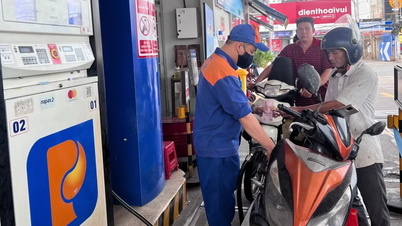
It's important to note that from June 1st, 2026, two types of biofuel will be available on the market: E5 (E5RON92) and E10 (E10RON95), allowing consumers to choose the one that best suits their vehicle. The E5 type, intended for older generation gasoline engines, will only be available until December 31st, 2030.
Thus, the roadmap for the use of biofuels in Vietnam is aiming to ensure a balance between the goals of green energy transition, environmental protection, and stabilization of the petroleum market, while also protecting the legitimate rights of citizens and businesses.
Source: https://baotintuc.vn/thoi-su/nhung-ke-pha-binh-ve-xang-e10-20260531134311564.htm
![[Photo] General Secretary and President To Lam presides over a meeting with the Central Organizing Committee.](https://vphoto.vietnam.vn/thumb/1200x675/vietnam/resource/IMAGE/2026/06/03/1780482764658_a1-bnd-4741-3342-jpg.webp)
![[Photo] Secretary of the National Assembly Party Committee, Chairman of the National Assembly presides over the meeting of the Standing Committee and Executive Committee of the National Assembly Party Committee.](https://vphoto.vietnam.vn/thumb/1200x675/vietnam/resource/IMAGE/2026/06/03/1780480353201_ndo_br_bnd-2585-jpg.webp)

![[Photo] First session of the 14th Congress of the Vietnam Trade Union](https://vphoto.vietnam.vn/thumb/1200x675/vietnam/resource/IMAGE/2026/06/03/1780465947883_ndo_br_img-3852-jpg.webp)




































![[Video] Sunset at Lap An Lagoon – Where the sun sets over the fishing nets](https://vphoto.vietnam.vn/thumb/1200x675/vietnam/resource/IMAGE/2026/05/31/1780192137701_beach-landscape-sea-water-nature-grass-745871-pxhere-com.jpeg)



























Comment (0)