

In the United States
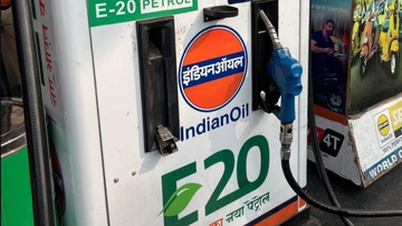
According to the Renewable Fuels Association (RFA), Americans have been using E10 gasoline consistently for decades. Since 2010, almost all gasoline sold in the U.S. has contained 10% ethanol, making it a viable replacement for pure gasoline in everyday driving. Many areas are now making a deeper transition to E15 and E20 blends.
Ethanol has been used in automobiles since Henry Ford designed the Model T in 1908, and trillions of miles have been driven on ethanol-blended fuels since 1980. In fact, several teams in national and international racing competitions, including Formula 1, Drag Racing Championships, and NASCAR, use ethanol because of its superior quality and performance.
Fleet testing and studies, including those on race cars and regular vehicles, have shown no difference in vehicle performance compared to gasoline without ethanol blending.

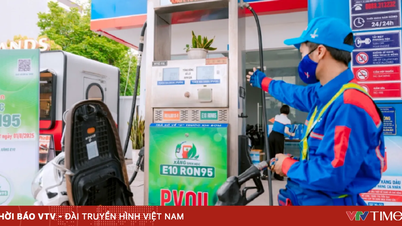
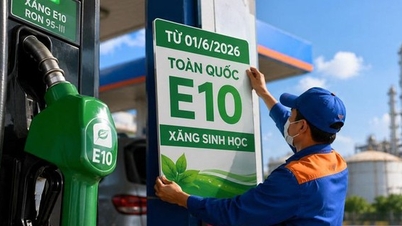
E10 gasoline is a fuel blend consisting of 90% traditional gasoline from petroleum and 10% renewable ethanol. (Source: Statcan.gc.ca)
Ethanol and additional components called detergents help prevent deposits from building up in a vehicle's fuel system. When unleaded gasoline containing ethanol and detergents replaced leaded gasoline in the mid-1980s, there were initially some problems due to deposits being washed away from the fuel system and clogging filters. Today, the use of unleaded gasoline blended with ethanol has reduced fuel system deposits, and all gasoline sold in the U.S. includes detergents designed to keep the fuel system clean.
Environmentally friendly ethanol helps reduce carbon emissions and improve air quality. Ethanol reduces greenhouse gas emissions by 40-50% compared to pure gasoline. Furthermore, by replacing hydrocarbons such as aromatics in gasoline, ethanol significantly reduces harmful emissions, particulate matter, carbon monoxide, nitrogen oxides, and hydrocarbons in exhaust gases. These emissions are linked to a number of health problems, including lung and respiratory diseases, cardiovascular problems, cancer, and other illnesses.
Ethanol has an octane rating of 114 AKI, significantly higher than competing petroleum-based octane sources. The octane rating of a fuel is a measure of its resistance to engine knocking, which occurs when the air/fuel mixture ignites prematurely during combustion.
Bobby Likis, owner and operator of an award-winning auto service facility and host of the automotive talk show "Bobby Likis Car Clinic," says that of the 175,000 cars and pickup trucks he has serviced over the past 42 years, not a single engine has been damaged by ethanol. When it comes to fuel lines and fuel injectors, ethanol is no more harmful than gasoline if stored according to proper instructions.
To help mechanics and other service technicians gain the necessary information to understand fuel quality issues, the RFA Foundation provided funding for the publication of The Changes in Gasoline Manual: The Auto Technician's Gasoline Quality Guide. This up-to-date and accurate information on the many changes made to modern gasoline formulations helps mechanics and consumers better understand the type of gasoline they are using.
European
The RED II directive requires European Union (EU) member states to increase the share of renewable energy in the transport sector to at least 14% by 2030. In January 2024, Poland replaced E5 gasoline (95 octane) with E10, a type of gasoline containing up to 10% bioethanol derived from second-generation feedstocks such as agricultural waste.

Using E10 fuel is very much in line with the Net Zero goal and the current energy shortage situation (Source: Startrescue.co.uk)
Poland became the 18th country in the EU to use E10 fuel, following countries such as Austria, Belgium, Bulgaria, Denmark, Estonia, Finland, France, the Netherlands, Spain, Ireland, Lithuania, Latvia, Luxembourg, Germany, Romania, Slovakia, and Hungary.
In line with EU climate neutrality initiatives such as "Fit for 55" and the "European Green Deal," the transport sector is required to reduce emissions and increase the use of renewable fuels. Implementation began in France in 2009, followed by Germany, Finland, Belgium, and the United Kingdom. According to RAC, the largest and oldest automotive service company in the UK, Finland was a pioneer, where E10 petrol quickly captured over 60% of the petrol market share after its launch.
According to the EU, the use of alternative fuels in internal combustion engines is important for many reasons, including environmental, economic , and technological aspects. The main drivers include environmental protection, reducing reliance on fossil fuels, promoting sustainable development, meeting EU regulations, leveraging technological capabilities, and improving cost efficiency.
In Australia
E10 gasoline is sold openly and widely at most gas stations. Because E10 has a slightly lower energy density, it is significantly more economical than regular unleaded gasoline.
Over the past 14 years, demand for E10 fuel has decreased by approximately 44%. However, this trend is now reversing, as the prolonged closure of the Strait of Hormuz forces governments worldwide to consider alternatives to conventional diesel and gasoline. For countries that import a large portion of crude oil and refined petroleum products, encouraging the production and use of E10 could alleviate some of the pressure on domestic fuel supplies.
Australia is a major importer of diesel fuel, making it extremely vulnerable to fuel shocks. Australia only meets about 20% of its national fuel needs domestically. However, only a fraction of that fuel is produced as unleaded petrol, the type suitable for blending with E10.
According to energy experts, E10 is a fuel made from a mixture of regular unleaded gasoline and ethanol. Ethanol is a flammable liquid produced when sugars from plants, such as corn or sugarcane, are fermented into ethyl alcohol or ethanol. To produce a batch of E10, nine parts gasoline are mixed with one part ethanol. Therefore, the "E" stands for ethanol and the number "10" indicates the proportion of ethanol in the mixture. Because ethanol is cheaper than regular gasoline, E10 is generally more affordable than other fuels.

Vehicles with engines manufactured after 2000 are compatible with E10 gasoline (Source: Startrescue.co.uk)
E10 fuel contains 3% less energy than other lower-quality gasoline. This means that if you replace regular unleaded gasoline with E10, you'll need about 3% more E10 to travel the same distance. Therefore, although E10 is often cheaper at gas stations, you'll have to refuel more frequently.
Both ethanol and conventional unleaded gasoline are flammable. Therefore, blending these two liquids to create E10 would produce a fuel compatible with modern internal combustion engines. However, adding ethanol increases the fuel's octane rating. The octane rating is based on the ignition speed of the fuel in a standard internal combustion engine. Therefore, the higher the octane rating, the more stable the fuel is and the less likely it is to damage the engine's cylinders and connecting rods.
It should also be added that E10 gasoline still has drawbacks. If you're using an older car, it's best to avoid using E10. The reason is that engines manufactured before 2000 are often incompatible with this fuel. Ethanol can damage old gaskets and fuel lines, which are often made of plastic and rubber that are incompatible when in contact with ethanol.
More importantly, E10 is not suitable for use in carburetors. These devices, which pump a fuel-air mixture into internal combustion engines, are only found in older vehicles. Therefore, the idea that E10 damages vehicles likely stems from its impact on older vehicles. But for older car models, especially those with engines manufactured after 2000, E10 is generally safe to use.
Source: https://phunuvietnam.vn/cac-quoc-gia-da-trai-qua-dieu-gi-khi-su-dung-xang-e10-238260603150620826.htm
![[Photo] First session of the 14th Congress of the Vietnam Trade Union](https://vphoto.vietnam.vn/thumb/1200x675/vietnam/resource/IMAGE/2026/06/03/1780465947883_ndo_br_img-3852-jpg.webp)
![[Photo] General Secretary and President To Lam presides over a meeting with the Central Organizing Committee.](https://vphoto.vietnam.vn/thumb/1200x675/vietnam/resource/IMAGE/2026/06/03/1780482764658_a1-bnd-4741-3342-jpg.webp)

![[Photo] Secretary of the National Assembly Party Committee, Chairman of the National Assembly presides over the meeting of the Standing Committee and Executive Committee of the National Assembly Party Committee.](https://vphoto.vietnam.vn/thumb/1200x675/vietnam/resource/IMAGE/2026/06/03/1780480353201_ndo_br_bnd-2585-jpg.webp)






















































![[Video] Sunset at Lap An Lagoon – Where the sun sets over the fishing nets](https://vphoto.vietnam.vn/thumb/1200x675/vietnam/resource/IMAGE/2026/05/31/1780192137701_beach-landscape-sea-water-nature-grass-745871-pxhere-com.jpeg)



































Comment (0)