

Through several reorganizations and mergers, the government 's organizational structure has remained stable from 2007 to the present, comprising 30 entities including 18 ministries, 4 ministerial-level agencies, and 8 government-affiliated agencies.
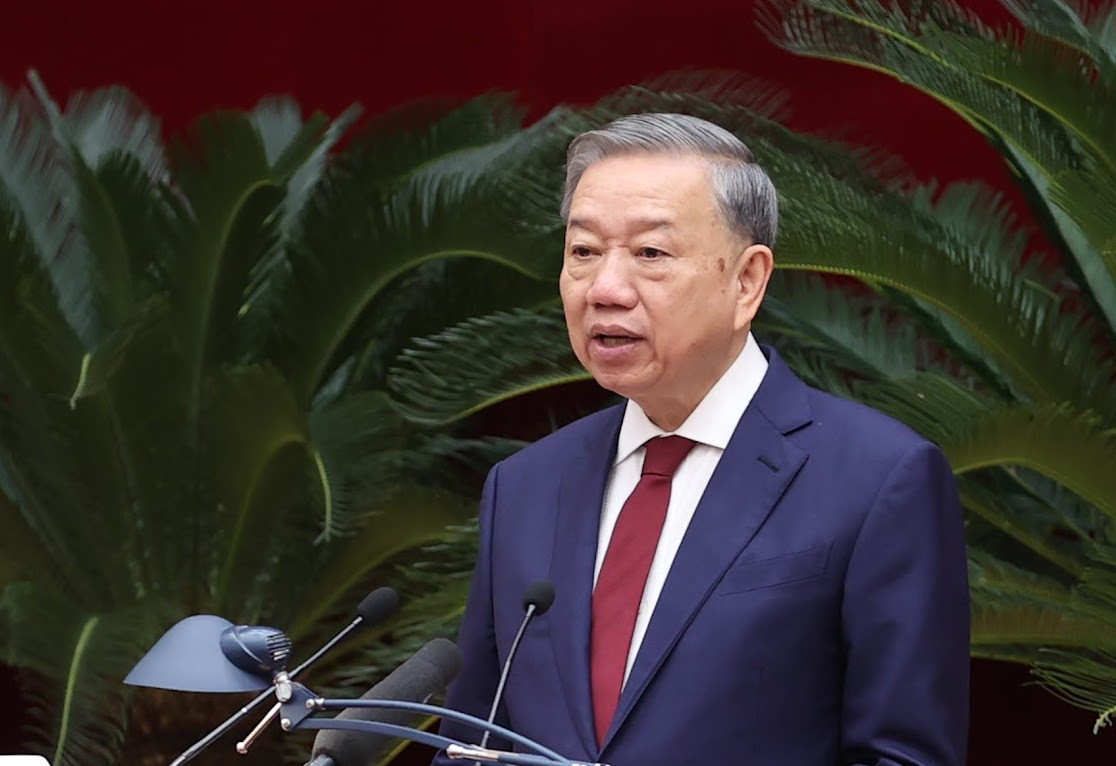
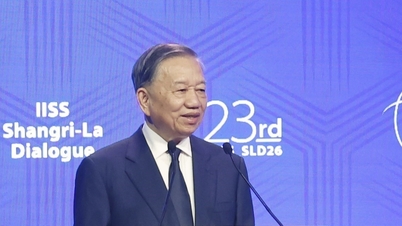
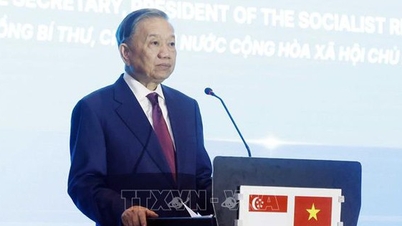
General Secretary To Lam . Photo: Nhat Bac
"This is a particularly important task, a revolution in streamlining the organizational structure of the political system, requiring a very high degree of unity in awareness and action throughout the Party and the entire political system," the General Secretary stated.Many have suggested renaming and streamlining ministries and agencies.
During the process of building the organizational structure of the 15th Government (2021-2026), many opinions proposed renaming some ministries and agencies and reorganizing and streamlining the structure of some ministries and agencies with similar functions and tasks. .
Following the Government's directive, the Ministry of Interior conducted thorough, scientific , and cautious research and discussion on this matter. However, in the difficult context of the impact of the Covid-19 pandemic (2021), the Government had to focus on directing the implementation of a "dual objective." The Politburo also concluded and directed: "For the time being, maintain the stability of the names, organizational structure, and number of ministries and ministerial-level agencies of the 15th Government as in the 14th term." Therefore, at the first session of the 15th National Assembly in July 2021, the Government proposed to the National Assembly, for the time being, "to maintain the stability of the names, organizational structure, and number of ministries and ministerial-level agencies of the Government for the 2021-2026 term as in the 14th term," and this was approved by the National Assembly.The government apparatus has remained stable from 2007 to the present.
Looking back at the restructuring of the government apparatus from the post-reform period (1986) to the present, the issue of merging ministries and agencies with similar or overlapping functions and tasks has been raised. Depending on each historical period, the government apparatus has been restructured accordingly. There was a time when the government had 36 ministries and agencies (9th term, 1992-1997). By the 10th term, 1997-2002, the government had 48 entities. By the 11th term, 2002-2007, the government had 38 entities, including 26 ministries and ministerial-level agencies and 12 government-affiliated agencies. By the 12th term, 2007-2011, the government apparatus was restructured to 30 entities, including 22 ministries and ministerial-level agencies and 8 government-affiliated agencies. The restructuring and merger of ministries and agencies in mid-2007 formed a government apparatus oriented towards multi-sectoral and multi-field ministries. Specifically, the Ministry of Industry merged with the Ministry of Trade to form the Ministry of Industry and Trade . The Ministry of Fisheries merged with the Ministry of Agriculture and Rural Development. The Ministry of Culture and Information was separated into two sectors: the cultural sector merged with the Committee for Physical Education and Sports and the General Department of Tourism to form the Ministry of Culture, Sports and Tourism; and the Press Department and the Publishing Department were merged into the Ministry of Post and Telecommunications to form the Ministry of Information and Communications. In addition, during this period, the Government also dissolved the Committee on Population, Family and Children and transferred its functions to relevant ministries. The functions and tasks of state management regarding population were transferred to the Ministry of Health; the functions and tasks of state management regarding family were transferred to the Ministry of Culture, Sports and Tourism; and the functions and tasks of state management regarding children were transferred to the Ministry of Labor, War Invalids and Social Affairs.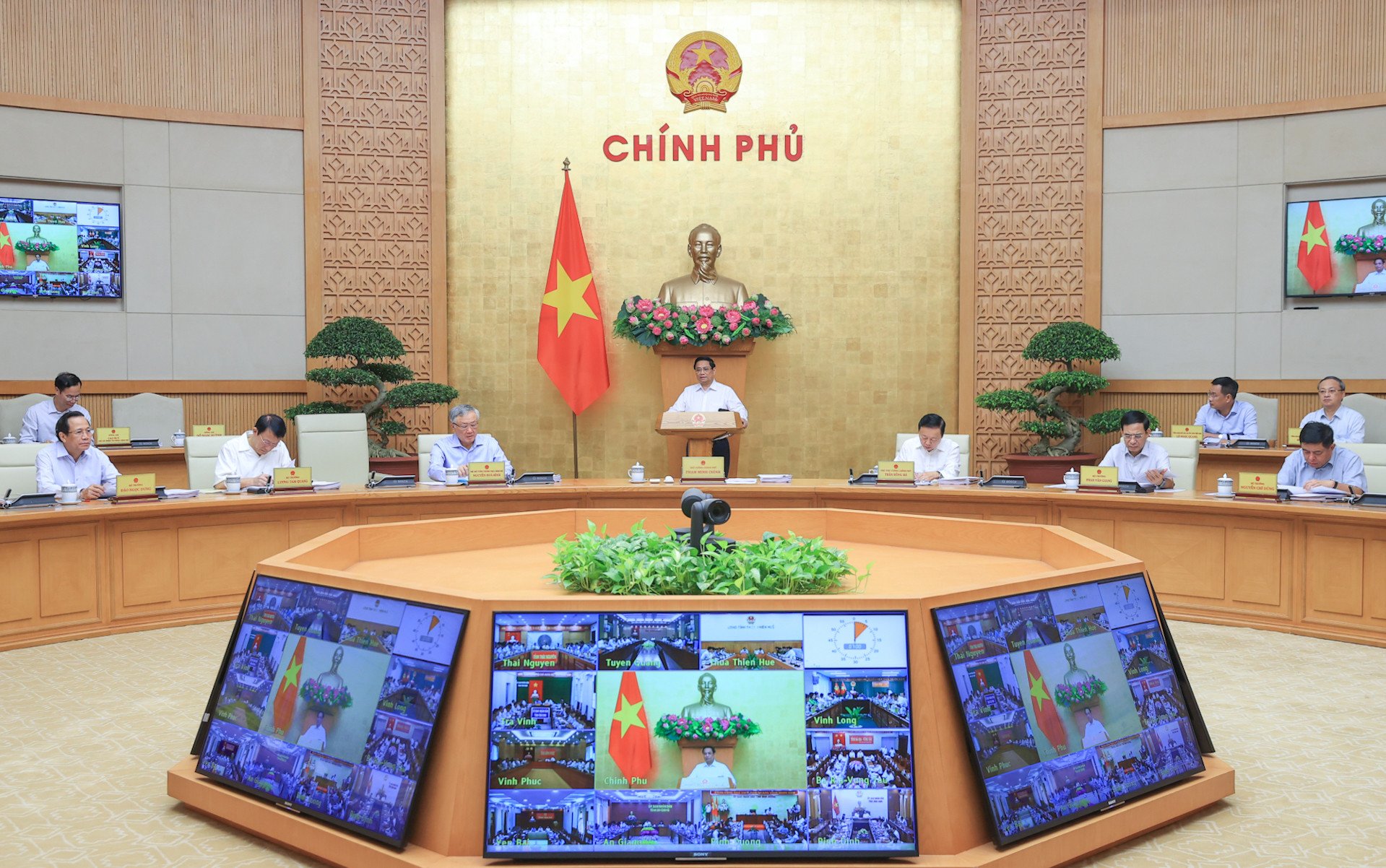
The current government has 27 members, including Prime Minister Pham Minh Chinh, 5 Deputy Prime Ministers, and 21 ministers and heads of agencies. Photo: Nhat Bac
Through numerous restructurings and mergers, the government apparatus has remained stable from the 12th term (2007-2011) to the present, comprising 30 agencies: 18 ministries, 4 ministerial-level agencies, and 8 government-affiliated agencies. The 18 ministries include: National Defence, Public Security, Foreign Affairs, Justice, Finance, Industry and Trade, Labour, Invalids and Social Affairs, Transport, Construction, Information and Communications, Education and Training, Agriculture and Rural Development, Planning and Investment, Interior, Health, Science and Technology, Culture, Sports and Tourism, and Natural Resources and Environment. The four ministerial-level agencies include: the Government Office , the Government Inspectorate, the State Bank of Vietnam, and the Committee for Ethnic Minorities.Complete the organizational restructuring plan by December.
In an article titled "Sleek - Lean - Strong - Efficient - Effective - Effective," General Secretary To Lam assessed that, after 7 years of implementing Resolution 18, a number of important results have been achieved, initially creating positive changes in reforming and reorganizing the organizational structure, and improving the operational efficiency of agencies, units, and organizations within the political system.Resolution No. 27/2022 of the 6th Plenum of the 13th Central Committee on continuing to build and perfect the socialist rule of law in Vietnam in the new period sets out the task of continuing to innovate the organization and operation of the Government towards streamlining, effective and efficient operation; organizing ministries and specialized agencies into multi-sectoral and multi-field organizations; and reasonably reducing the number of ministries and ministerial-level agencies.
However, the General Secretary also noted that the organizational structure is not yet synchronized and comprehensive. Some ministries and sectors still shoulder the responsibilities of local authorities, leading to the existence of a "request-and-grant" mechanism, easily giving rise to corruption, waste, and negative practices... Therefore, to date, the organizational structure of the political system remains cumbersome, with many layers and multiple points of contact. The delineation of the multi-sectoral and multi-field management scope of ministries is not thorough; some tasks are interconnected or within the same field but are managed by multiple ministries. The organizational structure within ministries and ministerial-level agencies still has many layers, with some levels having unclear legal status; the number of subordinate units with legal personality is increasing, exacerbating the situation of "ministries within ministries"... According to the General Secretary, compared to the tremendous changes in the country after 40 years of Doi Moi (Renovation), the organizational structure of our political system basically still follows a model designed decades ago, and many issues are no longer suitable for the new conditions and are contrary to the laws of development; This creates a mentality of "saying one thing and doing another." Based on these analyses, the General Secretary requested the urgent implementation of a revolution to streamline the organizational structure of the political system.
The Central Committee has requested a report on the plan for restructuring and consolidating the organizational apparatus of the political system in the first quarter of 2025.
Recently, the Government requested ministries, ministerial-level agencies, and government agencies to urgently summarize the 7 years of implementing Resolution No. 18/2017. This December, ministries and agencies must complete the development of plans for restructuring their organizational apparatus towards a multi-sectoral and multi-field model, reducing internal organizational structures, and ensuring efficiency, effectiveness, and effectiveness in accordance with the directives of the Politburo and General Secretary To Lam. On November 16th, Prime Minister Pham Minh Chinh signed a decision establishing the Steering Committee for summarizing the implementation of Resolution No. 18, chaired by the Prime Minister. The Steering Committee is tasked with researching and proposing to the Prime Minister tasks and solutions for reforming and restructuring the organizational model of the Government, ministries, ministerial-level agencies, and government agencies to be streamlined, effective, and efficient, meeting the requirements and tasks of the new era; and reforming and restructuring the system of state administrative agencies. The Steering Committee is tasked with developing a plan to summarize 20 years of implementing the government's organizational structure and propose the organizational structure of the 16th Government (2026-2031 term).Vietnamnet.vn
Source: https://vietnamnet.vn/nhung-lan-sap-xep-sap-nhap-bo-nganh-qua-cac-thoi-ky-2342487.html![[Image] Pleasant weather helps students enter the 10th grade entrance exam with confidence.](https://vphoto.vietnam.vn/thumb/1200x675/vietnam/resource/IMAGE/2026/05/29/1780034401612_ngay-1-thi-lop-10-minh-duy-8-5009-jpg.webp)


![[Photo] Ba Lang An Lighthouse - the "eye of the sea" amidst the "rock museum" of Quang Ngai province.](https://vphoto.vietnam.vn/thumb/1200x675/vietnam/resource/IMAGE/2026/05/29/1780038698840_anh-man-hinh-2026-05-29-luc-14-10-42.png)
































































Comment (0)